
El Torcal de Antequera: Where the Sea Turned to Stone
Petrified. Weathered. Awe-inspiring. You stand on a plateau 1,200 metres high, looking out over a landscape that seems to belong to another world. Here in the Sierra del Torcal, the floor of the Jurassic sea has transformed into coral-reef sculptures: 150-million-year-old limestone that uplift, folding and erosion have turned into one of Europe’s most spectacular karst landscapes. Across the 12 km² nature park stand rock formations with names of their own: El Tornillo, El Sombrerillo, Las Meninas, La Esfinge.
Karst, wildlife and 150 million years of geological history
The nature park is home to over 600 plant species, including more than 30 wild orchids (flowering from March to May) and six endemic karst plants, such as Linaria anticaria and Saxifraga biternata, which grow nowhere else. Griffon vultures (Gyps fulvus) circle above the plateau – one of Spain’s largest breeding colonies. In the lowlands beneath the karst lie the Dolmens of Antequera, a UNESCO World Heritage Site since 15 July 2016, whose megalithic axes align precisely with the Torcal and the Peña de los Enamorados. Discover rock formations, geology, birds of prey, wild orchids and the connection to the dolmens’ World Heritage Site here.
Rock Formations in El Torcal – El Tornillo, El Sombrerillo, Las Meninas and More
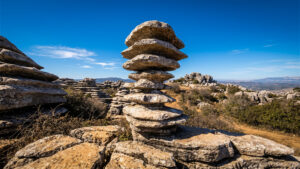
Rock formations in El Torcal – El Tornillo, El Sombrerillo, Las Meninas and more There are rocks in El Torcal that look as though they’ve been placed there deliberately. Not by chance, not through growth – as if someone had carefully arranged a screw, a little hat, a group of…
Reptiles in El Torcal: where lizards soak up the sun
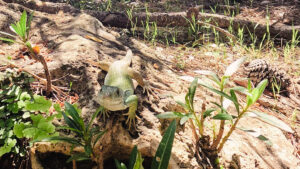
Reptiles in El Torcal: where lizards soak up the sun Anyone hiking the Ruta Verde or the yellow route will spot them sooner or later: a brief shadow flitting across a sunlit rock slab, a blue-green streak vanishing between the karst stones. Reptiles are the most common vertebrates you’ll encounter…
El Torcal geomorphology: where karst has four faces
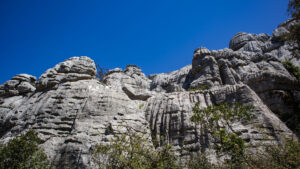
El Torcal geomorphology: where karst has four faces Anyone looking at El Torcal on a map sees, at first glance, a continuous karst area of around 17 square kilometres. Anyone walking through it quickly notices that this area is not a homogeneous block. The elevations change, the rock structures shift,…
Montpellier Maple in El Torcal – Where Shade Grows from Stone
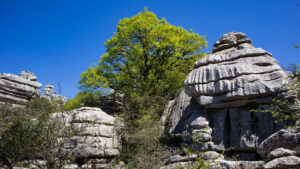
Montpellier maple in El Torcal: where stone casts shade Astonishingly few trees grow across 17 square kilometres of limestone. Anyone hiking in El Torcal first sees rock, cushion plants and shrubs, then a few oaks — and suddenly, often at a bend in the path, a gnarled tree with three-lobed…
Birds of prey in El Torcal – golden eagle, Bonelli’s eagle, eagle owl, peregrine falcon and more
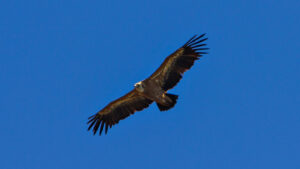
Birds of prey in El Torcal – golden eagle, Bonelli’s eagle, eagle owl, peregrine falcon and more Anyone who tilts their head back for more than ten minutes in El Torcal de Antequera will almost always spot one: a shadow gliding over the karst massif without a single wingbeat. Usually…
Bird protection area El Torcal: where 82 species are protected

Bird protection area El Torcal: where 82 species are protected Anyone studying the map in El Torcal will sooner or later come across four letters that are explained nowhere: ZEPA. Behind the abbreviation lies a European protection concept that has formally made the entire nature park a bird protection area…
Paraje Natural Torcal de Antequera – Andalusia’s UNESCO World Heritage Site
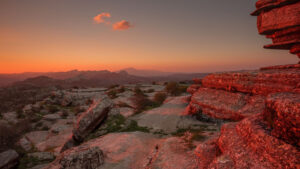
Paraje Natural El Torcal de Antequera: Andalusia’s geological masterpiece There are landscapes that can be described. And then there is the Paraje Natural El Torcal de Antequera. Limestone blocks rising from the ground like stacked slabs, rock sculptures with names like El Tornillo (the screw), Las Meninas (the giant heads)…
Karst Erosion in El Torcal – How 200 Million Years Shaped a Landscape
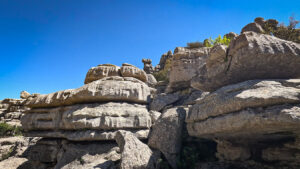
Karst erosion in El Torcal: how 200 million years shaped a landscape Anyone standing in El Torcal and looking at the stacked stone slabs is looking at a piece of Earth’s history that can genuinely be read. The horizontal layers, the sharp edges, the weathered basins – these are not…
Ammonites & Belemnites in El Torcal – Fossils from the Tethys Sea
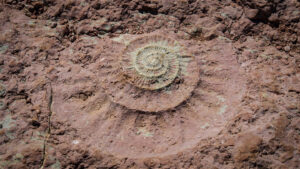
Ammonites & belemnites in El Torcal: what 150-million-year-old fossils tell us about the Tethys Sea There’s a moment on the Grand Circuit that stops some walkers dead in their tracks. At the trail’s edge, in a pale slab of limestone, a perfect spiral stands out. Not painted on, not carved,…
UNESCO World Heritage Antequera Dolmens Site – Why Building and Nature Are Protected Together Here
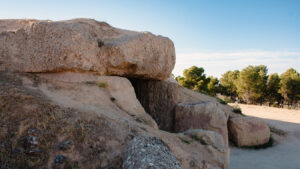
UNESCO World Heritage Antequera Dolmenss Site: why building and nature are protected together here There are UNESCO World Heritage Sites for historic old towns. There are some for unique buildings. And there are some for untouched nature. What sets Antequera apart is a rare combination: here, megalithic structures built by…
The Griffon Vulture of El Torcal – Emblem of the Karst Massif
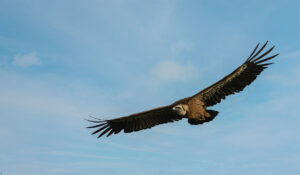
The Griffon Vulture in El Torcal: when Europe’s largest birds of prey circle over limestone You hear it before you see it: a quiet rushing sound, almost like wind, but steady and rhythmic. Then the shadow – large enough to cast a brief moment of darkness across the rock slabs.…
The Iberian Ibex – Andalusia’s Mountain Emblem in El Torcal
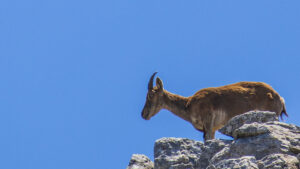
Iberian ibex in El Torcal: emblem of the karst world – and where to encounter it There are encounters in El Torcal you simply can’t plan. You walk along a rock passage, turn round, and suddenly, ten metres further on, an animal is standing at the edge of the path:…
Wild Orchids in El Torcal – Over 30 Species from Early Purple Orchids to Bee Orchids
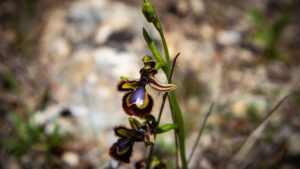
Wild Orchids in El Torcal: Karst Flora Between Orchises and Bee Orchids Anyone walking the Ruta Verde in spring encounters an El Torcal that has little in common with the dramatic rock formations seen on postcards. Between the grey limestone blocks, a carpet of meadows, cushion plants and dashes of…
Caves and Shafts in El Torcal – Where the Depths Begin
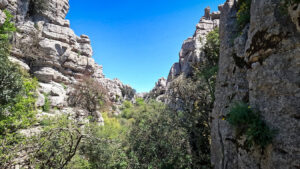
Caves and Shafts in El Torcal: Where the Depths Begin What becomes visible on the surface of El Torcal — towers, columns, rock sculptures — is only the upper half of the story. The other half lies beneath. Several hundred metres of limestone have been bored through, split apart and…
Water in El Torcal – Where the Mountain Stores the Rain
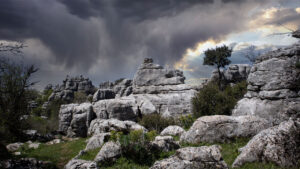
Water in El Torcal: where the mountain stores the rain At first glance, El Torcal seems very dry. Anyone climbing onto the plateau in high summer sees fossilised rock layers, sharp-edged lapiaz, the occasional hedgehog broom — but no stream, no watercourse, no visible spring. The impression is deceptive. The…
Peonies, hedgehog broom and Antequera catmint – endemic karst plants in El Torcal
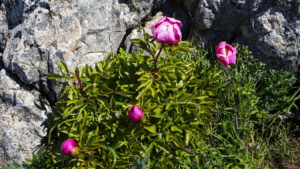
Peonies, hedgehog broom and Antequera catmint – endemic karst plants in El Torcal Anyone hiking through El Torcal in April expecting nothing but rock is in for a surprise. Wild peonies bloom among the limestone towers, cushions of blue-violet hedgehog broom hunker down on bare rock slabs, and in local…