The Griffon Vulture in El Torcal: when Europe’s largest birds of prey circle over limestone
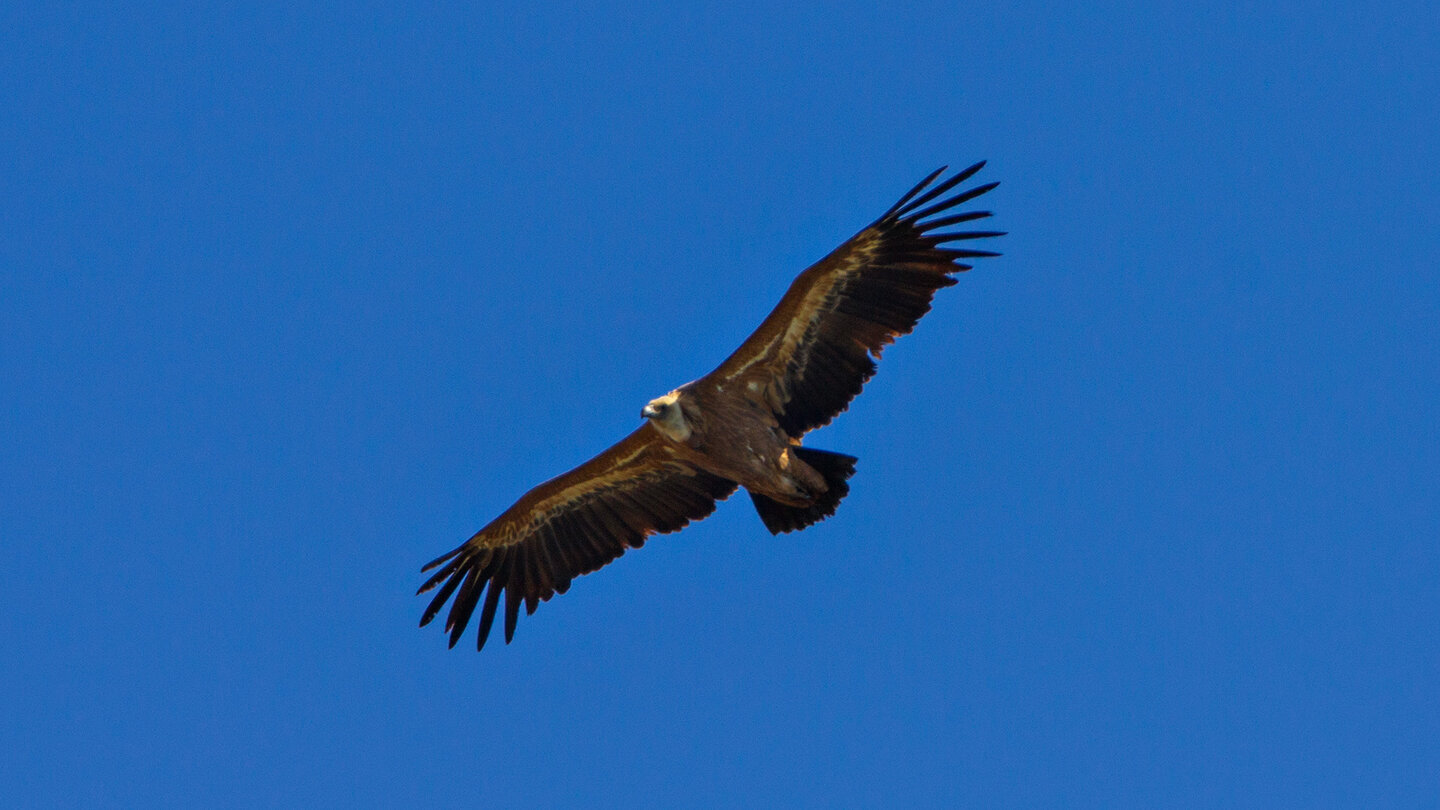
You hear it before you see it: a quiet rushing sound, almost like wind, but steady and rhythmic. Then the shadow – large enough to cast a brief moment of darkness across the rock slabs. The Griffon Vulture in El Torcal is not simply a bird. It is a natural spectacle with wings. A wingspan of up to 2.80 metres, a weight of eight to eleven kilograms, and the ability to stay aloft for hours without a single wingbeat.
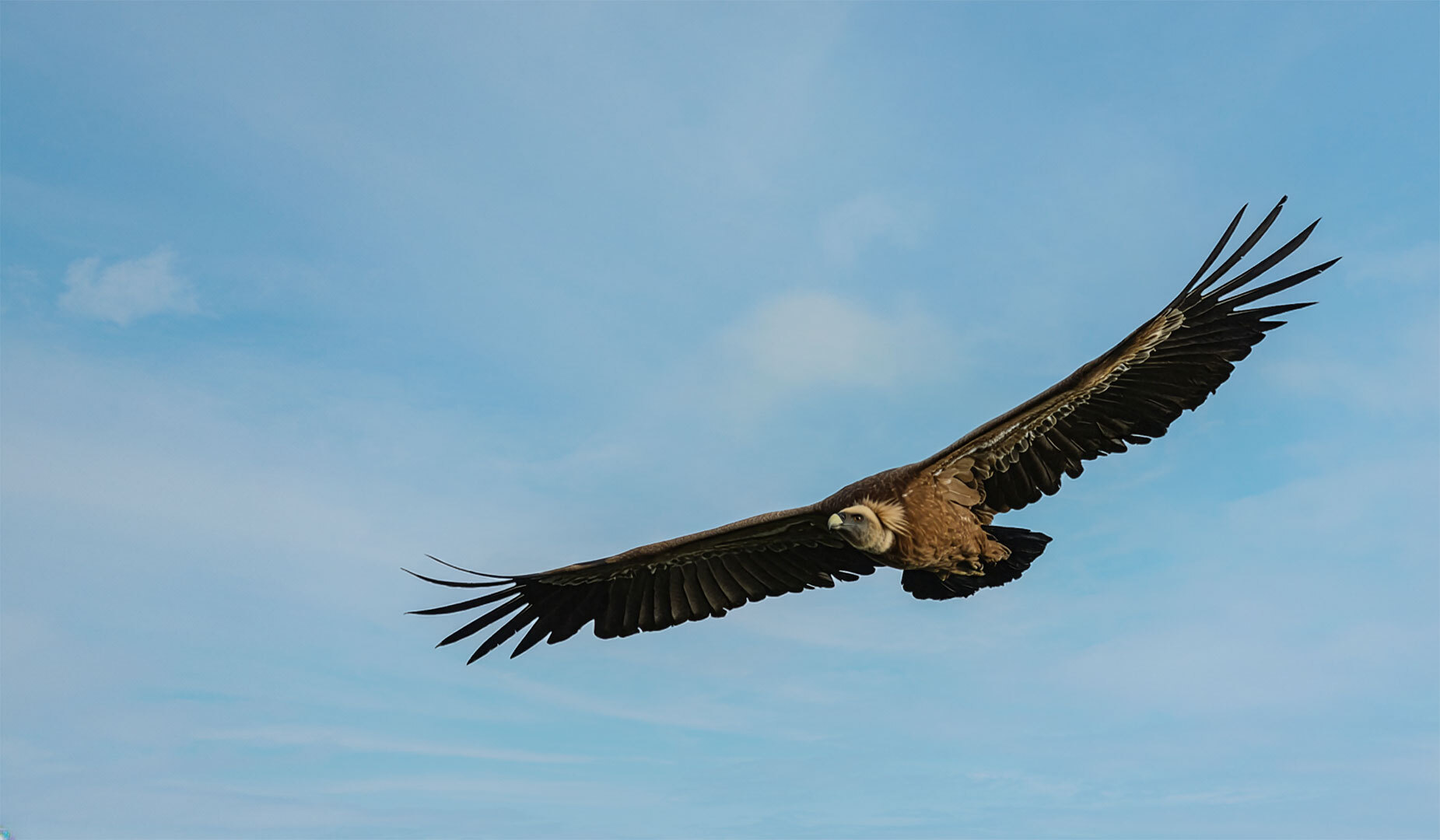
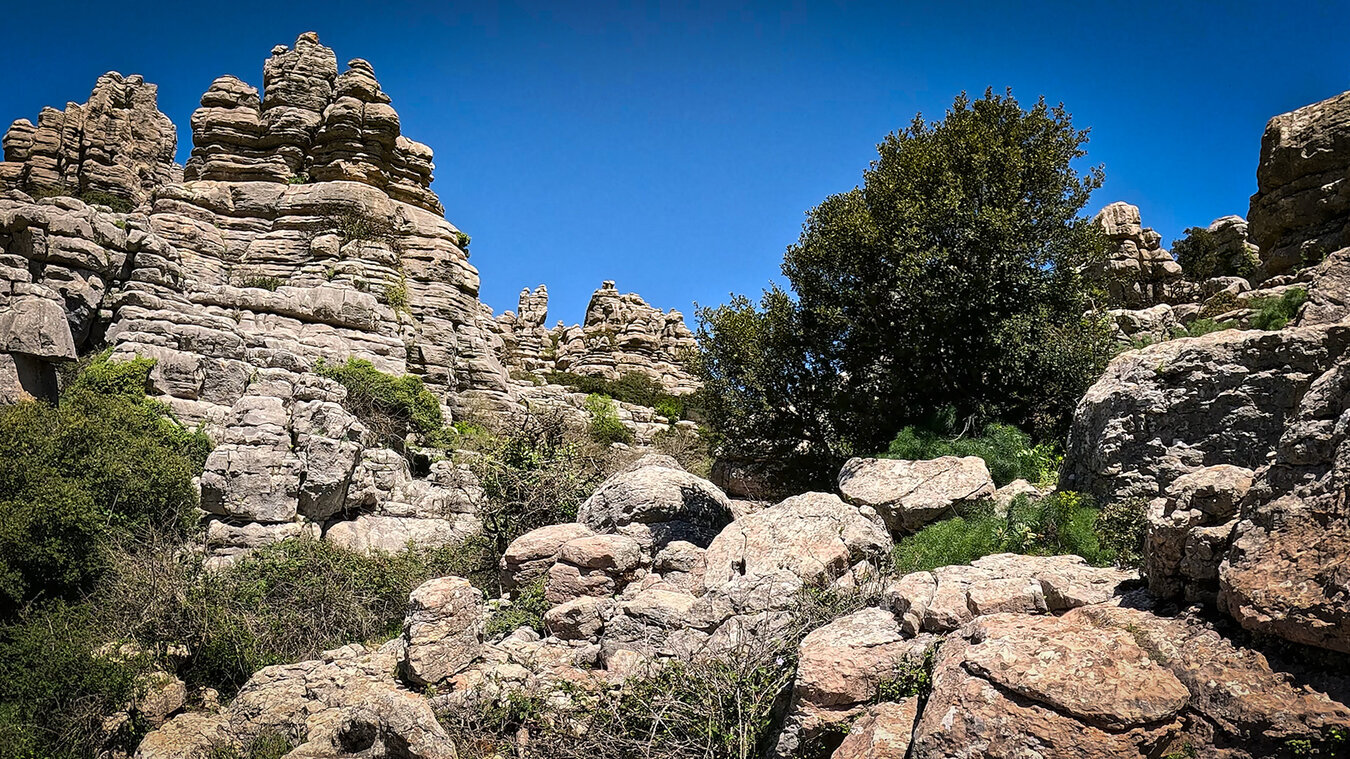
Its scientific name is Gyps fulvus. It is common in El Torcal: several individuals often circle simultaneously over the karst massif, riding the thermals above the sun-baked limestone surfaces and climbing to heights at which you have to tip your head right back just to keep them in view. Anyone who has once seen a so-called vulture spiral – dozens of birds rising in a spiralling thermal, silent, elegant, barely moving – never forgets the sight.
The Paraje Natural El Torcal has been an official Special Protection Area for Birds (ZEPA) since 2002. The Griffon Vulture is the main reason for this. It needs this protection, and it deserves it.
Fact file: the Griffon Vulture (Gyps fulvus)
| Scientific name | Gyps fulvus |
|---|---|
| Wingspan | 2.40–2.80 m |
| Weight | 8–11 kg |
| Body length | 95–110 cm |
| Flight style | Thermal soaring – hours in the air without a single wingbeat |
| Diet | Exclusively carrion (a specialist in soft tissue) |
| Status in El Torcal | Common, circling over the karst massif |
| Protection status | Special Protection Area (ZEPA) since 2002 |
| Best time to observe | Late morning to early afternoon (optimal thermals) |
| Best season | March–October (longest daylight hours, most active thermals) |
Way of life: thermal soaring as an art of living
How the Griffon Vulture makes use of the karst landscape
The Griffon Vulture is a master of energy efficiency. It eats carrion – exclusively – and searches for it from great heights with its sharp eyes. To use as little energy as possible in doing so, it relies on thermals: rising warm air above heated surfaces that carries it aloft without it needing to move its wings. The limestone slabs of El Torcal heat up strongly and quickly in the sun – ideal conditions. Little wonder that the Griffon Vulture is so common here.
Its silhouette in flight is unmistakable: wings held in a shallow upward V, a small, pale head on a long neck that is stretched well forward. When several Griffon Vultures circle together – which happens regularly in El Torcal – this is known as a “vulture spiral”: a spiralling upward movement along a thermal that can carry the birds dozens of kilometres into the sky.
The breeding season falls in late winter and early spring. A pair of Griffon Vultures hatches only a single egg each year – the chicks remain dependent on their parents for a long time. This slow reproduction rate makes the species vulnerable: losses through poisoning, power lines or disturbance at nesting sites have a direct impact on population numbers. In El Torcal, the nesting sites are therefore consistently protected.
Importance for the El Torcal ecosystem
Why the Griffon Vulture is indispensable
Griffon Vultures are often associated with death – yet they are one of nature’s most important clean-up crews. As specialised scavengers, they dispose of animal carcasses before these can become sources of disease. Their stomach acid is strong enough to kill pathogens that would be fatal to other animals. Without Griffon Vultures, disease would spread far more quickly in the wild.
In El Torcal, they benefit from the proximity of the farmed landscape around Antequera, where livestock is kept. The karst massif itself provides nesting sites in inaccessible rock faces and gorges – sheltered from disturbance, with a clear take-off in every direction. The Griffon Vultures of El Torcal are part of a larger Iberian population that has recovered over recent decades, following a dramatic decline through poisoning and persecution in the 20th century. Today they can once again be found regularly and in stable numbers across the mountains of southern Spain.
For this reason, drone flights are strictly forbidden in El Torcal: they severely disturb nesting birds and can cause them to abandon their clutches. Climbing is not permitted for the same reason. Protecting these animals is an absolute priority in El Torcal – the 2002 ZEPA designation was the logical consequence of a stable but vulnerable population in need of protection.
The Griffon Vulture and its neighbours in the ZEPA protected area
A community of rare birds of prey
The Griffon Vulture shares the airspace over El Torcal with some of Europe’s rarest birds of prey. The Golden Eagle nests in the massif’s sheer rock faces – a solitary bird that consistently defends its territory. The Bonelli’s Eagle is rarer but has also been recorded here. The Eagle Owl, Europe’s largest owl, nests in the rock crevices and caves and can occasionally be seen on the rocky outcrops in the evening hours.
What makes this community of birds so special is the interplay of different ecological niches. The Griffon Vulture occupies the air above the plateau. The Golden Eagle watches over its territory from a rocky outcrop. The Kestrel hunts small mammals on the grassy slopes. Each of these birds makes use of the karst landscape in its own way – and all of them benefit from El Torcal being consistently protected as a ZEPA site.
Observation tips: when and where to see the Griffon Vulture in El Torcal
How to get the best sightings
Best time of day: late morning to early afternoon – by then the thermals have built up over the limestone slabs and the vultures are active. In the early morning and in the evening, the air is still too cool.
Best season: March to October – long days, strong sunshine, optimal thermals. In winter, Griffon Vultures are seen less often, as the thermals are weaker.
Where to watch: the open rock platforms along the Ruta Amarilla and the Grand Circuit offer a clear view of the sky. The Mirador de las Ventanillas near the visitor centre is another good vantage point.
Equipment: binoculars (at least 8×42) are recommended, as the vultures often circle at great height. Binoculars with 10x magnification also reveal details of the plumage and flight posture.
Patience: sometimes you simply have to stay still and wait. Griffon Vultures are not shy – if you remain quiet, they will sometimes circle directly above you.
⚠️ Drone flights forbidden · Climbing not permitted – El Torcal is an official bird protection area (ZEPA).
Conclusion: the Griffon Vulture makes El Torcal something special
Rock formations can be seen elsewhere. Watching the Griffon Vulture over a karst massif that was seabed 150 million years ago – that is unique. El Torcal is one of the few places in Europe where you can experience this bird regularly and at close quarters, without depending on a guided nature tour.
More on the El Torcal ecosystem: Paraje Natural El Torcal de Antequera · All El Torcal articles at a glance.
Frequently asked questions about the Griffon Vulture in El Torcal
Is the Griffon Vulture dangerous to people?
How big is a Griffon Vulture really?
Why are drone flights forbidden in El Torcal?
What other birds of prey are found in El Torcal?
This article is based on the on-the-ground knowledge of the Gequo editorial team – publishers of several Reisezeit hiking guides and operators of Sunhikes.com. As of: May 2026