
Travel tips for El Torcal de Antequera: what to know before you go
Free. High up. Changeable. You drive up the narrow mountain road A-7283, park at 1,200 metres above sea level – and admission to the nature park is free. What might sound like a given at first is, by European standards, a rarity: a UNESCO-recognised natural wonder with no entrance fee, complete with a visitor centre, waymarked paths and a viewing platform. But the microclimate of the Sierra del Torcal demands prepared visitors: on the plateau, sun, fog and rain can alternate within an hour, and the temperature drops by 5–10°C compared with Antequera.
Getting there, parking and the question of the best time to visit
Travelling by car is the only sensible option: 30 minutes from Antequera via the A-7075 and then up the A-7283 to the visitor centre at 1,200 metres above sea level. Motorhomes park in the lower car park – the final bends are narrow. Admission to the nature park is free; only special guided tours and the planetarium cost money. Best time to visit: April to June and September to November – wild orchids bloom in spring, and in autumn the visibility is clear and the vultures are especially active. In summer, set off very early (before 9 a.m.), as the plateau fills up quickly. Find out more here about travelling by car and hire car, motorhome parking, admission rules, dogs, families and safety tips for walkers.
Best Time to Visit El Torcal & Antequera: Why Spring and Autumn Are the Top Choice
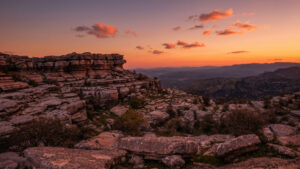
Best time to visit El Torcal & Antequera: why spring and autumn are the top choice Travellers to Andalusia ask themselves two questions: when is the weather pleasant? And when isn’t it too crowded? For El Torcal and Antequera, both answers coincide in two windows: March to May and September…
Antequera in Spain: Where Andalusia’s Unknown Heart Lies
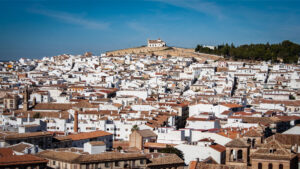
Antequera in Spain: where Andalusia’s unknown heart lies Anyone travelling through Andalusia has Seville on their list, along with Granada, Córdoba, perhaps Málaga and Ronda. Hardly anyone knows Antequera – even though virtually every journey between the region’s major cities inevitably passes through this town. What looks like a blind…
Admission & Opening Hours at El Torcal: The Torcal Alto Visitor Centre at a Glance
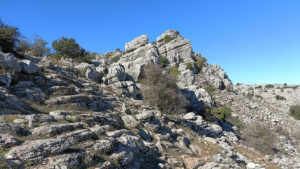
Admission & Opening Hours at El Torcal – The Torcal Alto Visitor Centre at a Glance The most important point first: admission to El Torcal is free. This applies to the whole nature park as well as to the Torcal Alto Visitor Centre. No tickets, no time-slot bookings, no queuing…
Summer in El Torcal: Where the Mountain Tames the Heat
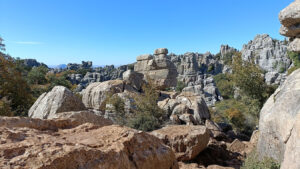
Summer in El Torcal: where the mountain tames the heat In July, the thermometer in the Vega de Antequera often shows 40°C or more. Anyone driving inland from the coast in summer sees the hot lowland plain shimmering and wonders whether a hike in El Torcal even makes sense now.…
Snow in El Torcal: When the Karst Turns White
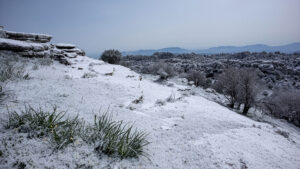
Snow in El Torcal: When the Karst Turns White Andalusia and snow — for most travellers, these two words belong to entirely different worlds. Sunshine, olive groves, the Mediterranean, whitewashed villages: that’s the picture. Snow doesn’t feature in it. But anyone lucky enough to be in the south in the…
Getting to El Torcal de Antequera: All the Ways to Reach the Karst Massif
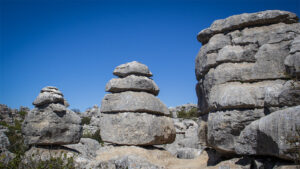
Getting to El Torcal de Antequera: all the ways to reach the karst massif El Torcal de Antequera – the karst massif lies 14 km south of Antequera and around 50 km from Málaga The Paraje Natural El Torcal de Antequera lies in the geographical centre of Andalusia – close…
Staying near El Torcal: Where Villanueva Becomes Your Base Camp
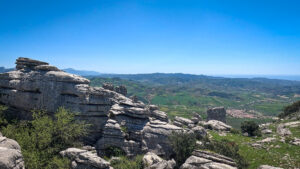
Staying near El Torcal: where Villanueva becomes your base camp Anyone wanting to spend more than a day at El Torcal faces a choice: stay in Antequera, the town with plenty of hotels and sights, or stay right at the foot of the karst, in a small white village that…