Snow in El Torcal: When the Karst Turns White
Andalusia and snow — for most travellers, these two words belong to entirely different worlds. Sunshine, olive groves, the Mediterranean, whitewashed villages: that’s the picture. Snow doesn’t feature in it. But anyone lucky enough to be in the south in the right week in January or February can experience a different side of it: snow in El Torcal, a karst massif standing 1,100 to 1,400 metres above sea level, which transforms for a few hours or days into a fairy-tale winter landscape.
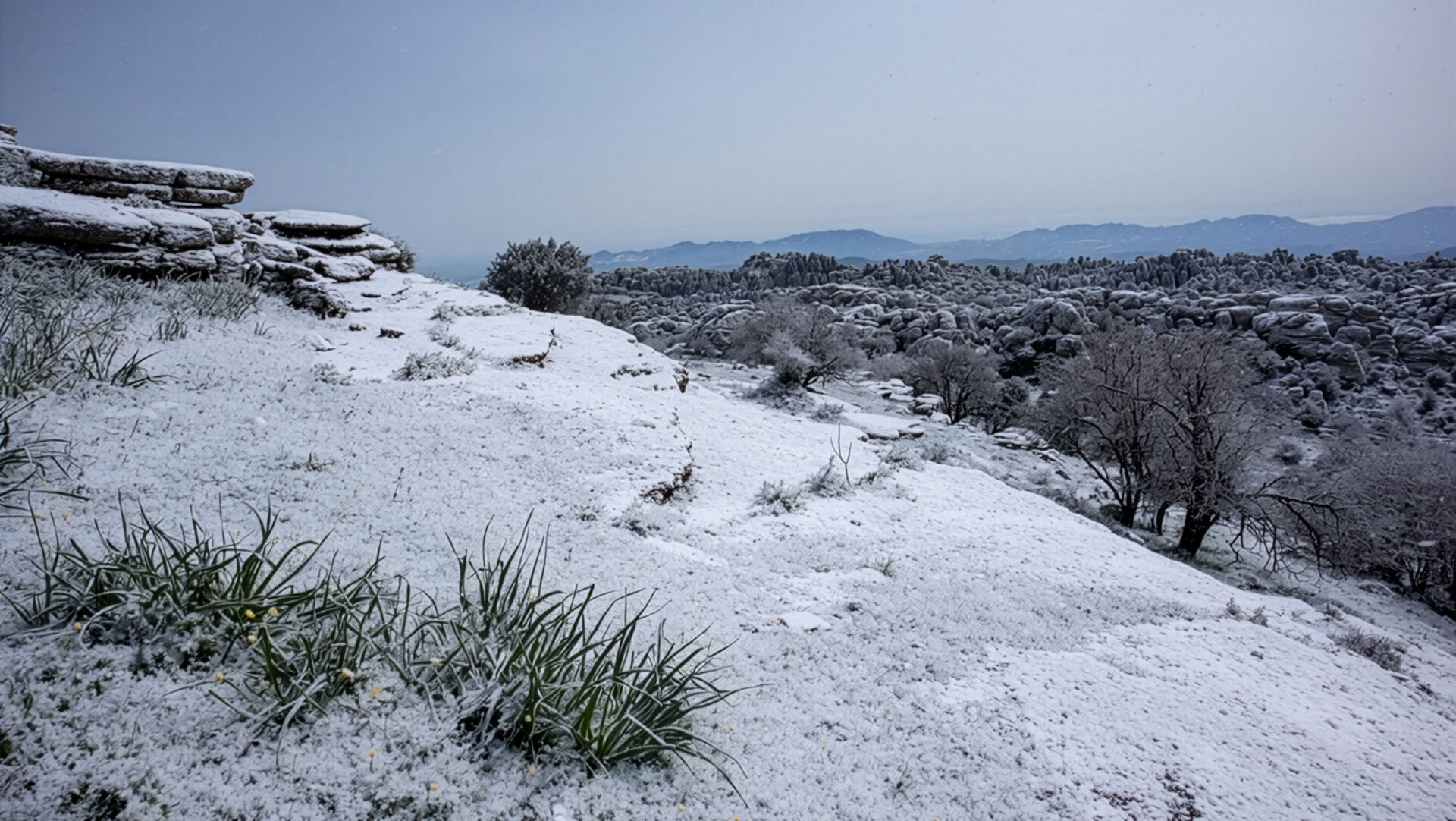
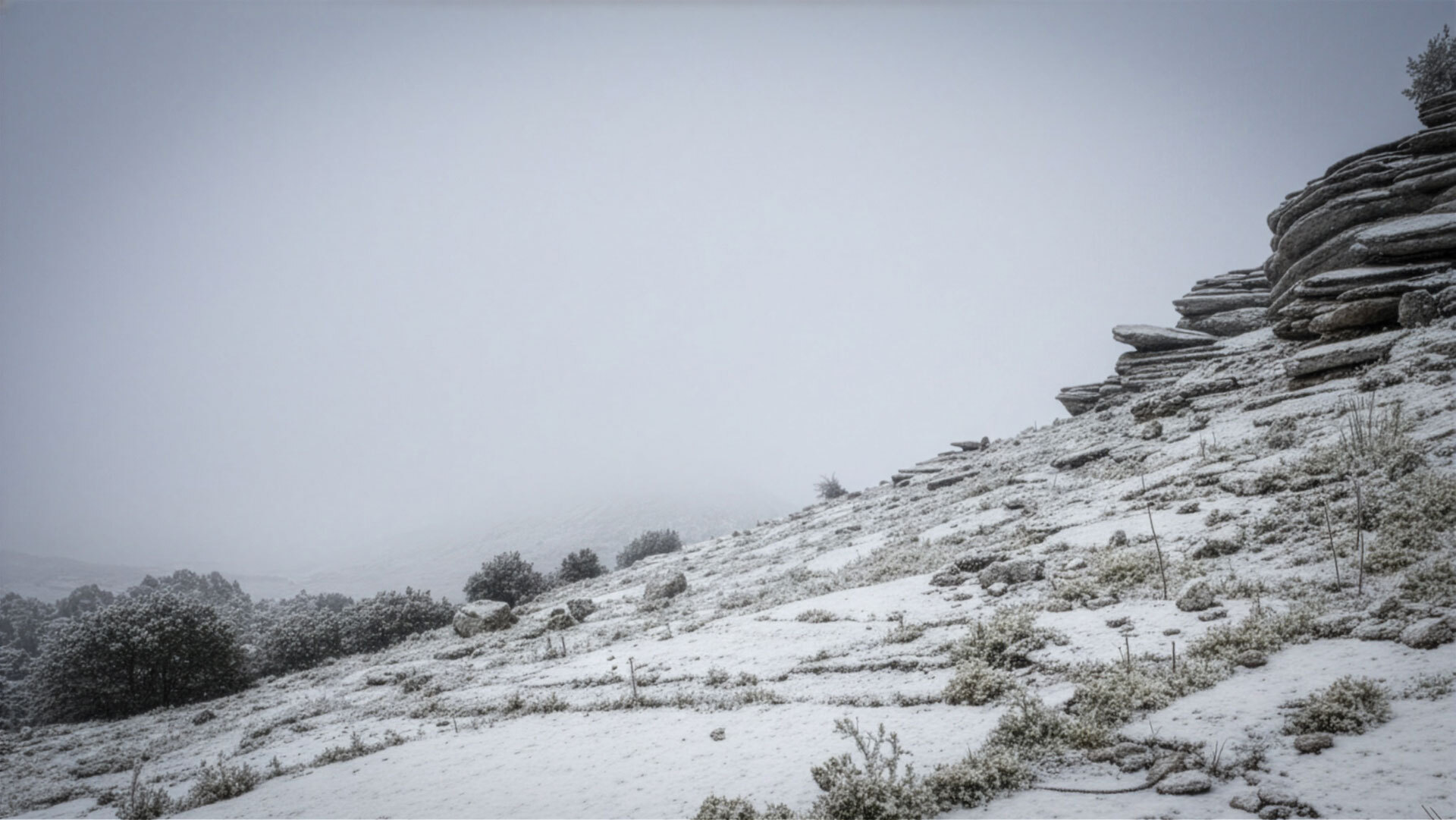
Snow is rare in El Torcal. In most winters none falls at all; in others there’s just enough for a thin covering that melts again by midday. But when a North Atlantic weather shift hits the region at just the right moment, ten centimetres can suddenly settle on the rock towers, and the karst sculptures look as though they’ve come straight out of a Nordic picture book. Days like this can’t be planned for — but anyone in Antequera in the depths of winter shouldn’t rule them out.
What makes snow here possible, when it arrives, how to hike in frost and fog — and why the climb is worth it.
When the Snow Falls: Climate in Deep Winter
Antequera itself sits at 575 metres and rarely sees snow. El Torcal, however, begins some 700 metres higher, and conditions at that altitude are different — cooler, more exposed, closer to what counts as deep winter near the Sierra Nevada.
Down to −10°C on the Plateau
The official climate figures for the natural park are clear: in winter (December to February) the thermometer can drop to −10°C. It doesn’t happen every day, or every winter, but it does happen. On days like this the plateau turns icy, puddles freeze over, and the karst surface gets a white fringe of frost.
Compared with the coast — where January rarely dips below 8°C — El Torcal is a climate zone all of its own. The 12 to 15°C difference between Málaga and the plateau in January is why some Andalusians make a special trip up just to see the snow.
La Montera: the Fog Before the Snow
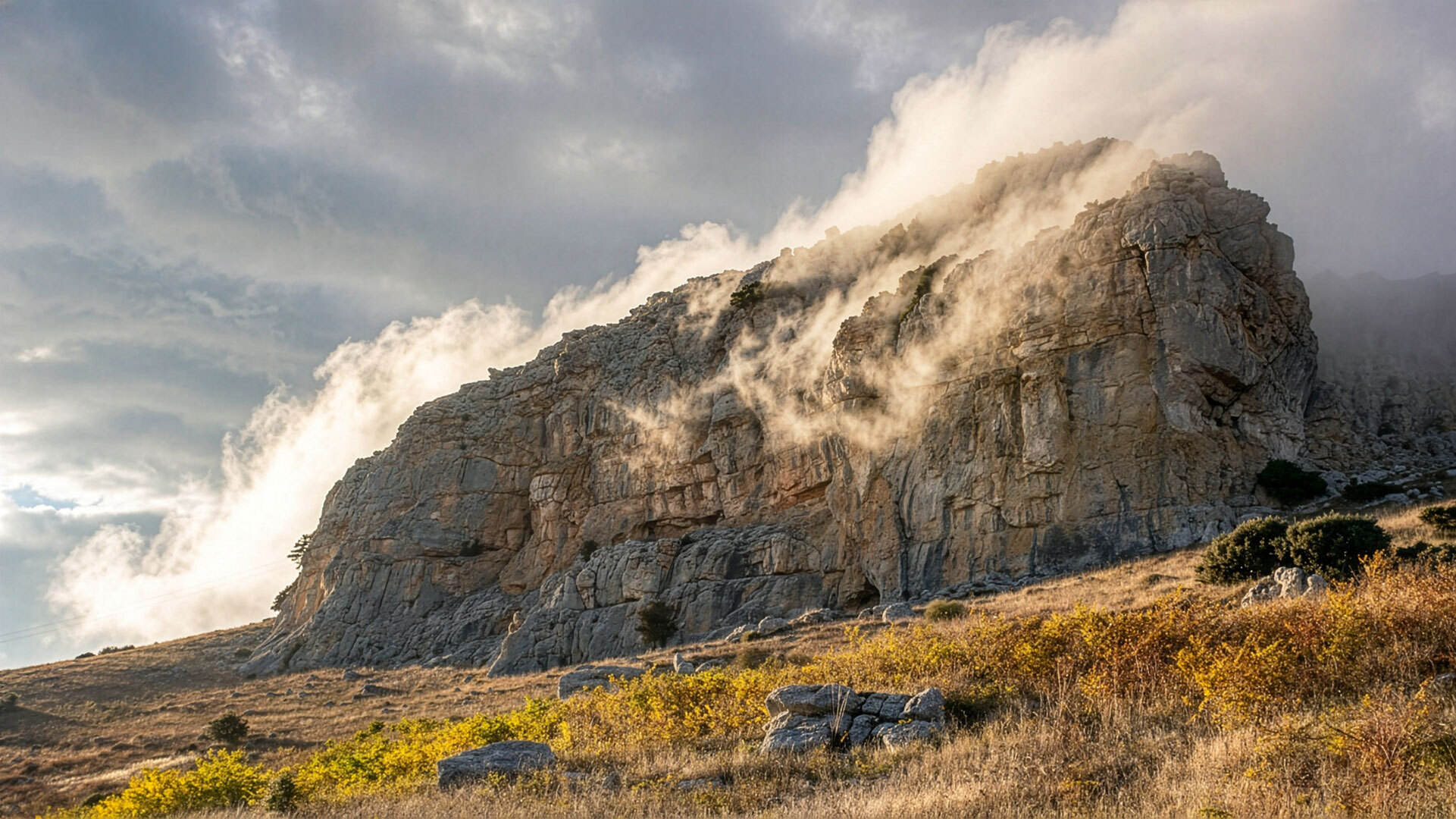
Bevor es im El Torcal schneit, kommt oft ein lokales Phänomen vor: La Montera. Der Name bedeutet wörtlich „die Mütze” und beschreibt eine Fogschicht rund um die Gipfel des Massivs, wenn warme Südwinde aus dem Mittelmeerraum auf die kühlere Luft aus der Vega de Antequera treffen. La Montera ist im Herbst und Winter häufig und macht das Karstmassiv von unten unsichtbar — wer aus der Stadt hochschaut, sieht eine Wand aus Wolken, wo eigentlich Felstürme stehen sollten.
Inside the fog, a whole microcosm takes over. Visibility often drops to just five to ten metres, the rocks drip with moisture, and every sound is muffled. It’s atmospheric and impressive, but tricky for walkers: in the karst labyrinth, it’s extremely easy to lose your bearings in visibility like this. If fog starts closing in, turning back is the right call.
What Snow Does Differently in El Torcal
Wenn dann doch Schnee fällt, verwandelt sich der Park. Die offiziellen Park-Mitarbeiter nennen die Schneetage „märchenhafte Winterlandschaft” — und das ist nicht übertrieben. Fotografen rechnen Januar und Februar zu ihrer Spezial-Saison.
Karst in Winter Dress as a Photo Subject
Snow does something to the karst that’s impossible in summer: it reveals the layers. Snow settles on the horizontal ledges of the limestone but not on the vertical faces. The result is a geological striped pattern — every rock tower displays its inner structure in bands of white and grey.
Then there’s the light. In deep winter the sun sits low, shadows stretch long, and the snow reflects what little light there is so that even midday shots look soft. Sunrise and sunset become highlights under a clear, snowy sky — the karst sculptures take on pink and golden tones, and the peaks catch the last of the light.
Visibility Under Clear Winter Skies
A second winter effect: visibility. While summer air over Andalusia is often dusty and hazy, the cold, clear days of January and February bring exceptional long-distance visibility. From the Mirador de las Ventanillas or the Camorro de las Siete Mesas, given the right conditions, you can see the Sierra Nevada to the east — snow-capped and sharply outlined — and the African coast to the south.
Hiking in Winter: What to Bear in Mind
The requirements for a winter trip to El Torcal are different from summer, but no more complicated. Pay attention to a few points and you’ll have a relaxed day out — even in frosty conditions.
Layered Clothing, Wind Protection, Sturdy Footwear
Die Clothing ist das wichtigste Thema. Zwiebellook ist die richtige Strategie: dünne Basislage aus Funktionsmaterial, mittlere Isolationsschicht (Fleece oder leichte Daunenjacke), wind- und wasserabweisende Außenschicht. Auf der Hochfläche kann der Wind die gefühlte Temperatur um 5 bis 10 °C senken — das ist der Faktor, der „kühl” zu „eisig” verschiebt. Mütze, Handschuhe, Schal sind Pflicht. Sonnenbrille auch im Winter, weil reflektierender Schnee blendet.
Sturdy footwear matters more in winter than in summer. When the karst is wet or covered by a thin layer of ice, the already sharp-edged limestone slabs become slippery. Hiking boots with a good tread pattern are the right choice. Sandals and trainers are out of the question. Anyone seriously expecting snow can bring microspikes or crampons — rarely necessary, but worth their weight in gold if there’s black ice at the edge of the path.
Shorter Days and the Risk of Fog
In deep winter the sun sets in Andalusia at 6.30pm — and darkness falls quickly. Anyone planning a hike should set off by 11am at the latest, so the return journey ends back at the car before dusk. A head torch still belongs in the rucksack: if fog rolls in or a break takes longer than planned, having light is far more reassuring than being caught out.
The fog issue is a serious one. La Montera can roll in within 30 minutes and wrap the rock labyrinth in cotton wool. Anyone out on the Grand Circuit at that point has a genuine orientation problem. The rule of thumb: if fog starts to close in, head for the nearest waymarker, then take the direct route back to the visitor centre from there. Don’t cut across country — the karst has crevices that become invisible in fog.
Which Routes Work in the Snow
Unlike in summer, route choice in winter is determined less by the heat than by visibility and path quality. The rule of thumb reverses: the best route isn’t the shortest one, but the one that’s most reliably waymarked.
Ruta Verde in the Snow
The Green Route remains the easiest option even in winter. 1.8 kilometres out and back from the visitor centre, well waymarked, with hardly any change in altitude. In snow it might take an hour instead of the usual 45 minutes – paths are walked more carefully and photo stops come more often. Anyone experiencing snow in El Torcal for the first time should start here.
The Ruta Amarilla (3.1km) is manageable, but in deep snow or black ice it’s a matter of experience. The Grand Circuit (8.6km) is a job for specialists in winter snow – parts of it have no clear path, the waymarking is hard to make out under snow, and turning back midway is barely feasible.
When It’s Better to Turn Back
Three signs mean it’s time to head back to the car. First, thick fog rolling in. Second, black ice on shaded sections of the path — typically after cold, clear nights, around 9 or 10am, when the sun freezes the dew. Third, sudden strong wind: on the high rock platforms this can become dangerous.
If in doubt, turn back and enjoy the park from the visitor centre’s viewing platform instead. A hot café cortado in the bistro with a view of snow-covered karst rocks still makes for a good day out.
Winter Safety in the Rock Labyrinth
Clothing
Layering is essential: a thin technical base layer, fleece or lightweight down, and a wind- and water-resistant outer shell. Hat, gloves, scarf. On the plateau, wind lowers the perceived temperature by 5 to 10°C.
Footwear
Hiking boots with a good tread or sturdy trail runners with a trekking sole. In snow or where there’s black ice at the edge of the path, microspikes or crampons are a good addition. Sandals and smooth-soled trainers are out of the question.
Time of Day
Set off by 11am at the latest. Sunset in deep winter is at 6.30pm — and darkness falls quickly. Pack a head torch anyway, so a delay doesn’t turn into a stressful situation.
Fog
La Montera can roll in within 30 minutes. If fog starts to close in, head back to the nearest known waymarker, then take the direct route to the visitor centre from there. Don’t cut across country — the karst has crevices that become invisible in fog.
If in Doubt, Turn Back
Thick fog, black ice, strong wind: head back to the car. Viewing the park from the visitor centre is still a good day out — coffee in the bistro with a view of snow-covered karst rocks is no bad programme.
Conclusion – Snow in El Torcal
Snow in El Torcal is rare, but when it arrives, that day ranks among the finest the park has to offer. Down to −10°C on the plateau, La Montera fog as a companion, clear views as far as the Sierra Nevada on the right days — an Andalusian experience few travellers expect. To see what the other climate extreme looks like, read the article on hiking in summer at 40°C. Which season is generally most rewarding is covered in the article on the best time to visit. Opening hours and admission are covered in the article on admission and opening hours at the visitor centre. The right winter route can be found in the article on the Ruta Verde. For an overview of the natural park: karst landscape of El Torcal.
Frequently Asked Questions
Does it snow in El Torcal every winter?
How cold does it really get in winter?
What is "La Montera"?
Are all the routes open in winter?
Do I need spikes or crampons?
This article is based on the on-the-ground knowledge of the Gequo editorial team – publishers of several seasonal hiking guides and operators of Sunhikes.com. Last updated: May 2026.