Summer in El Torcal: where the mountain tames the heat
In July, the thermometer in the Vega de Antequera often shows 40°C or more. Anyone driving inland from the coast in summer sees the hot lowland plain shimmering and wonders whether a hike in El Torcal even makes sense now. The answer is: yes, but differently than in April. The karst of El Torcal lies between 1,100 and 1,400 metres in altitude, and at this elevation even the height of summer feels noticeably cooler — usually 5 to 10°C below what the coast shows.
Trotzdem ist Sommer im El Torcal kein „normaler” Wandertag. El Torcal Sommer heißt: früh starten oder spät, mehr Water als gewohnt, kein Mittagsausflug auf die Hochfläche, kleine Routen bevorzugen. Wer diese Regeln einhält, erlebt eine andere Seite des Parks — leeres Felslabyrinth, goldene Abendstimmung, klare Sterne über dem Karst.
How to hike at 40°C — strategically, safely, and with enjoyment of the heat instead of frustration.
Why El Torcal doesn’t have the coast’s heat
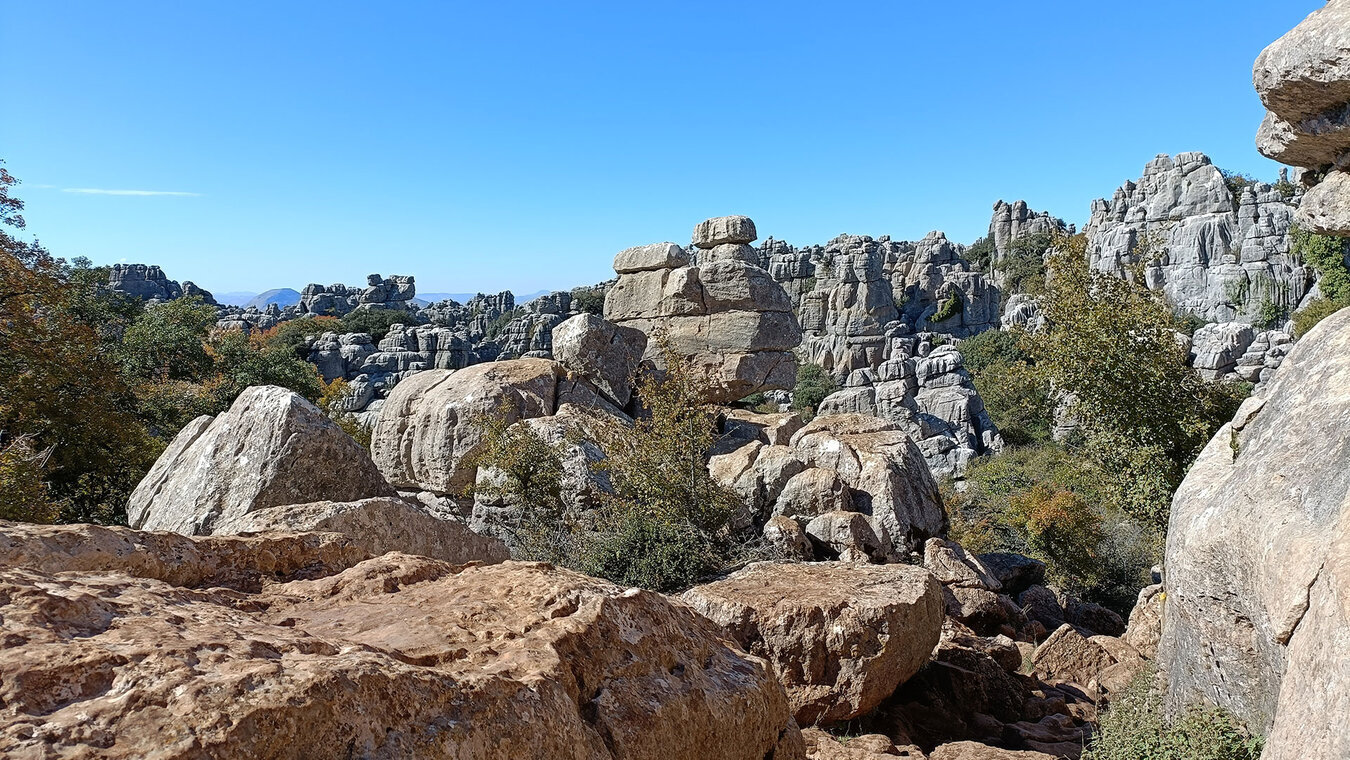
The answer lies in the geography. Antequera itself, on the plain at around 575 metres, is among the hottest regions of Andalusia in summer — a continentally influenced lowland where the heat builds up and lingers for days. Anyone hiking there takes a health risk. The El Torcal nature park only begins around 700 metres higher up, on the plateau between 1,100 and 1,400 metres. That makes the difference.
Altitude as a climate factor
For every 100 metres of altitude, air temperature in dry air drops by about 1°C. From the town of Antequera to the highest point of El Torcal — the Camorro de las Siete Mesas at around 1,336 metres — that’s a difference of around 7°C. So when the town shows 40°C, the plateau realistically has 32 to 33°C. That’s still warm, but no longer an extreme value.
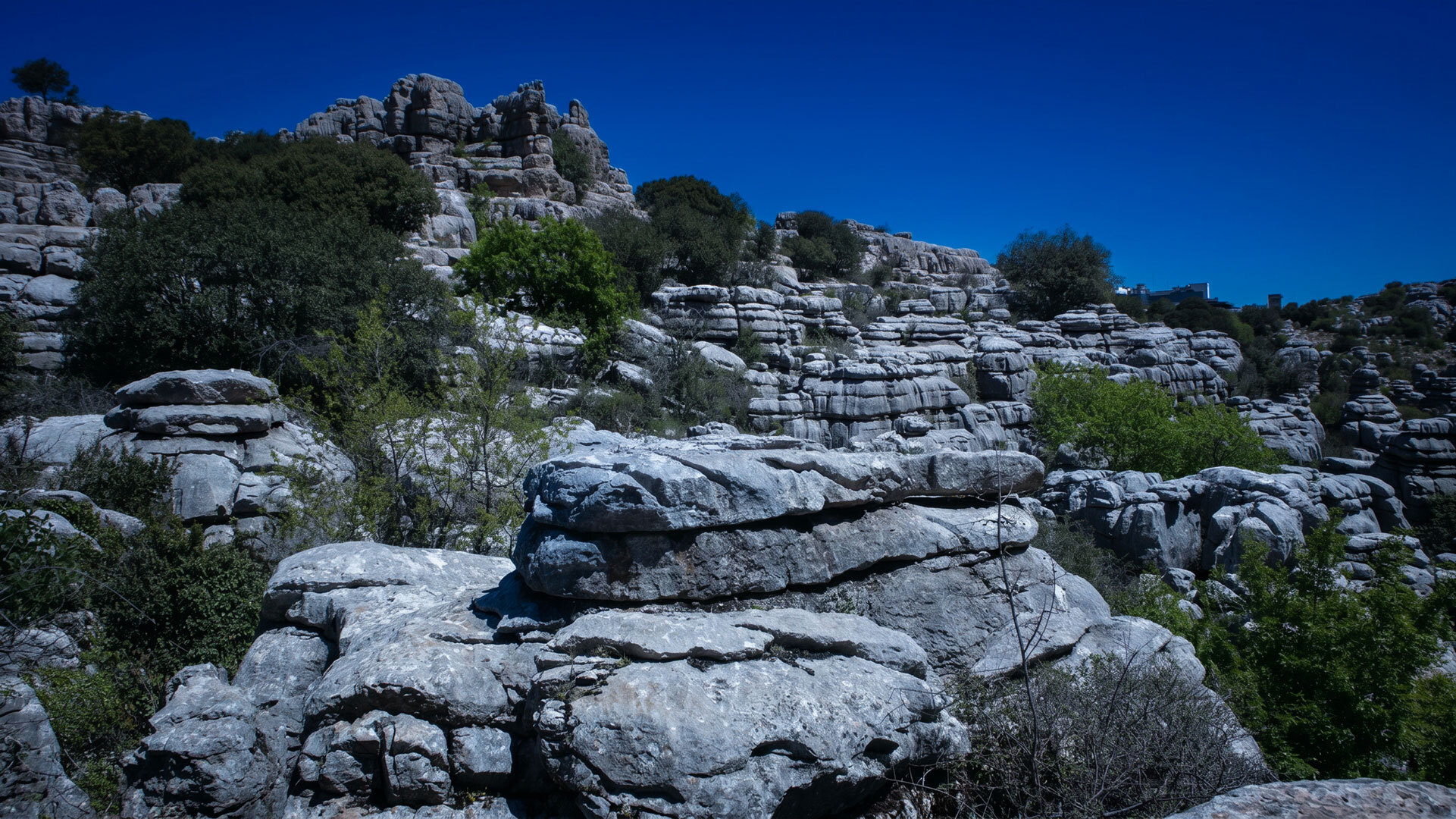
On top of that, a light breeze often blows across the plateau, which reduces how hot it feels. Within the rock labyrinth itself, between tall limestone towers, there are also shaded passages that are worth their weight in gold at the height of summer. Some sections of path feel like a natural air conditioner — the Tabakgasse (Callejón del Tabaco), for example, which remains bearable even at 2pm.
Cloud factor: more rainfall at the peaks
A second effect intensifies the cooling. El Torcal receives more rainfall than the surrounding region because clouds coming from the south get caught on the peaks. Even at the height of summer, cumulus clouds occasionally form over the massif, bringing brief shade and sometimes afternoon thunderstorms. The consequence: summer storms in El Torcal are a real thing. Anyone who notices clouds building up in the afternoon should plan the descent before the thunder starts.
When to start: the right hours in high summer
The most important rule for a summer hike in El Torcal isn’t the water bottle, the hat or the route — it’s the time of day. Setting off at 11am turns any hike into an endurance test. Setting off at 8am or at 6pm reveals a different park.
Before 9am and after 6pm
The Torcal Alto visitor centre opens at 10am and closes at 7pm in summer (April–October). The nature park itself, however, is accessible all day, even outside opening hours. Anyone wanting to avoid the heat should drive up early — ideally in time to start walking at 8am. Up to 11am, the short Ruta Verde (1.8 km) is easily manageable; the Ruta Amarilla (3.1 km) is too, if you arrive early.
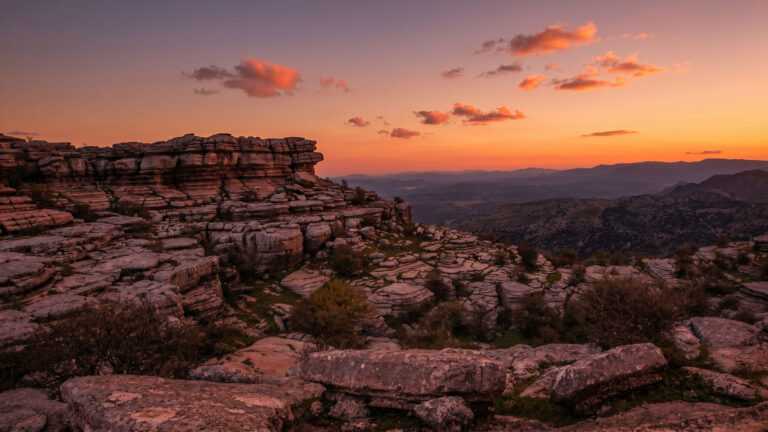
Anyone who doesn’t want to start the day so early can flip the logic: set off after 5pm, hike as the sun goes down, photograph the rock formations in the warm evening light, and head back to the car once dusk begins. The hour before sunset is climatically the most pleasant of the day and visually the most beautiful — the slanting rays sculpt the karst formations, the sky changes colour, and the rock labyrinth lies still.
Sunset and moonlight tours
Genau deshalb bietet das Besucherzentrum im Sommer zwei spezielle Tourformate an. Die „Ammoniten-Route bei Sonnenuntergang” geht in den letzten Stunden des Tages durch den Park, mit Guide und Fokus auf die geologischen Highlights. Die „Vollmond-Tour” findet an Vollmondabenden statt und nutzt das Mondlicht für eine Wanderung nach Einbruch der Dunkelheit. Beide sind buchbar über das Besucherzentrum und im Hochsommer die elegantere Variante zum Tageswandern.
How much water, what equipment
In summer, El Torcal calls for planning rather than improvising. The must-have list is short but non-negotiable.
Water, sun protection, a light jacket
Water is essential. The official minimum recommendation is 1.5 litres per person in summer; on 40°C days on the plateau, it’s more like 2 litres. Anyone doing the Grand Circuit (8.6 km) — which at these temperatures is only for early risers anyway — should bring 3 litres. There are no springs along the way.
Sun protection comes second. The trails are largely without shade — the karst offers local shaded passages between the rock towers, but the open sections of the plateau lie in full sun. A wide-brimmed hat, sunglasses, sunscreen with SPF 30 or higher, and a lightweight long-sleeved shirt make up the standard kit.
A light jacket still belongs in the rucksack. Even at the height of summer, it noticeably cools down after sunset, especially at the highest points and when it’s windy. Anyone doing a sunset tour will notice this at the latest on the way back.
What to leave at home
Just as important is what doesn’t go in the rucksack. Heavy hiking gear — trekking poles for multi-day tours, thick hardshell jackets, heavy climbing equipment — is unnecessary for the short karst routes. Skip: glass bottles, cotton shirts (they don’t cool you down), black clothing (it heats up), sandals or flip-flops (dangerous on sharp-edged karst). Sturdy footwear is essential — light hiking shoes or trail runners are enough.
Which routes work at 40°C
Not every route in El Torcal is equally good in summer. The rule of thumb: the shorter, the better. More shade helps; longer open plateau sections are problematic.
Ruta Verde – the short karst option
At 1.8 kilometres long and around 45 minutes of walking time, the Green Route is the ideal summer option. It starts right at the visitor centre, runs through the most spectacular part of the rock labyrinth, and comes back out at the same point. Anyone starting early — say, 8am — is finished by 9am, with the park almost entirely to themselves. It also works well as an afternoon tour from 5:30pm onwards.
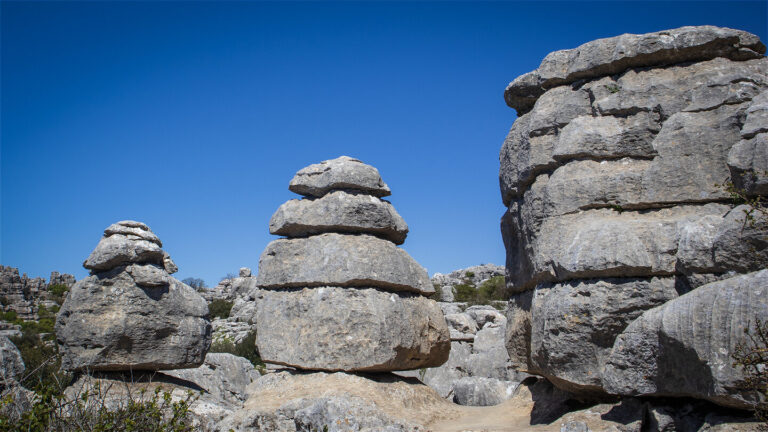
Along this route you pass the iconic rock sculptures: La Esfinge, the Eagle, the Indian, and the little hat El Sombrerillo. Enough karst for a full impression, in a distance that anyone can manage with just two litres of water.
What makes the longer circuits unappealing in the heat
The Grand Circuit (8.6 km, 253 metres of ascent, 3:30 to 4:30 hours) is, in summer, only for very early starters or experienced heat-hikers. The route is partly pathless and alpine in character, most of it lies in full sun, and turning back midway is not straightforward. Anyone doing it anyway should start by 7am at the latest in high summer and be back by midday.
The Ruta Amarilla (3.1 km, 1:30 to 2 hours) falls in between. Manageable early in the day, borderline in the afternoon heat. Anyone starting at 8am is finished by 10am — that works.
Heat safety in the rock labyrinth
Time of day
Start before 9am or after 5pm. Between midday and 4pm, the heat on the plateau is at its highest — no longer hikes during this time. It’s better to take a midday break in the shaded visitor centre or in the car.
Water
At least 1.5 litres per person, more like 2 litres at 40°C, and 3 litres for the Grand Circuit. There are no water points along the way. Running out of water is the most common emergency in summer.
Summer storms
Bei aufkommenden Quellwolken am Nachmittag den Abstieg einplanen. Höher gelegene Felsplattformen verlassen, sobald Donnern hörbar wird. Schutz im Auto oder Besucherzentrum suchen — keine Felsdurchgänge oder Höhlen als „Unterstand” nutzen.
Stay on waymarked paths.
Heat and exhaustion increase the risk of leaving the path. The karst area has deep fissures and shafts — the Sima Rasca, for example, drops 230 metres vertically. Don’t take shortcuts, don’t go cross-country.
Early warning signs of heat exhaustion
Headaches, dizziness, nausea, sudden lack of sweating. Anyone who notices these should immediately take a break in the shade, drink water, have some salt (crackers, nuts), and plan the way back. Better to turn back too early than too late.
Conclusion – summer in El Torcal
El Torcal is not off-limits terrain in high summer — it’s simply a park that demands different rules than in April. 5 to 10°C of altitude cooling compared with the coast, shaded rock passages like the Tabakgasse, and a day plan with an early start or an evening round turn 40°C days into workable hiking conditions. The article on the best time to visit describes when the park is most pleasant. Anyone looking for opening hours and admission will find them in the article on visitor centre admission and opening hours. The short summer route can be found in the article on the Ruta Verde, and guided sunset and full moon tours in the article on guided tours. And anyone wanting to know what it’s like at the other climate extreme can read on in the article on snow in El Torcal.
Frequently asked questions
How hot does it really get in El Torcal in summer?
When should you go hiking in summer?
How much water do I need to bring?
Are all routes open in summer?
Are sunset or moonlight tours worth it?
This article is based on the on-the-ground knowledge of the Gequo editorial team — publishers of several seasonal hiking guides and operators of Sunhikes.com. As of: May 2026