Paraje Natural El Torcal de Antequera: Andalusia’s geological masterpiece
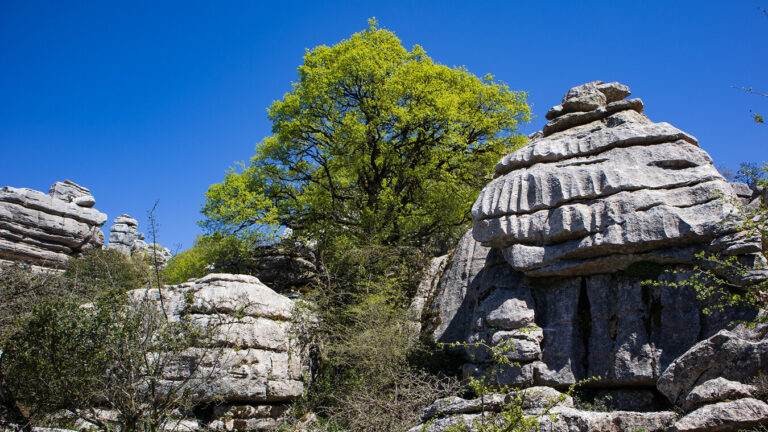
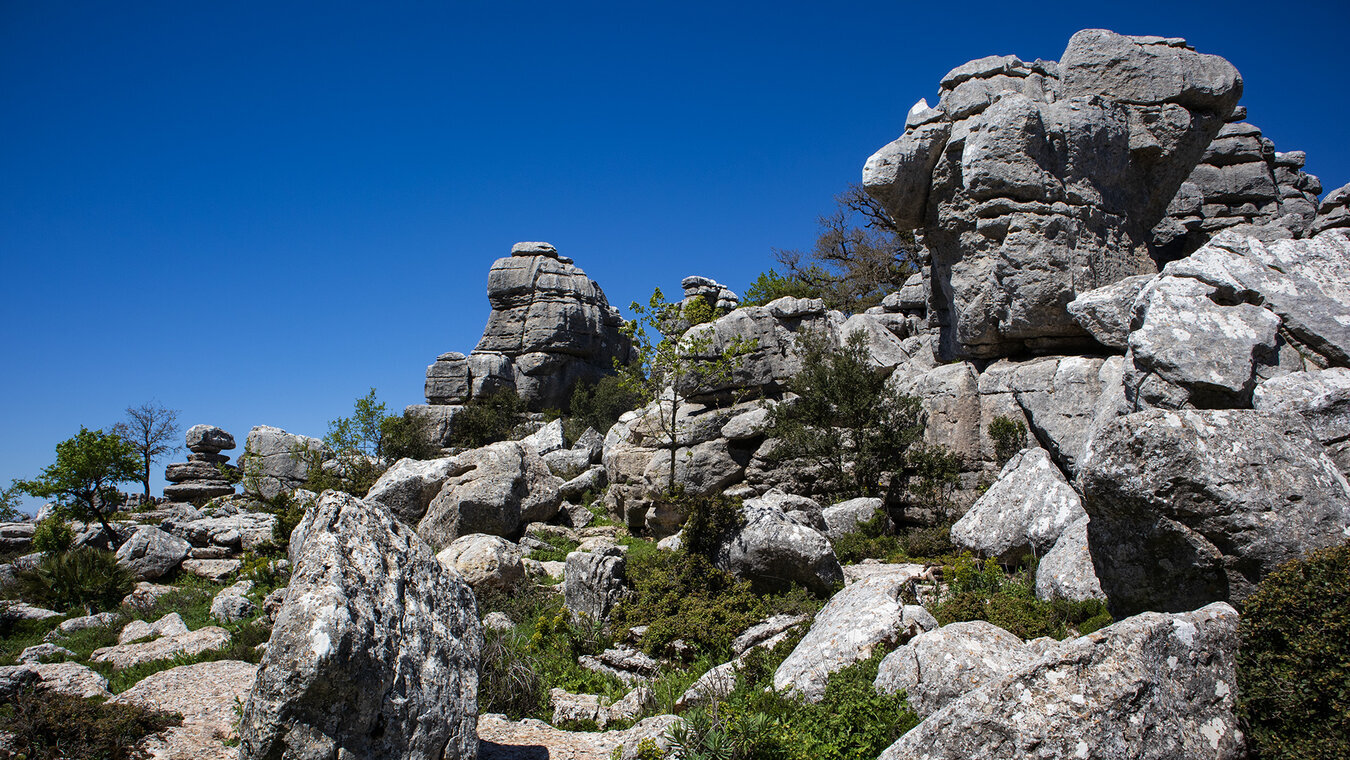
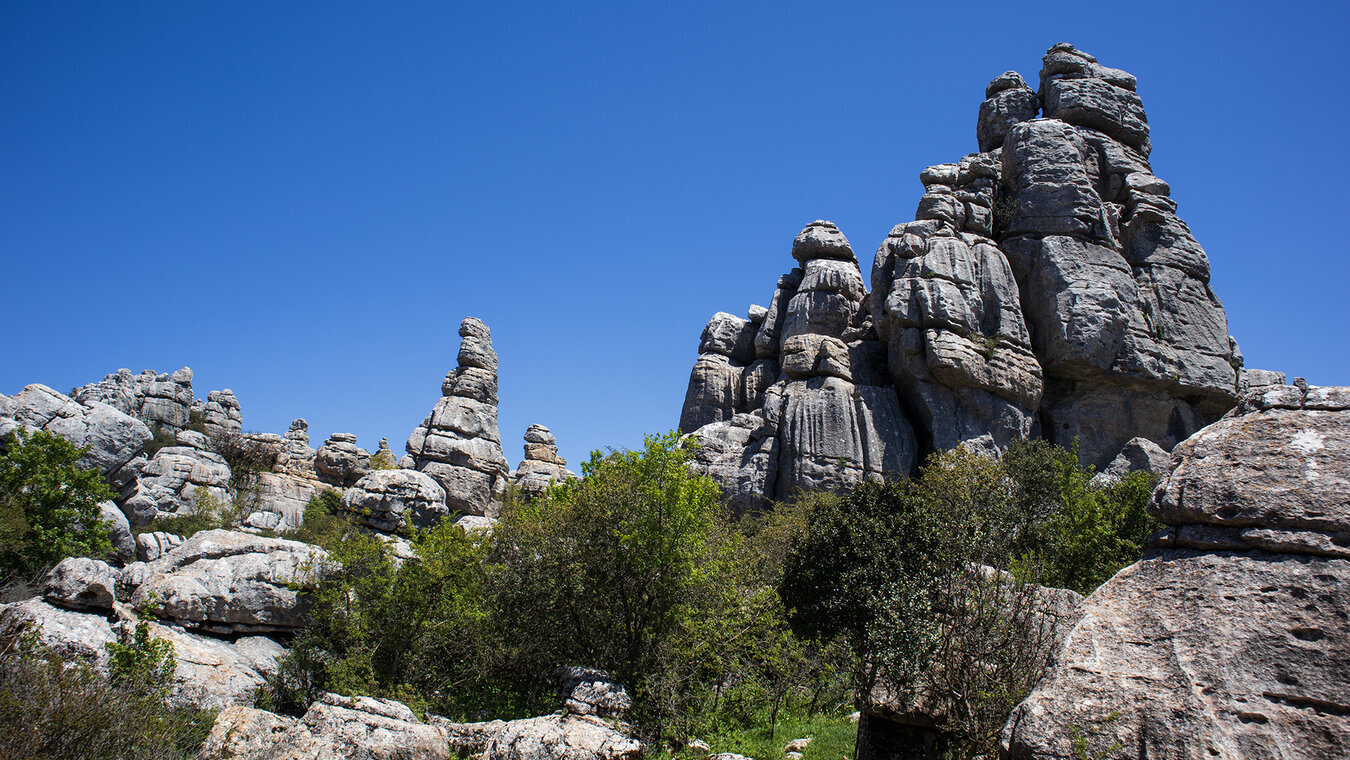
There are landscapes that can be described. And then there is the Paraje Natural El Torcal de Antequera. Limestone blocks rising from the ground like stacked slabs, rock sculptures with names like El Tornillo (the screw), Las Meninas (the giant heads) or La Casa de Gaudí – a world that began 150 to 200 million years ago on the bed of a tropical sea and today lies over 1,000 metres above sea level. El Torcal is no ordinary landscape. It is a geological archive of the Earth.
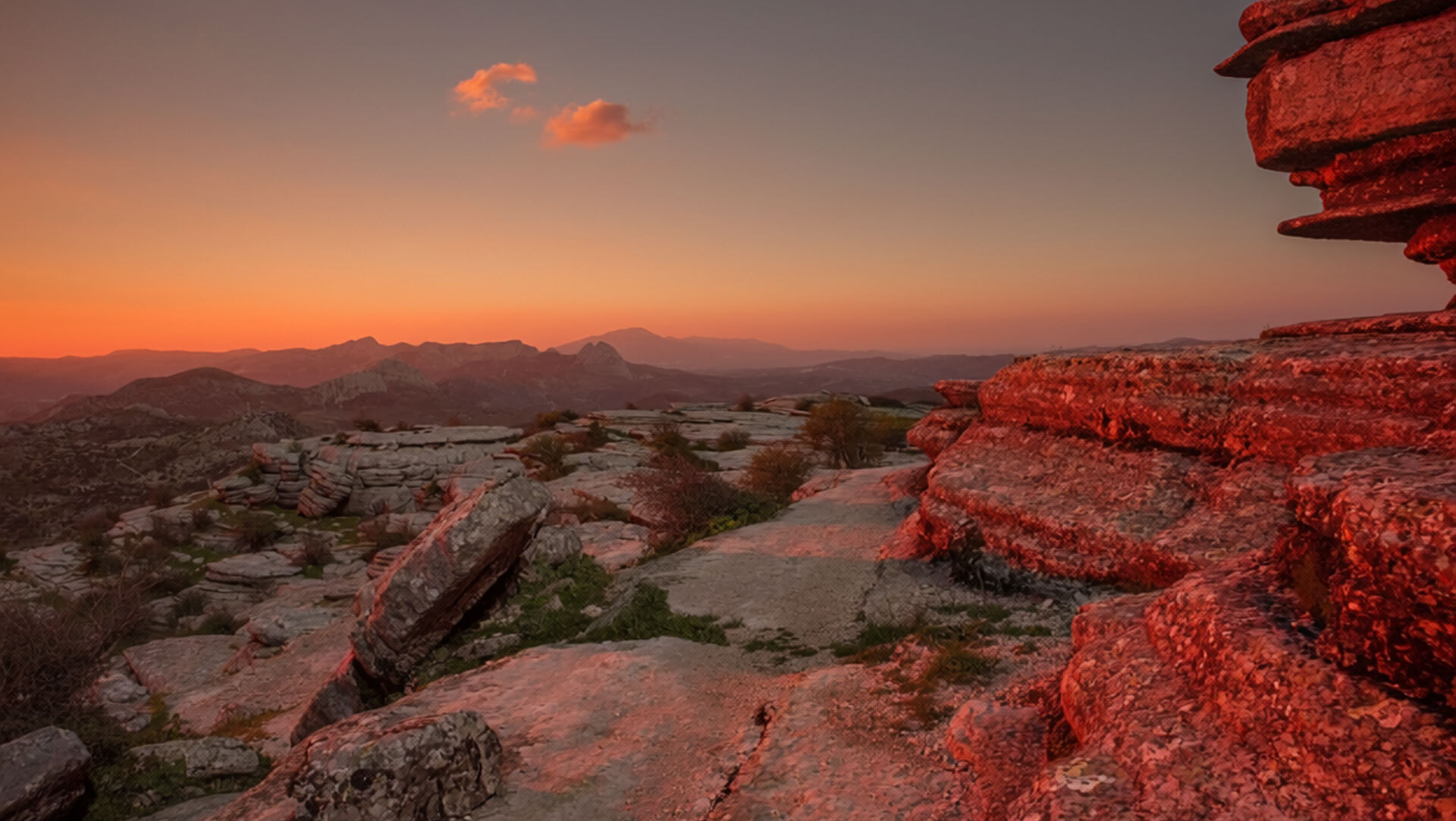
Since 15 July 2016, El Torcal has been part of the UNESCO World Heritage Site Sitio de los Dólmenes de Antequera – together with the dolmens of Menga, Viera and El Romeral, as well as the Peña de los Enamorados. In doing so, UNESCO recognised not only the prehistoric structures but also the exceptional karst landscape that has provided orientation and habitat for the people of this region for thousands of years.
1,171 hectares of core zone, over 600 plant species, 116 vertebrate species, griffon vultures, Iberian ibex, 30 species of wild orchid – and all of it freely accessible, 14 kilometres south of Antequera. It is hard to understand why even more people don’t come here.
Key facts: Paraje Natural El Torcal at a glance
| Full name | Paraje Natural Torcal de Antequera |
|---|---|
| Area | 1,171 hectares core zone · approx. 17 km² including buffer zone |
| Altitude | 1,100 to 1,400 metres above sea level |
| Highest point | Camorro del Mástil, 1,336–1,348 metres above sea level |
| GPS | 36.952618, -4.545056 |
| Protection status | 1929 National Interest status · 1978 Nature Reserve · 1989 Paraje Natural |
| UNESCO World Heritage | since 15 July 2016 (as part of the Sitio de los Dólmenes de Antequera) |
| Special Protection Area for Birds (ZEPA) | since 2002 |
| Visitors per year | over 100,000 |
| Admission | Free (nature park and visitor centre) |
| Visitor centre | Winter (Nov–Mar) 10am–5pm · Summer (Apr–Oct) 10am–7pm |
| Getting there from Antequera | approx. 14–15 kilometres / 20 minutes via the A-7075 |
| Getting there from Málaga | approx. 50–55 kilometres / 45–60 minutes |
| Geology | Karst landscape of Jurassic limestone, approximately 150–200 million years old |
| Best time to visit | March–May · September–November |
Geology: how El Torcal came into being
150 million years in four stages
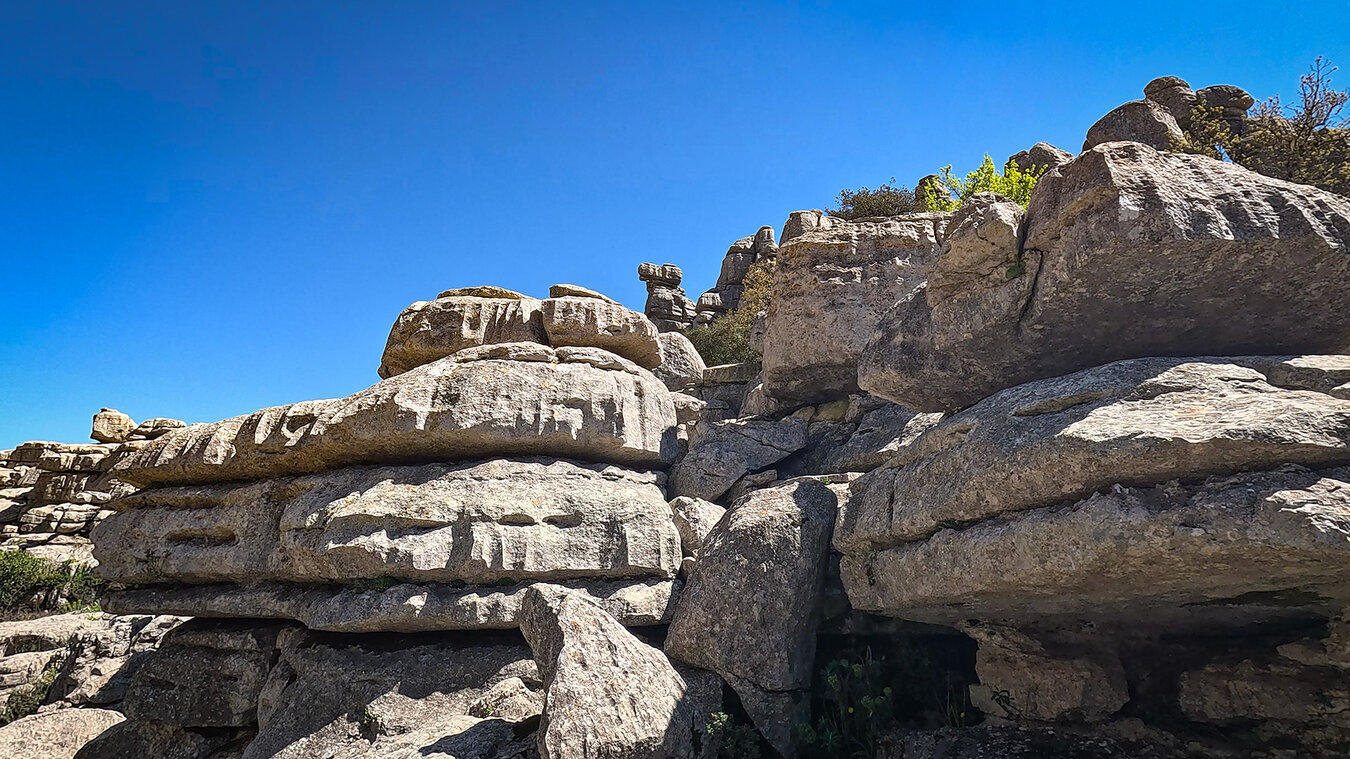
The Tethys Sea covered the entire region during the Jurassic period. Over millions of years, shells, coral remains and marine sediments settled on its bed to form massive layers of limestone – together with the spiral shells of ammonites and the straight shells of belemnites, which can still be found in the rocks today.
Alpine mountain-building processes lifted these sediment packages by over 1,000 metres. What followed was the actual formation of today’s landscape: rainwater, slightly acidified by dissolved CO₂, dissolved the limestone along cracks and fissures. The softer layers disappeared, while the harder ones remained standing as towers, slabs and sculptures – the principle of karst erosion, observable in El Torcal in its purest form over millions of years.
The massif is divided into four geomorphological areas: Sierra Pelada, Torcal Alto (the actual rock labyrinth with the visitor centre), Torcal Bajo, and Tajos and Vilaneras. The Torcal’s groundwater reservoir holds around 15.5 billion litres of water – enough to supply Antequera and Villanueva de la Concepción for seven years. The most important spring is the Manantial de la Villa in the north of the park.
Geology: how El Torcal came into being
From symbolic tree to endemic orchid
Despite the barren limestone soil, El Torcal is home to over 600 documented plant species. In spring, the open areas turn into a sea of colour: wild peonies bloom in the gorges, hedgehog broom (Erinacea anthyllis) glows blue-violet among the rocks, and Antequera catmint (Nepeta amethystina) scents the grassy hollows.
The botanical highlight is the Montpellier maple (Acer monspessulanum) – the region’s symbolic tree, listed in the Red Book of Andalusia’s threatened wild plants. The best-known specimen grows along the Ruta Verde: the „Arce de la Ruta Verde”, a protected tree.
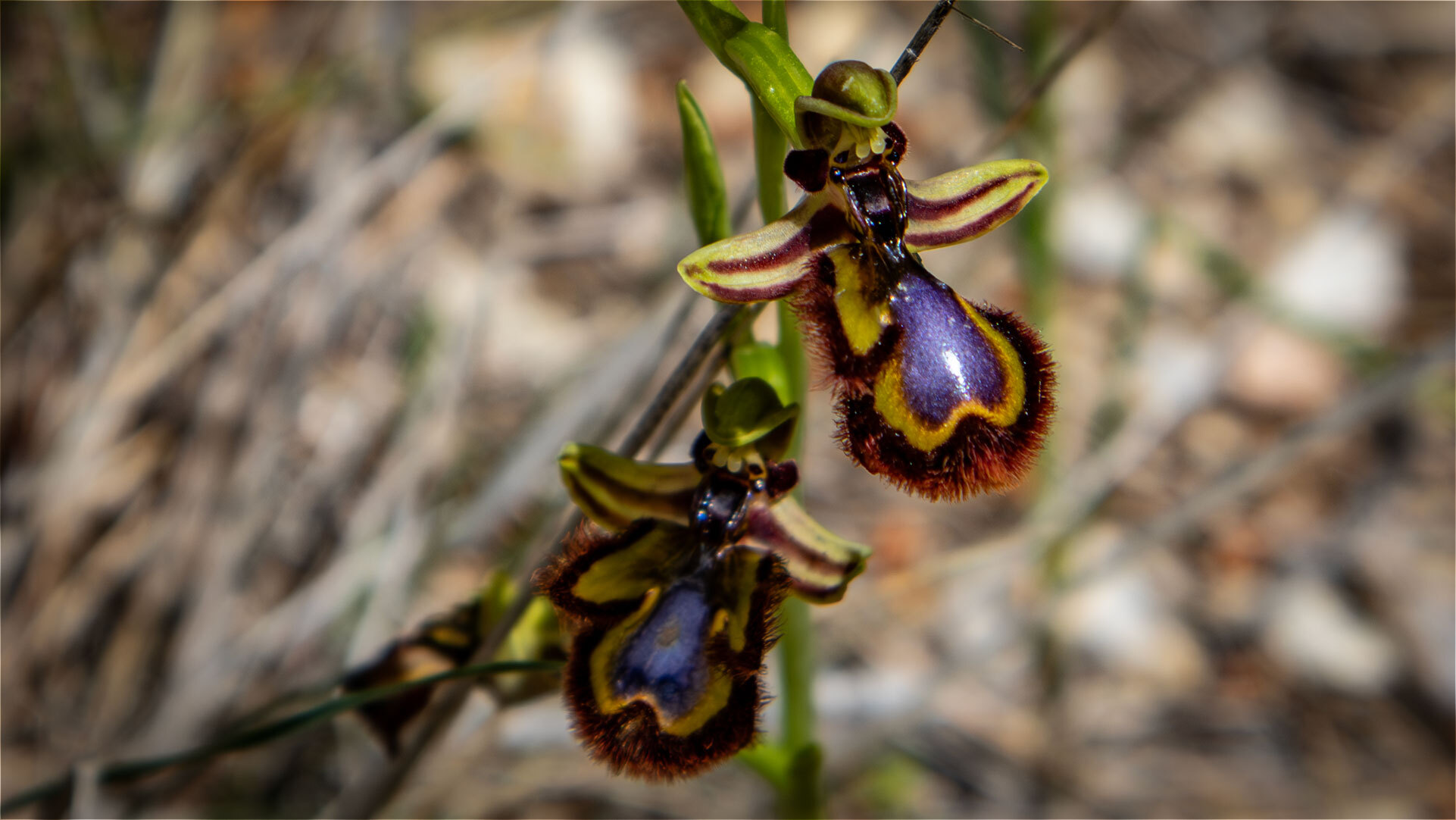
The diversity of orchids is particularly remarkable: over 30 species of wild orchid have been identified in El Torcal, six of which occur only here. The flowering period from March to June makes spring the best season for botanists and nature photographers.
Fauna: 116 vertebrate species in the UNESCO-protected area
Griffon vultures, ibex and 82 bird species
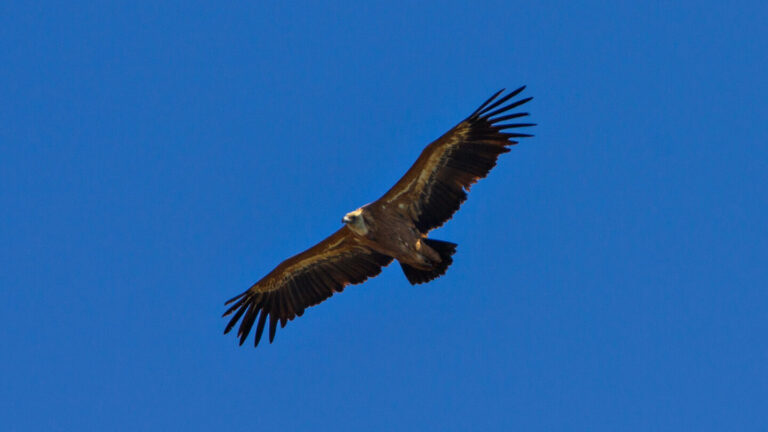
El Torcal has been designated a Special Protection Area for Birds (ZEPA) since 2002 – and for good reason. 82 bird species have been recorded, including some of the most spectacular birds of prey in southern Spain. The griffon vulture (Gyps fulvus) is the most conspicuous species: several individuals often circle simultaneously above the karst massif, searching for thermals over the warm rock surfaces. Golden eagles and Bonelli’s eagles nest in the rock faces, while the eagle owl nests in caves and at the edges of gorges.
Drone flying is prohibited in El Torcal – it disturbs the nesting birds of prey, particularly golden eagles and peregrine falcons in the rock gorges. Climbing is not permitted for the same reason.
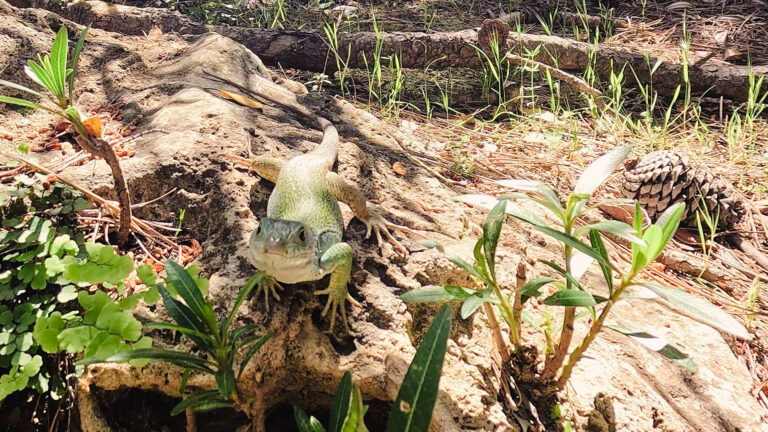
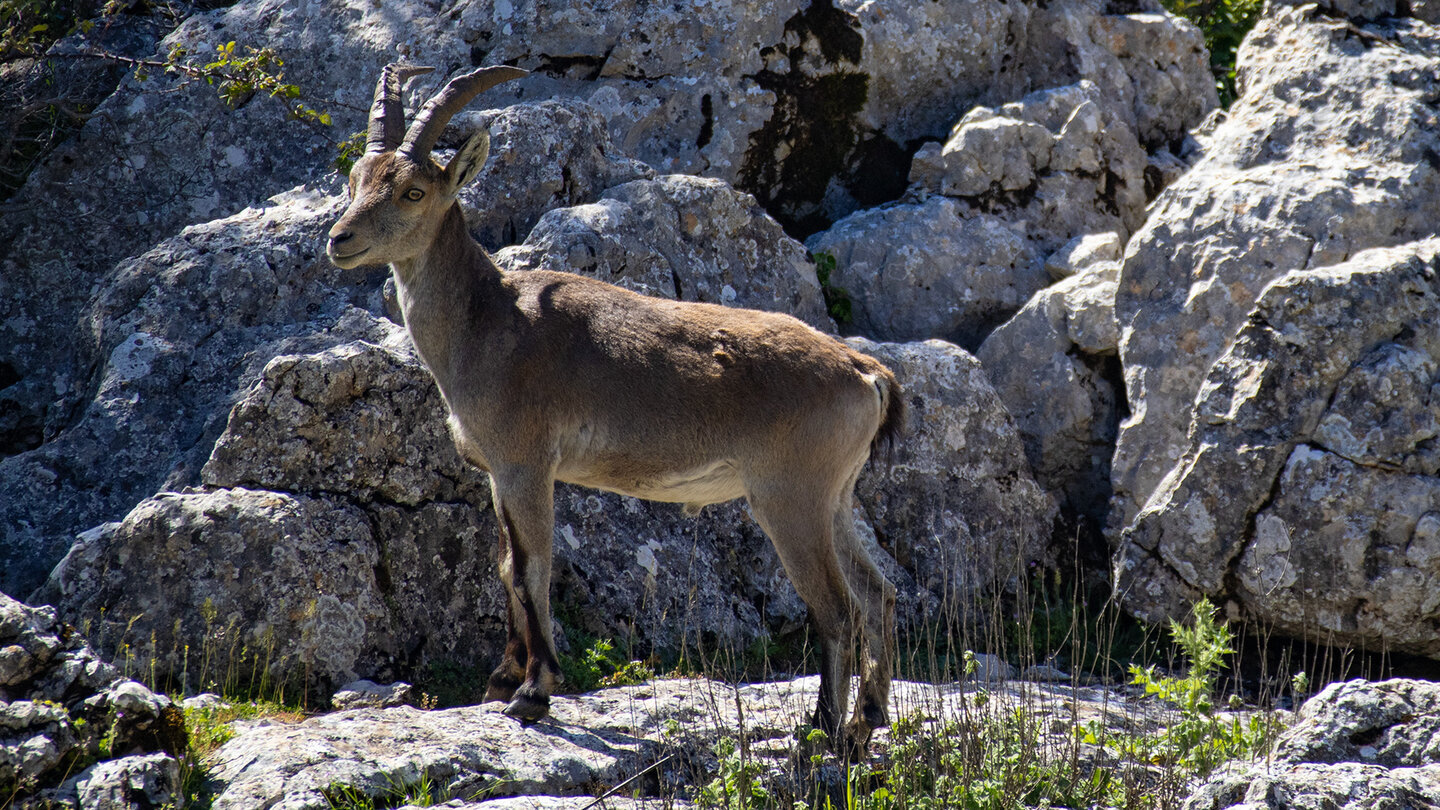
The park’s mammal landmark is the Iberian ibex (Capra pyrenaica). The population is actively protected and stable; those who walk quietly through the rocks will occasionally spot one on paths that people would rarely tread. Also present are foxes, badgers, weasels and bats – including the cave myotis and greater horseshoe bat in the park’s cave colonies.
UNESCO World Heritage & Protection status
Since 15 July 2016, El Torcal has been part of the UNESCO World Heritage Site Sitio de los Dólmenes de Antequera – together with the three dolmens (Menga, Viera, Romeral) and the Peña de los Enamorados. El Torcal is thus part of one of the few UNESCO World Heritage Sites that combines both a cultural monument (prehistoric structures) and an exceptional natural landscape. Drone flying is prohibited throughout the protected area. Climbing is not permitted.
Walking trails, visitor centre and practical tips
Practical tips – Paraje Natural El Torcal
Admission: Free – the nature park and visitor centre are accessible free of charge.
Walking trails (free): Ruta Verde (1.8 km · easy · 45–75 min) · Ruta Amarilla (3.1 km · moderate · 1:30–2:15 h) · Grand Circuit (8.6 km · moderate · 3:30–4:30 h)
Geführte Touren (kostenpflichtig): TorcalExpress (8,50 €) · Ammoniten-Route (13,50 €) · Antigua Ruta Roja (17,50 €) · Buchung: reservas@torcaldeantequera.com · +34 952 243 324 (Stand Mai 2026)
Visitor centre: Winter (Nov–Mar) 10am–5pm · Summer (Apr–Oct) 10am–7pm · closed 25 Dec, 1 and 6 Jan
Getting there: From Antequera via the A-343 → A-7075 towards Villanueva de la Concepción, approx. 14–15 kilometres / 20 minutes. Free car park at the visitor centre.
Best time to visit: March–May (orchid bloom, spring) · September–November (autumn, ibex active). In summer, the plateau is very hot with little shade.
Drone flying prohibited · climbing not permitted
Conclusion: El Torcal is more than just a beautiful landscape
The Paraje Natural El Torcal de Antequera is a place that, once seen, is never forgotten. The rock formations, the 150 million years of Earth’s history in stone, the 600 plant species on the most barren soil, the griffon vultures above the plateau – all of this belongs to a nature reserve that has been counted among the UNESCO World Heritage Sites since 2016.
The easiest way in is via the Ruta Verde (1.8 km). Those who want to see more can take the Ruta Amarilla (3.1 km) or the Grand Circuit (8.6 km). All walking trails at a glance in the Hiking hub.
Frequently asked questions about Paraje Natural El Torcal de Antequera
Is El Torcal really a UNESCO World Heritage Site?
Does visiting El Torcal cost anything?
When is the best time to visit El Torcal?
Which animals can you see in El Torcal?
This article is based on the on-the-ground knowledge of the Gequo editorial team – publisher of several Reisezeit hiking guides and operator of Sunhikes.com. Correct as of: May 2026