Wild Orchids in El Torcal: Karst Flora Between Orchises and Bee Orchids
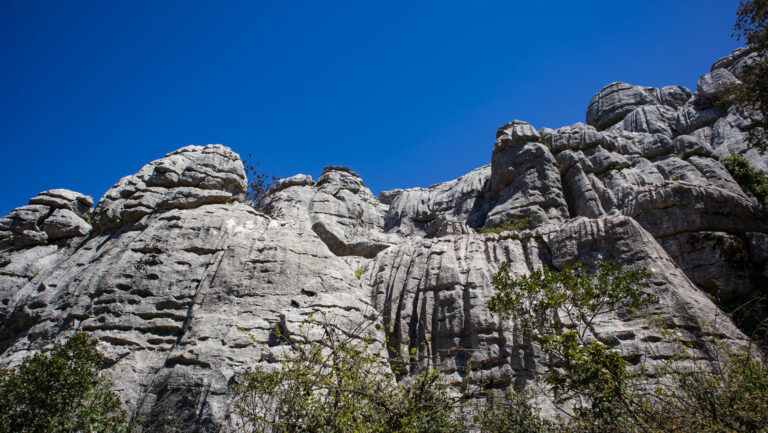
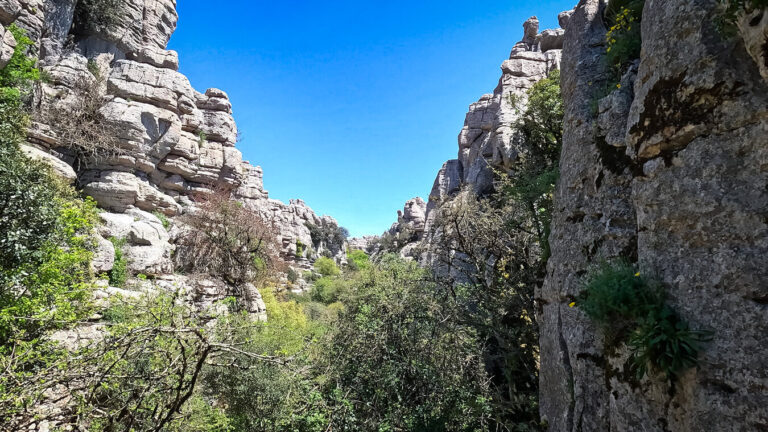
Anyone walking the Ruta Verde in spring encounters an El Torcal that has little in common with the dramatic rock formations seen on postcards. Between the grey limestone blocks, a carpet of meadows, cushion plants and dashes of colour draws the eye down to the ground. This is where wild orchids grow – fragile, richly varied in form, often no taller than a hand’s width, and easy to overlook.
Over 30 species of wild orchid have been recorded in El Torcal. They flower between March and May, depending on how wet the winter has been. After a rainy March, the slopes turn into a botanical paradise; in dry winters, some species stay hidden underground. Anyone who knows the park only as a landscape of bare rock gets to know it afresh in spring – as one of Andalusia’s most remarkable orchid refuges.
Set within a rich karst flora
What surrounds the orchids
The 30 orchid species in El Torcal are all strictly protected – they are widespread across the Mediterranean and the Iberian Peninsula, and find particularly good conditions in the Torcal. Their habitat is part of a karst flora that, with over 600 recorded plant species, ranks among the most species-rich in Andalusia.
Among the park’s botanical specialities are plants found exclusively in this area or in the surrounding Andalusian mountains. These include the Antequera Toadflax (Linaria anticaria) and the saxifrage Saxifraga biternata – less conspicuous plants that are often overlooked in the shadow of the spectacular orchid flora, but which rank scientifically among the region’s most valuable endemics.
Anyone who identifies a Mirror Orchid or a Naked Man Orchid in the Torcal may well encounter the same species elsewhere in Andalusia or in the Balearic Islands. This makes the park an outstanding training ground for identifying Mediterranean orchids – with a density and diversity rarely found in this form.
The key species – an identification overview
Seven orchids you are highly likely to find in El Torcal
Anyone walking through in spring with their eyes open will come across a manageable number of typical species. The following list covers the orchids that most define this stony labyrinth.
| Long Orchis | Orchis langei – the most common species in the park, with a violet flower crown, hardy on karst meadows |
|---|---|
| Champagneux's Orchis | Anacamptis champagneuxii – deep violet flowers, often in dense clusters on calcareous meadows |
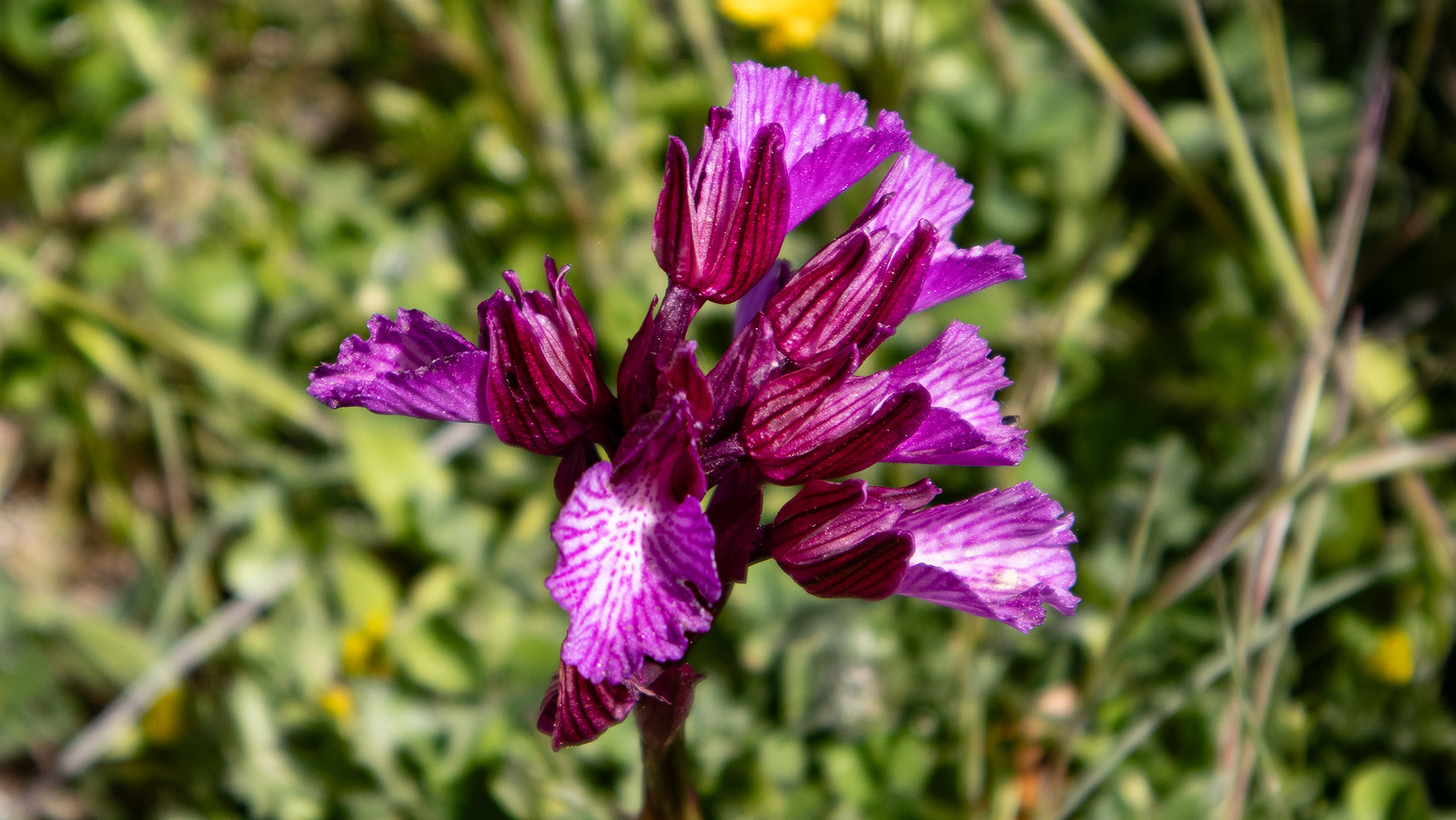
| Italian Orchis | Orchis italica – the „Naked Man Orchid“, whose flowers resemble tiny pink figures of little men |
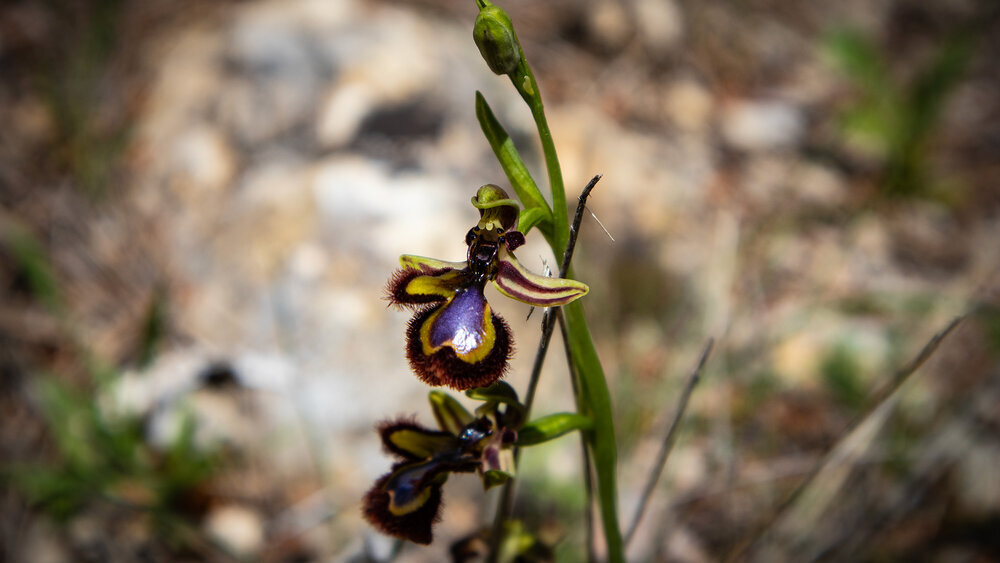
| Mirror Orchid | Ophrys speculum – its lip gleams blue, luring insects into pseudocopulation |
| Bumblebee/Woodcock Orchid | Ophrys scolopax – perfectly mimics the appearance and scent of female insects |
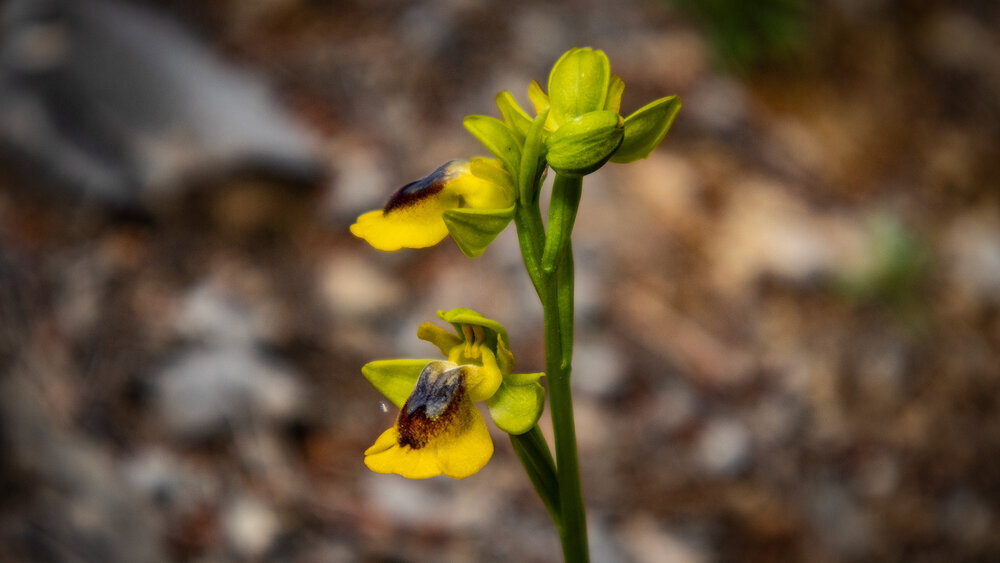
| Sombre Bee-orchid | Ophrys fusca – the earliest to flower, often found as early as late winter |
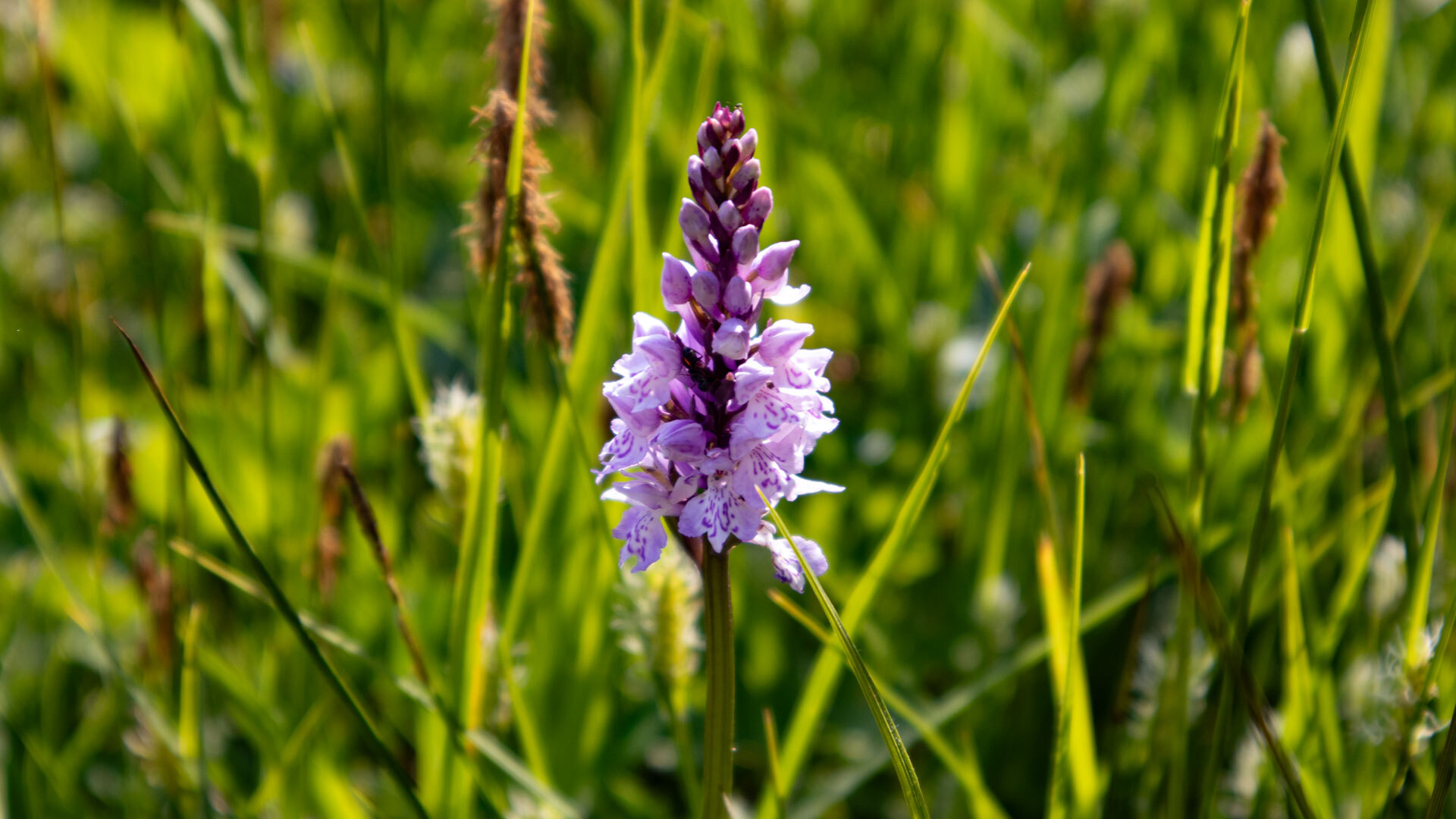
| Pyramidal Orchid | Anacamptis pyramidalis – intensely pink to purple, pyramid-shaped flower spikes |
Spectacular Tricks: Bee Orchids and Their Insect Impersonations
Why a plant looks like a bumblebee or a shard of mirror
Among the seven typical species, one group stands out in particular: the bee orchids (genus Ophrys). They employ one of the most sophisticated pollination strategies in the plant kingdom – and anyone who examines them up close in El Torcal understands why.
The Mirror Orchid (Ophrys speculum) gets its name from a central lip that gleams intensely blue – like a framed piece of mirror. Male insects mistake this lip for a receptive female, land on it and attempt to mate. Pollen sticks to the insect’s body, the plant is pollinated, and the insect flies on to the next Mirror Orchid. A case of pseudocopulation – a failed attempt from the insect’s point of view, but the perfect dispersal strategy from the plant’s.
The Bumblebee Orchid (Ophrys scolopax, sometimes also called the Woodcock Orchid) goes a step further: it not only mimics the appearance of female insects but also produces scents that are deceptively similar to their sex pheromones. Males are attracted from metres away, even though no real nectar reward awaits them.
This trick is highly specific. Each bee orchid species is tuned to a particular insect species, often a single species of wild bee or wasp. If the insect disappears, the plant can no longer be pollinated either – one of the reasons why the park’s protected status is so important. What looks like a botanical curiosity is in fact a fragile plant–pollinator ecosystem.
What Flowers When – the Seasonal Calendar
From late winter into early summer
The orchid season in El Torcal is not a fixed period but a succession of species, each reaching its peak in turn. Anyone who visits the park several times during spring will see different flowers each time – that is part of the appeal.
Late February to mid-March: The Sombre Bee-orchid (Ophrys fusca) leads the way. It often flowers while the karst is still frosty at night. Anyone walking the Ruta Verde in late February who looks carefully will find it as the first orchid of the year.
March to April: The main season for the orchises begins. The Long Orchis, Champagneux’s Orchis and Italian Orchis flower largely at the same time, and in wet years cover some meadow stretches with colour.
April to May: The Mirror Orchid and Bumblebee Orchid have their main season. They are smaller and less conspicuous than the orchises, but that is exactly what turns spotting them into a game. Those who walk slowly and keep glancing at the ground will be rewarded.
May: The season closes with the Pyramidal Orchid (Anacamptis pyramidalis) and its strikingly pink-to-purple flower pyramids – often the last orchids before summer, when most of the karst flora withers and the park retreats into dormancy.
The overall span depends heavily on the winter. A wet winter extends the season, bringing some species into flower as late as early June; a dry winter compresses everything into just a few weeks and can cause some species to fail to appear at all.
Where to find them – and where not to: habitats, routes and search success
Orchids do not grow everywhere in El Torcal. They are concentrated in three of the park’s four habitats: scrubland with sparse vegetation, Encerraderos meadows in the hollows between the rocks, and the transition zones at the edge of the rocky landscape. They are rarely found on bare karst pavement or in dense holm-oak groves.
The Ruta Verde, the short green karst circuit, is the most accessible orchid route. It passes several times through exactly the meadow hollows where orchises and Pyramidal Orchids grow. Those who walk slowly and take a longer break at the Mirador Las Ventanillas often see several species close together.
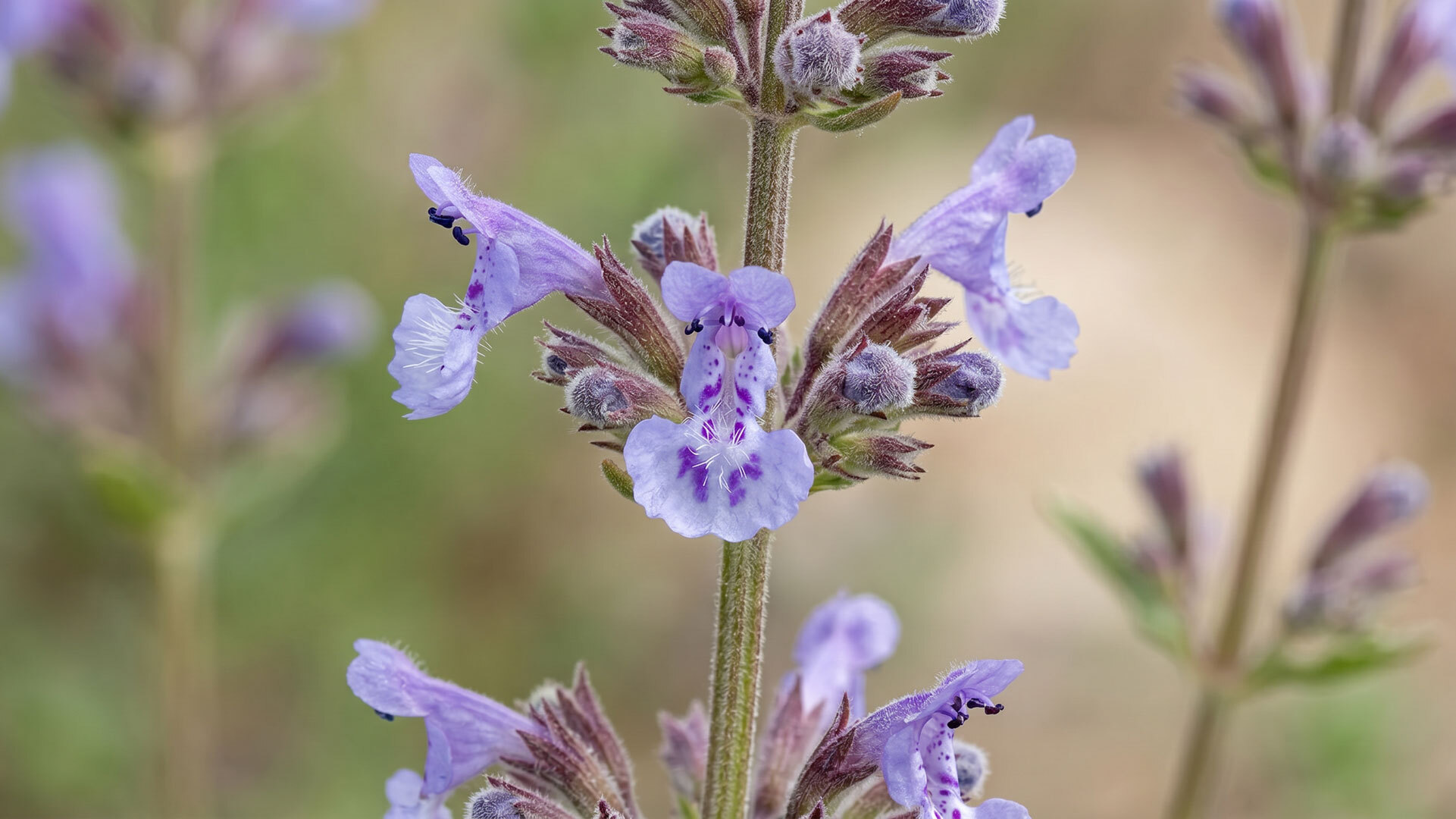
The Ruta Amarilla, through the rock labyrinth, combines the spectacular rock formations with meadow stretches where bee orchids are found. It has a lower density of orchids than the Ruta Verde, but offers a greater variety of accompanying flora – peonies, hedgehog broom, and, time and again, Antequera catmint (Nepeta amethystina).
Anyone walking the Grand Circuit – unwaymarked, pathless in places, and suitable only for experienced hikers with a GPS track – reaches more remote meadows where wildlife has more peace and quiet, and where rarer orchid species also occur more often. A word of caution, though: here you leave the waymarked paths, and this is doubly tricky during the flowering season, since you can easily tread on rare plants without realising it.
Rules of Conduct: Look, Photograph, Do Not Touch
Nature conservation in detail
All wild orchids in Andalusia are strictly protected. Picking, digging up or damaging them is prohibited and punishable by heavy fines. This applies to every species, whether „endemic“ or not – orchids are dependent on specific pollinators and precise sites, and a single dug-up specimen will not survive in a garden at home.
In El Torcal, additional rules apply under the Paraje Natural designation (since 1978) and the ZEPA bird protection area (since 2002): paths must not be left unless explicitly permitted; mountain biking and freeride activities do not take place; and drones are prohibited outright. The latter also applies to orchid photographers hoping for aerial shots – it simply is not possible.
Rules for orchid watchers
Looking: yes, as much as you like – even with a magnifying glass or macro lens
Picking or digging up: never, prohibited by law and subject to fines
Paths: stay on the waymarked routes, do not cut across country
Photos: use a macro lens or smartphone from a crouching position, no trampled paths
Locations: do not share publicly on social media (it attracts collectors)
Drones: prohibited throughout the entire park
Accompanying Flora: Peonies, Hedgehog Broom, Antequera Catmint
The plants that share the orchid stage
Anyone out and about in El Torcal during the orchid season will see not only orchises and bee orchids but also a rich accompanying flora. Wild peonies flower from April onwards in the gorges and along the paths, with large pink blooms visible even from a distance. Hedgehog broom (Erinacea anthyllis), a protected cushion plant with blue-violet flowers, shapes whole hillsides in spring. Antequera catmint (Nepeta amethystina) – one of the region’s true endemics – grows in the Encerraderos meadows.
Add to this juniper, rock roses, Montpellier maple, holm oak and Portuguese oak – a tapestry of over 600 plant species that contributes to the EU protected-area designation. The orchids are the stars, but they do not grow in isolation.
Conclusion: a spring treasure best sought quietly
The orchids of El Torcal are not objects to be collected – they are a spring phenomenon that can only be experienced by coming at the right time and walking slowly enough to see it.
Over 30 species between orchises and bee orchids, a main season from March to May, and a protection regime that takes their fragility seriously: this is the karst flora that, beyond its spectacular rock formations, makes El Torcal a nature park of the first order. Anyone who has been there in spring comes away different from someone who has only seen the rock formations.
Weiter zu Pfingstrosen, Igelginster & Antequera-Katzenminze, zum Montpellier-Ahorn als Symbolbaum, zum Paraje Natural Torcal de Antequera und zum Iberischen Steinbock, der durch dieselben Wiesen zieht. Back to the El Torcal overview
Frequently Asked Questions About the Wild Orchids in El Torcal
When is the best time for orchid walks in El Torcal?
Which plants are endemic to El Torcal?
Which orchid species is the most common in the park?
Are you allowed to dig up orchids for your own garden?
What exactly is a bee orchid – and why does it look like an insect?
This article is based on the on-the-ground knowledge of the Gequo editorial team – publishers of several Reisezeit hiking guides and operators of Sunhikes.com. Last updated: May 2026