Ammonites & belemnites in El Torcal: what 150-million-year-old fossils tell us about the Tethys Sea
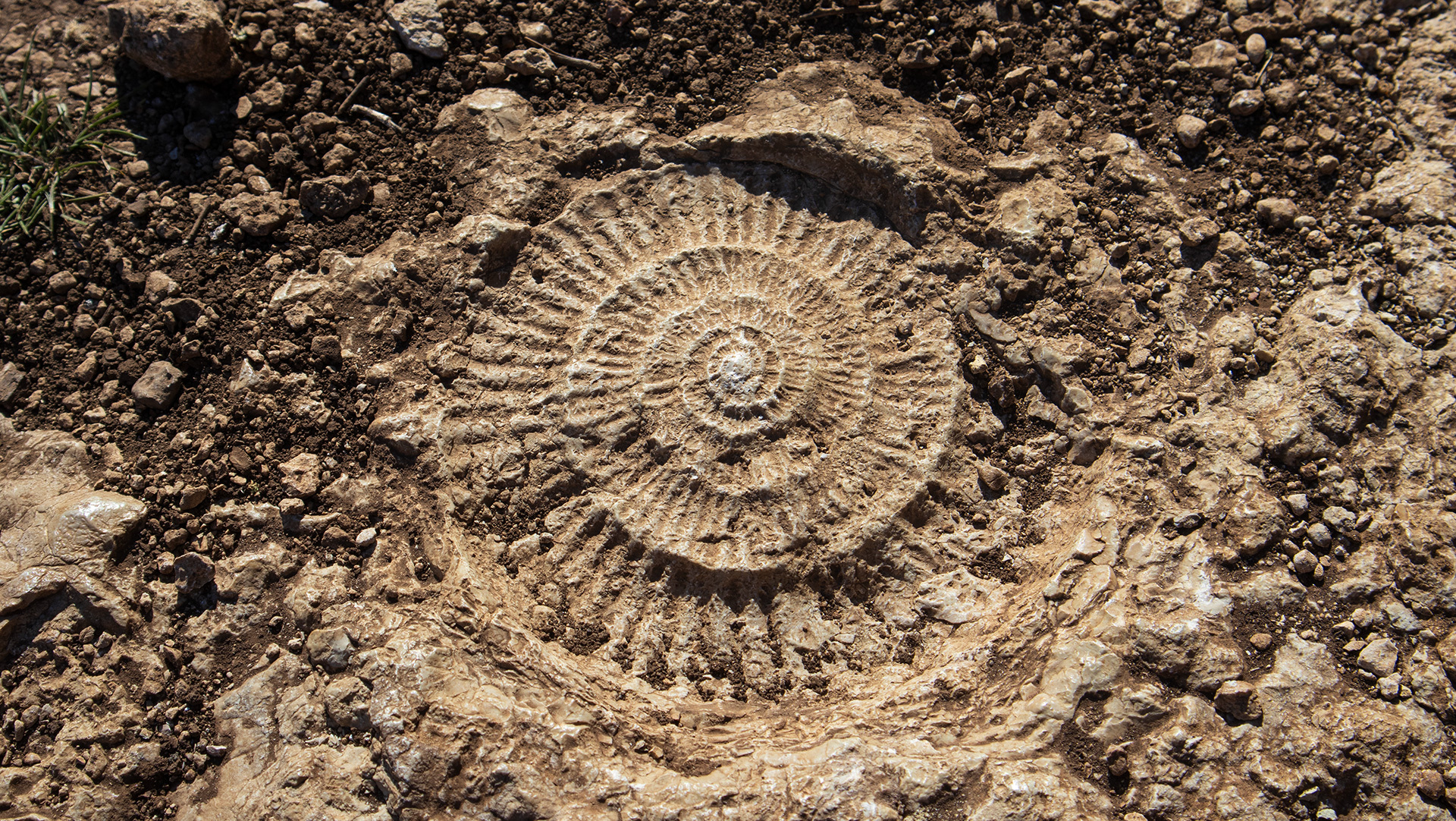
There’s a moment on the Grand Circuit that stops some walkers dead in their tracks. At the trail’s edge, in a pale slab of limestone, a perfect spiral stands out. Not painted on, not carved, but embedded – an ammonite whose shell drifted in the warm Tethys Sea 150 million years ago and is now part of the rock you’re walking on.
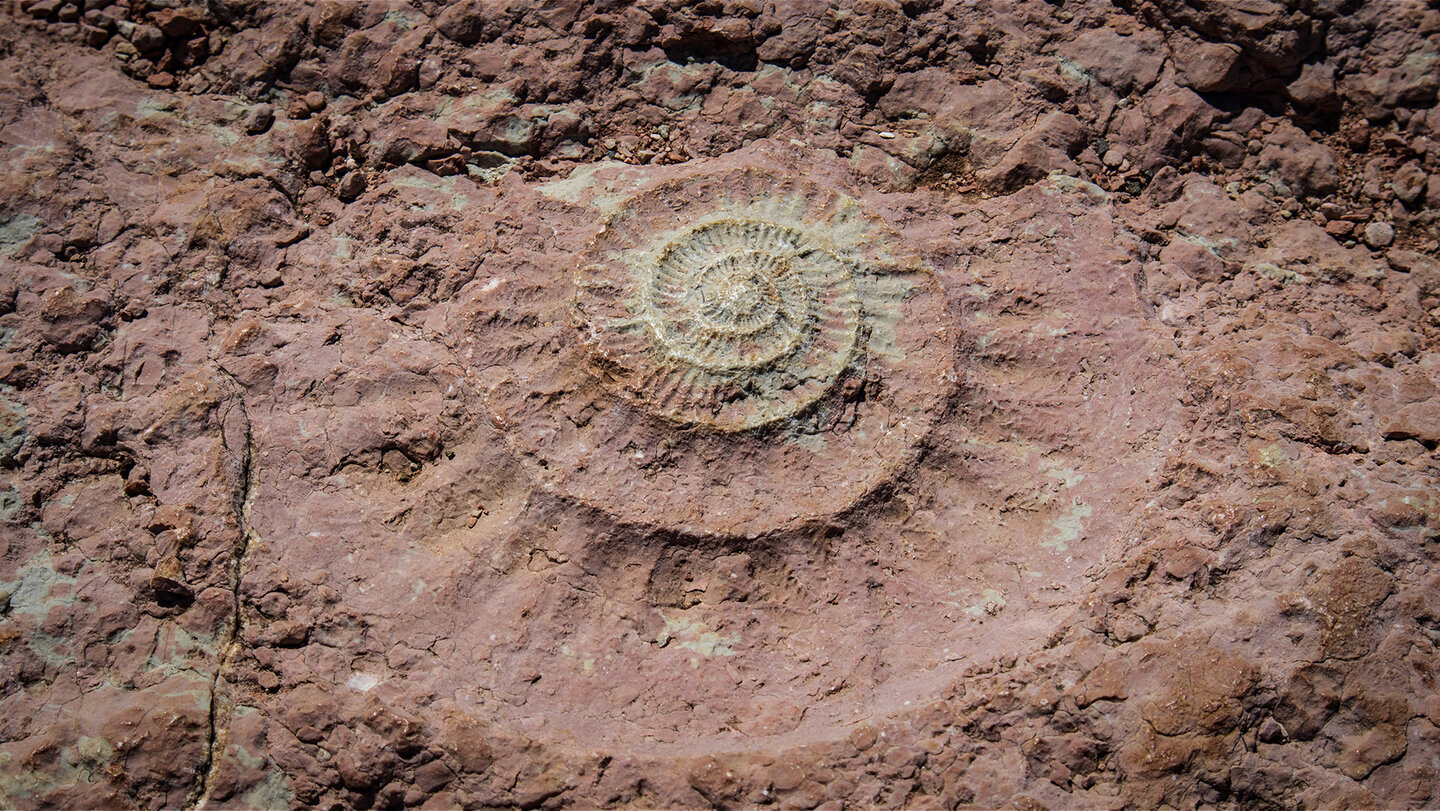
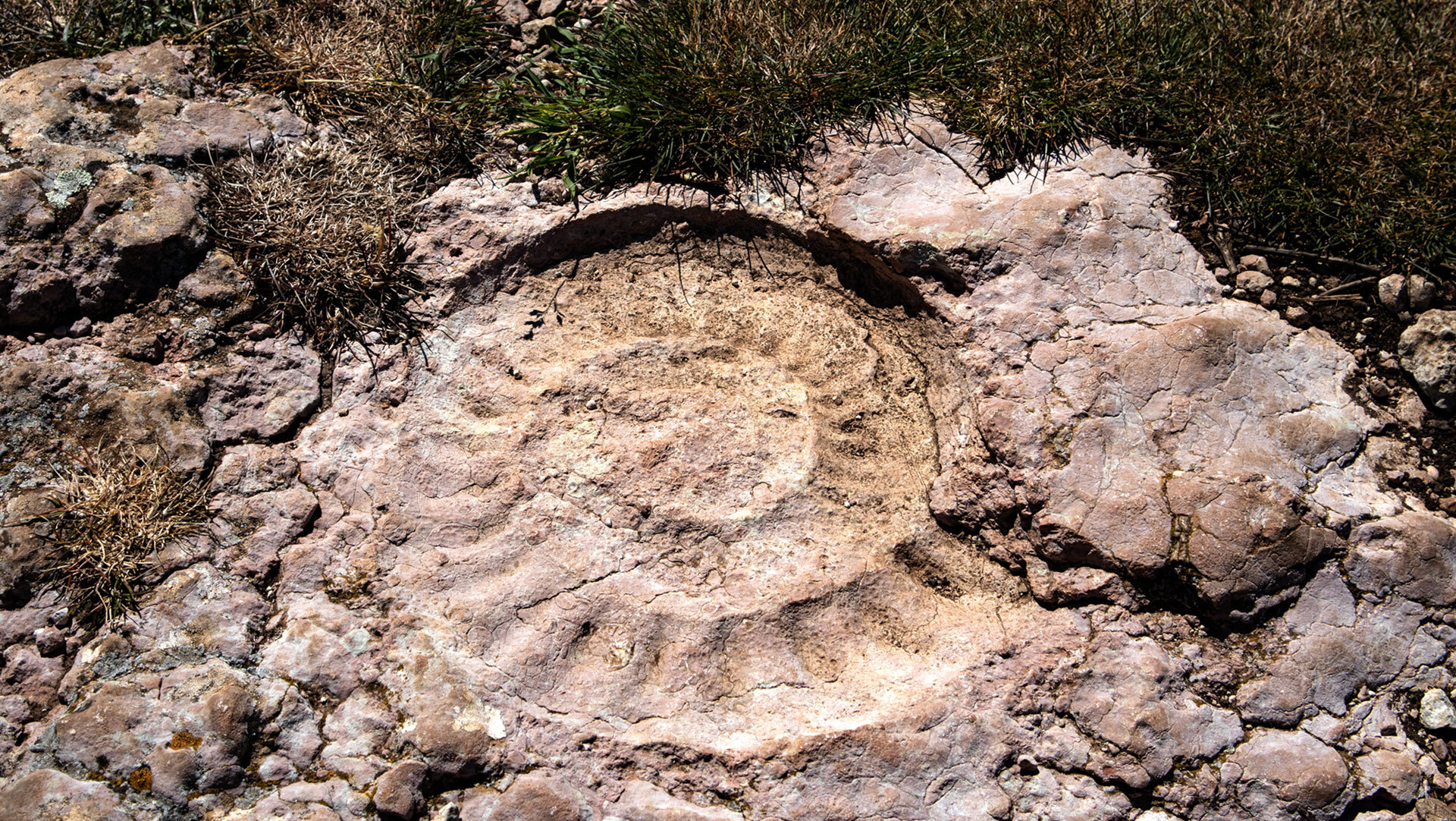
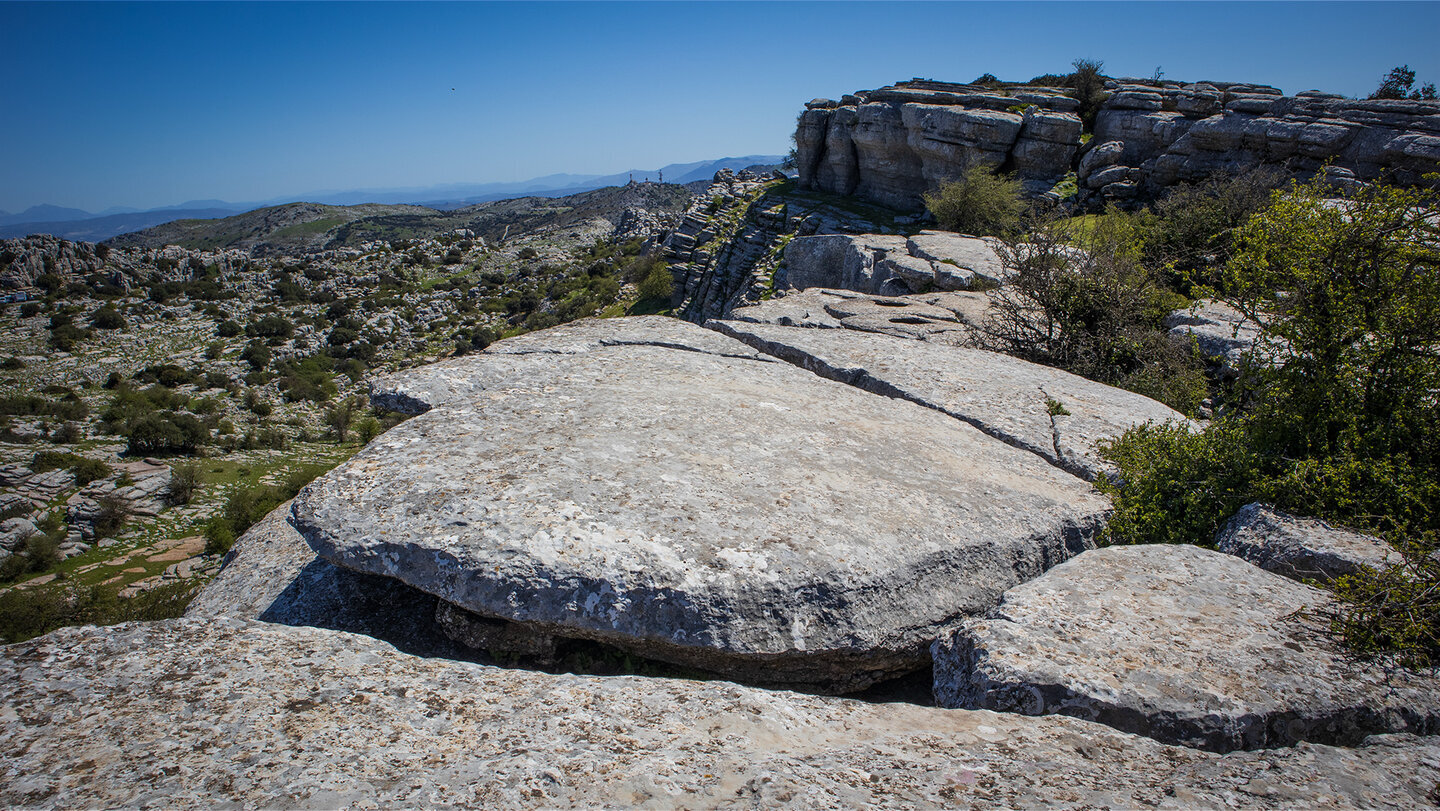
Such moments are far from rare in El Torcal. The entire karst landscape is made of marine sedimentary rock formed in the Jurassic, when the area still lay beneath the sea. Anyone walking with their eyes open will repeatedly find fossils along the waymarked trails – sometimes the round spirals of ammonites, sometimes the cigar-shaped rostra of belemnites.
These fossils are more than pretty patterns in stone. They are direct witnesses to a time when Andalusia was a tropical sea. What they are, where they come from, how to recognise them, and how to behave if you find one.
Fact file – the Tethys fossils at a glance
| Age | approx. 150-200 million years (Jurassic, Mesozoic) |
|---|---|
| Main species in the park | Ammonites (spiral shells) · belemnites (cigar-shaped rostra) |
| Scientific group | Cephalopods (Cephalopoda) – relatives of today’s cuttlefish, squid and nautiluses |
| Habitat at the time | Tethys Sea, a marine corridor between what is now the Atlantic and the Mediterranean |
| Size | Ammonites: 2 cm to over 1 metre · belemnite rostra: 5-30 cm |
| Extinction | End of the Cretaceous period, around 66 million years ago – alongside the dinosaurs |
| Best places to find them | Grand Circuit (“the ammonite walk”), Ruta Amarilla, rock slabs at the trail edge |
| Protection status | strictly protected – collecting, taking away or breaking off fossils is forbidden |
| Guided tour | Ammonites Path and Route of the Ammonites at Sunset (visitor centre) |
What ammonites were – and what their spiral reveals
Cuttlefish in spiral shells
Anyone who sees an ammonite spiral in the rock instinctively thinks of a snail. In fact, ammonites (Ammonoidea) belonged to a completely different group: the cephalopods (Cephalopoda). Their closest living relatives are not snails but cuttlefish, squid and the Pacific nautilus (Nautilus) – animals with eyes, tentacles and a developed nervous system.
The spiral shell found as a fossil was not solid during the animal’s lifetime, but hollow and divided into chambers. The animal itself lived only in the foremost, largest chamber. The rear chambers were filled with gas and water and served to regulate buoyancy – much like a fish’s swim bladder. By altering the gas-to-water mixture, the ammonite could rise and dive without having to swim actively.
Sizes varied considerably. The smallest ammonites fitted in a hand, while the largest reached over a metre in diameter. In El Torcal, you mainly find medium-sized specimens between 5 and 20 centimetres – larger finds are rare but have been documented.
For geologists, ammonites are index fossils – meaning certain species existed only within precisely defined periods of time. If a characteristic ammonite species is found in the rock, the layer can often be dated to within a few hundred thousand years. This makes them one of the most important tools in researching the geological history of the Mesozoic.
What belemnites were – the less conspicuous relatives
Cigars in the rock
Alongside the eye-catching spirals, El Torcal also holds a second type of fossil that’s harder to spot: cigar-shaped, glossy rods in the limestone, often finger-length. These are belemnites – or more precisely, their fossilised rostra.
Unlike with ammonites, what you see in the rock is not the outer shell but the animal’s internal support skeleton. Belemnites were also cephalopods, but looked like modern-day squid: elongated bodies, ten arms, large eyes. Inside, they carried a chalky rostrum as a stabilising axis – and it’s precisely this hard internal skeleton that has survived, while all the soft tissue decayed long ago.
This makes belemnite finds less conspicuous than ammonite spirals. Anyone who doesn’t know what they’re looking for can easily miss them – a dark, smooth rod in pale limestone. But once you have an eye for them, you see them everywhere. In some layers of El Torcal, dozens of them lie side by side.
Belemnites lived in the same seas as ammonites and became extinct together with them at the end of the Cretaceous period – around 66 million years ago, in the same mass extinction that struck the dinosaurs.
Why the fossils are found here
From seabed to rock slab
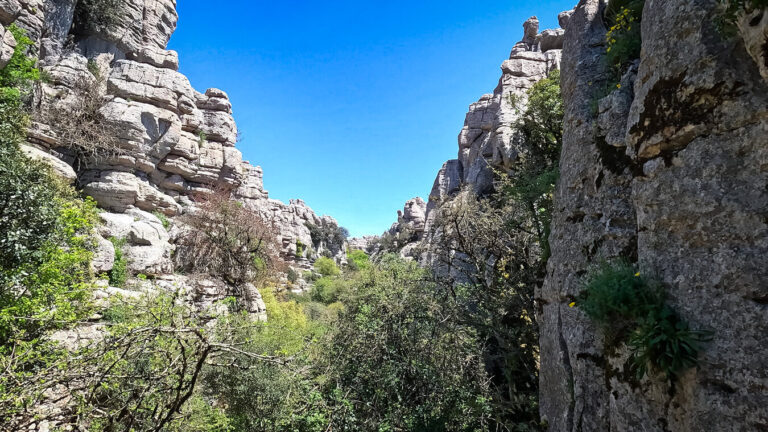
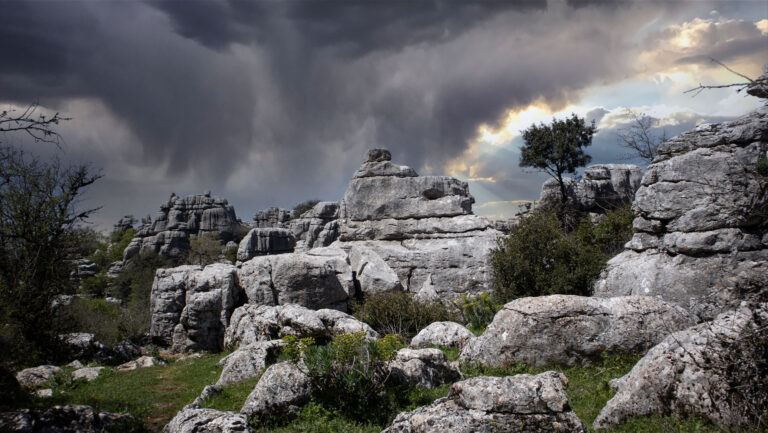
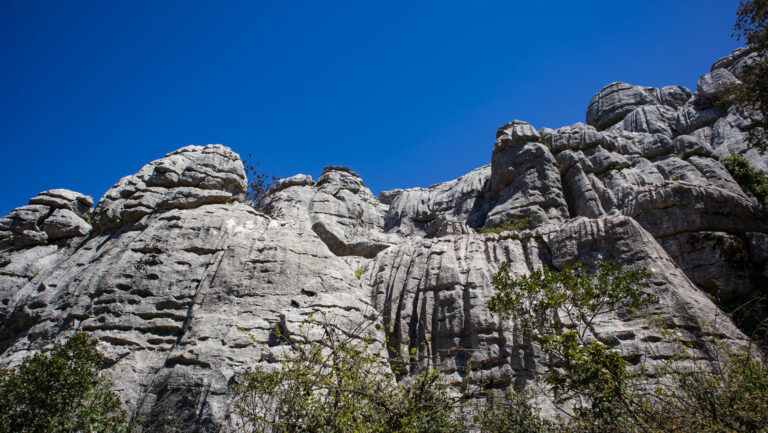
The answer lies in the geology of El Torcal itself. The karst is made of limestone that formed 150 to 200 million years ago on the bed of the Tethys Sea – a warm, shallow primordial sea in the corridor between what would later become the Atlantic and the Mediterranean. Ammonites, belemnites, molluscs and microorganisms lived in these waters by the billions.
When these animals died, their shells or skeletons sank to the seabed and settled there. Over millions of years, thick layers of calcareous mud built up, embedding the shells within them. Under the pressure of further deposits, the mud solidified into limestone, and the shells turned to stone – what we today call a fossil.
When the African plate pushed against the Eurasian plate around 60 million years ago, the former seabed was thrust upwards. What had begun as mud 1,500 metres underwater suddenly found itself at an altitude of 1,300 metres – complete with all the animals embedded within it. Anyone who spots an ammonite spiral at the trailside in El Torcal today is literally looking at a piece of seabed forced upwards from within the Earth.
Subsequent karst weathering exposed the fossils further still. Where water dissolved limestone over thousands of years, the more resistant shells emerged from the surrounding rock. Today they lie visible on rock surfaces, at the edges of rock strata, and along the trailsides.
Where to find them – and how to search
Routes, tips, and a trained eye
The fossils in El Torcal aren’t concentrated in a single “fossil museum” but are spread across the entire karst massif. Even so, there are routes where the likelihood of finding them is especially high.
The Grand Circuit – 8.6 kilometres, not waymarked, pathless in places, and suitable only for experienced walkers with a GPS track – is also known as “the ammonite walk”. It passes through rocky sections where ammonite spirals are frequently visible right at the trail’s edge. Anyone doing this route should walk slower than usual and keep glancing down at the ground.
On the Ruta Amarilla through the rock labyrinth, there are also several well-known spots, often on horizontal rock slabs at eye level. The Ruta Verde is richer in orchids and ibex than in fossils, but belemnites can occasionally be found there too, at the trailsides.
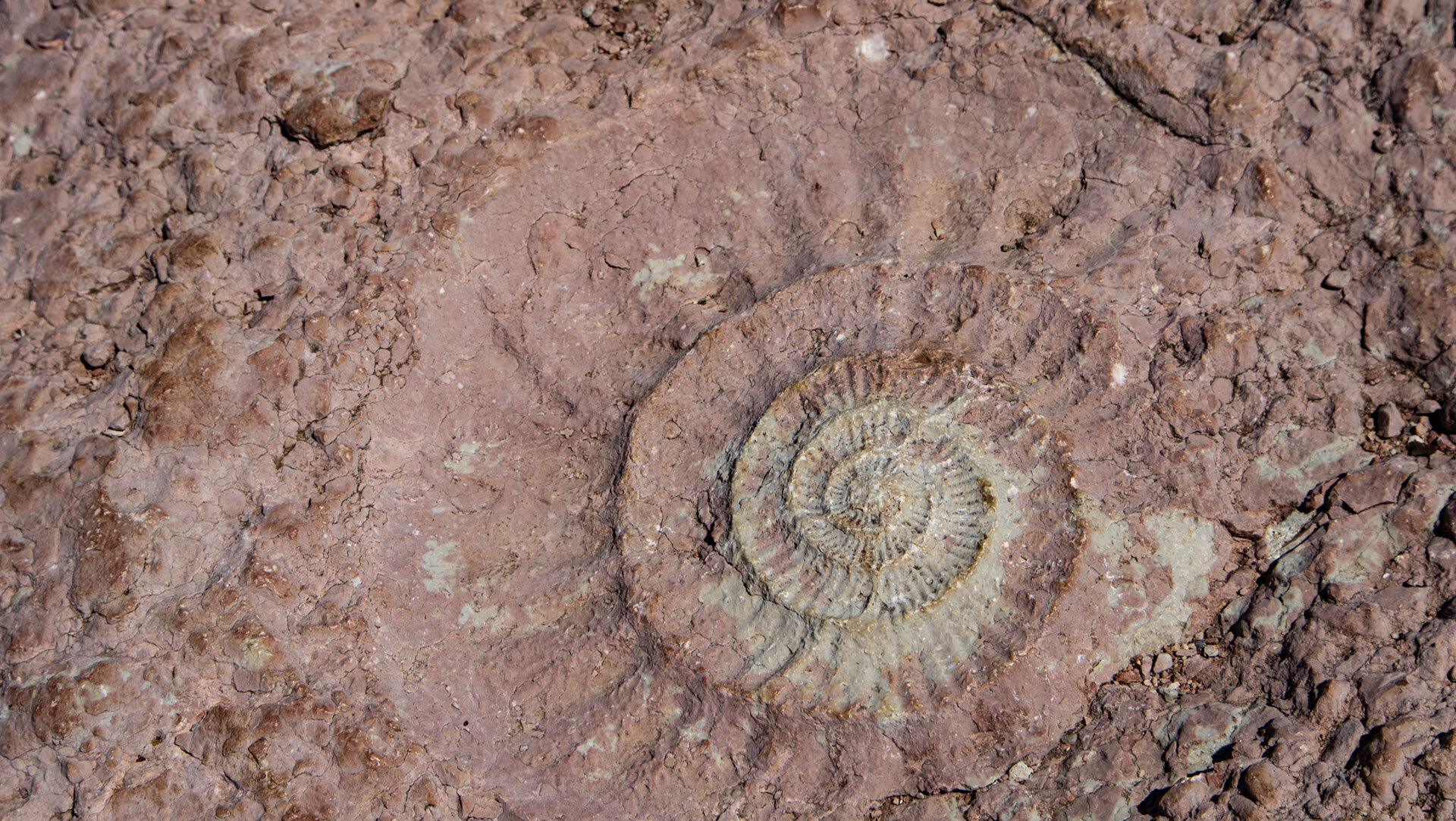
Three things help when searching: first, an eye for the typical shapes – a spiral for ammonites, a glossy rod for belemnites. Second, the right light: in the morning and afternoon, with the sun at a low angle, the reliefs on the rock are most visible. Third, patience. Anyone who finds nothing in the first ten minutes often overlooks the very spiral their hand has already brushed past.
Look, photograph, don’t take
What is allowed in the Paraje Natural – and what isn’t
Fossils in El Torcal are strictly protected. As part of the Paraje Natural since 1978 and the UNESCO World Heritage Site “Antequera Dolmens Site” since 2016, the following applies: collecting, breaking off or taking fossils away is forbidden and punishable by fines. This applies not only to clear fossils but also to “loose stones that might be one”.
The reason is simple: if every one of the more than 100,000 visitors a year pocketed a fossil, the sites would be picked clean within a few years. What has survived over 150 million years would vanish within a single human lifetime. The park is therefore a place to observe, not a self-service shop.
How to behave correctly when you find a fossil
Look: yes, as much as you like – with or without a magnifying glass
Photograph: yes, go ahead – without flash and without touching
Touch: preferably not – skin oils speed up weathering
Mark or paint: never, not even “just briefly for a photo”
Take away: under no circumstances, whether whole or in part
Locations: don’t share them publicly on social media (it attracts collectors)
Drones: banned throughout the entire park
Guided ammonite tours at the visitor centre
For those who want to know more
The Torcal Alto visitor centre offers two guided tours devoted specifically to the fossils.
The Ammonites Path (Ruta de los Amonites) is a guided walk with a qualified guide, lasting two to three hours through selected fossil sites. The guide explains what you’re looking at, which species can be identified, and how the geology fits together. For families and anyone who doesn’t want to search on their own, this is the easiest way to see several fossils for certain.
The Route of the Ammonites at Sunset is the sunset version of the same tour. It has two advantages: the low-angled light makes the reliefs on the rocks more visible than the harsh midday sun, and temperatures are noticeably more pleasant in summer. Both tours are offered directly by the visitor centre – bookable via torcaldeantequera.com.
Conclusion: a park where the history of the Earth is visible
The ammonites and belemnites in El Torcal aren’t “just” fossils – they are direct witnesses to a time when Andalusia was a tropical sea. Walking with this knowledge changes how you see the park.
150 million years separate the Tethys Sea from today’s karst surface, embedded in every square metre of rock: that’s the real appeal of these fossils. Anyone who spots a spiral at the trailside is looking at an animal that lived when the Iberian Peninsula still lay beneath the sea.
Continue to Karst erosion and the formation of El Torcal, to the Grand Circuit – the ammonite walk, to the guided tours at the visitor centre, and to the Paraje Natural Torcal de Antequera. Back to the El Torcal overview
Frequently asked questions about ammonites and belemnites in El Torcal
Exactly how old are the fossils in El Torcal?
Are you allowed to take fossils from El Torcal?
What is the difference between ammonites and belemnites?
Which hiking route is best for finding fossils?
Why did ammonites become extinct?
This article is based on the on-the-ground knowledge of the Gequo editorial team – publishers of several Reisezeit hiking guides and operators of Sunhikes.com. Correct as of: May 2026