The Woman in the Dolmen: Where a Medieval Legend Explains a 19-Metre-Deep Shaft
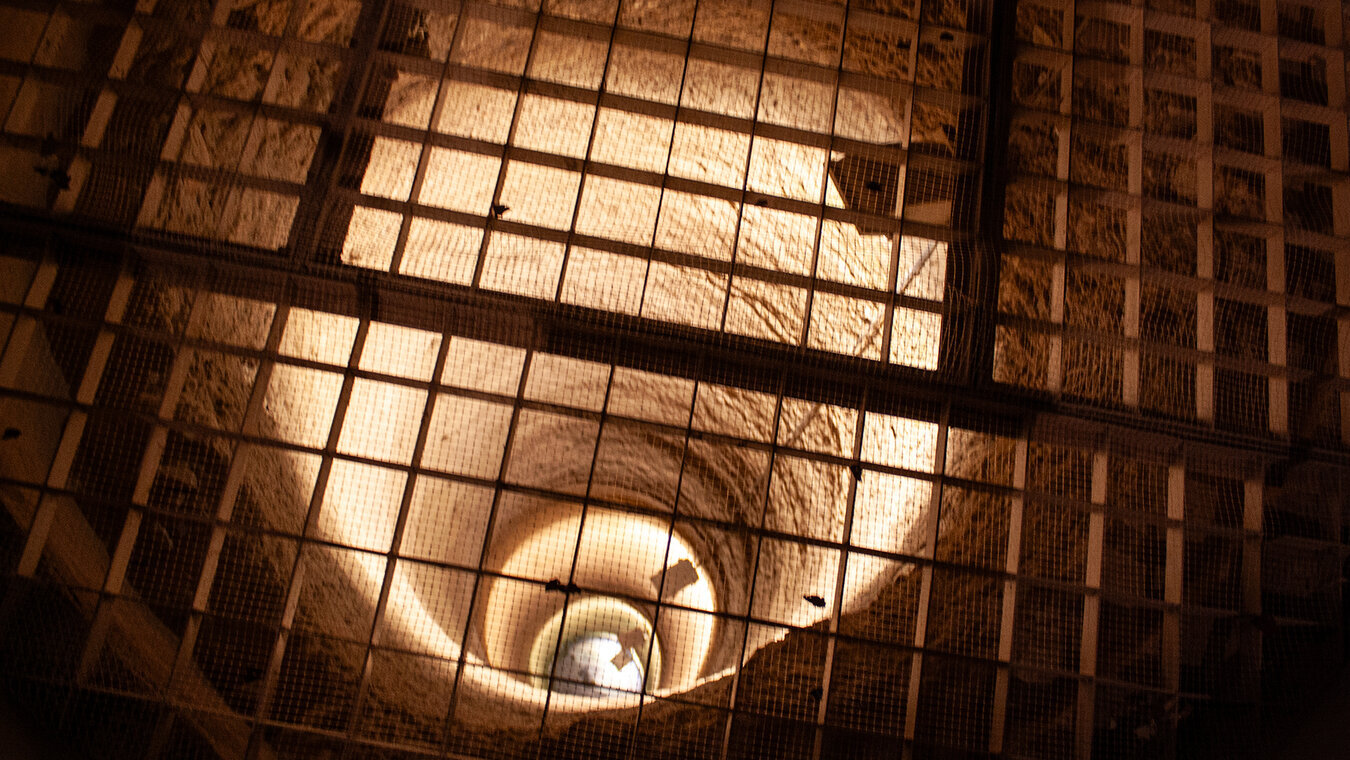
In the rear third of the burial chamber of the Menga Dolmen, the floor opens up. A circular hole 1.50 metres in diameter leads 19.50 metres straight down – to the groundwater level of the Vega de Antequera. The shaft is aligned with the three central pillars that support the massive capstones. Its depth corresponds almost exactly to the length of the dolmen – a geometric relationship that can be no coincidence. And yet the people who had known this well since the 16th century knew nothing of its original meaning. They knew only the legend – the tale of Menga, the leprous woman said to have lived here.
Erstmals schriftlich erwähnt wird die „Cueva de Menga” – die Höhle der Menga – in einer Bischofsurkunde von 1530. Im 19. Jahrhundert dann arbeitete der Antequera-Chronist Trinidad de Rojas die mündlichen Überlieferungen zu einer ausgearbeiteten Erzählung um: Margarita, später Menga genannt, eine an Lepra erkrankte Witwe aus adeligem Hause, soll sich nach dem Tod ihres Mannes in die Höhle zurückgezogen haben. Dort suchte sie Heilung im Wasser, das aus dem tiefen Schacht aufstieg.
What the legend tells us, where the name Menga comes from, and what lies between medieval legend and archaeological reality – an approach to one of the most enigmatic places in the World Heritage Site.
The Tale: Menga, the Leper Woman
What the medieval legend of the woman in the dolmen tells us
The most popular version of the legend, written down in 1874 in the Antequera newspaper Genil, goes like this: in the 16th century, a woman of noble birth comes to the town. Her name is Margarita – some versions call her Dominga. She is a widow; her husband, a nobleman, has died. But worse than her widowhood is the disease that has struck her: leprosy, one of the most feared afflictions of the Middle Ages. Lepers were banished from communities and had to live in isolated places.
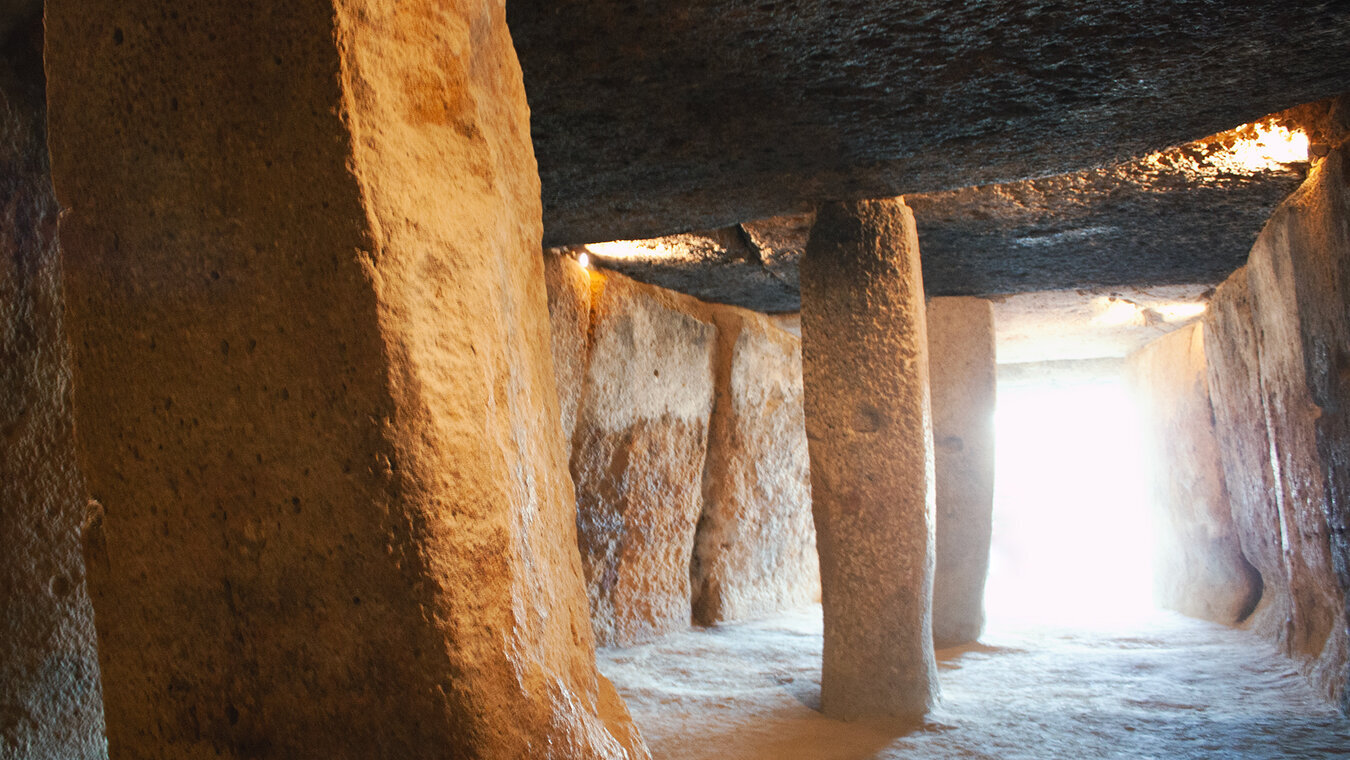
Margarita findet einen solchen Ort am Rand von Antequera: einen rätselhaften, halb verfallenen Megalithbau – die spätere „Cueva de Menga”. Sie zieht in das Innere ein. Was sie dort findet, ist mehr als ein Versteck: Im hinteren Bereich der Kammer entdeckt sie einen tiefen Brunnen. Sein Wasser, so erzählt die Sage, hat heilende Kräfte. Die Aussätzige nimmt davon, badet ihre Wunden, trinkt. Über die Jahre wird ihre Krankheit erträglicher – manche Versionen behaupten, sie sei vollständig geheilt worden. Erst nach ihrem Tod findet man ihren Leichnam in der Höhle. Von da an heißt sie „Cueva de Menga”, in volkstümlicher Verkürzung von Dominga zu Menga.
Other versions of the tale circulate alongside it. In one, Menga is not a leper but a sorceress who built the vast dolmen using supernatural powers – in rivalry with an adversary named Mari Macho, whose traces can be found on the nearby Cerro de Marimacho. The central thread remains the same, however: a female being who dwells mysteriously in the huge stone monument – and who gives the structure its name.
Etymology and Folk Belief: How Dominga Became a Myth
What linguistics tells us about the name
Die Sprachwissenschaft hat sich mit dem Namen intensiv beschäftigt. Das Ergebnis: Menga ist keine prähistorische Bezeichnung, sondern entstand erst nach der christlichen Eroberung Antequeras 1410. Es ist die volkstümliche Kurzform des im Mittelalter weit verbreiteten Frauennamens Dominga – einer femininen Ableitung von Domingo („Tag des Herrn”). In ähnlichen Verkürzungen finden sich Menga, Minga und Mingo als Spitznamen in kastilischen Texten des 13. bis 16. Jahrhunderts.
| First recorded mention | 1530 – Bischofsurkunde von Málaga: „antrum de Menga vulgariter nuncupatum” |
|---|---|
| Linguistic root | Dominga / Domingo (Sonntag, „Tag des Herrn”) |
| Folk shortening | Dominga → Do-Minga → Menga |
| Prevalence | Common woman’s nickname in the 13th–16th centuries |
| Legend first recorded in literature | Trinidad de Rojas, „Genil”, 14. Februar 1874 |
| Rival in the legend | Mari Macho (Cerro de Marimacho) |
What this naming tells us is more than a linguistic curiosity. It shows how Spanish-speaking settlers after 1410 perceived a structure whose origin they could not explain. Before them stood a 27-metre-long tunnel of stone blocks weighing up to 180 tonnes – something that must have exceeded their notion of human building achievement. The answer was typical of medieval thinking: a work of this scale must have arisen through supernatural means. A mythical woman, a sorceress, a mysterious inhabitant – the narrative pattern with which the Middle Ages explained things too great to comprehend.
Die Rivalin Mari Macho, im nahegelegenen Hügel desselben Namens vermutet, ergänzt das Bild. Auch der Cerro de Marimacho – auf dem heute archäologische Spuren der jungsteinzeitlichen Bevölkerung Antequeras nachgewiesen sind – hatte seinen Namen aus volkstümlicher Etymologie: Mari ist Kurzform von María. Zwei weibliche Wesen, eine in der „Cueva de Menga”, eine auf dem „Cerro de Marimacho”, rivalisierend, geheimnisvoll – das war die Erklärung des spätmittelalterlichen Antequera für die rätselhaften Spuren der Vorzeit.
The Real Shaft: What Archaeologists Know Today About the Well
From prehistoric water sanctuary to buried secret
Behind the medieval legend lies a much older reality. The well in the Menga Dolmen is not the dwelling of a leprous widow – it is an architectural element of the megalithic complex, created by its builders for ritual purposes. Its depth of 19.5 metres reaches exactly the groundwater level of the Vega. Its position – central in the rear half of the chamber, aligned with the three massive pillars – cannot be explained functionally, but only symbolically.
| Depth | 19.5 metres – down to today’s groundwater level |
|---|---|
| Diameter | approx. 1.5 metres, cut into sandstone |
| Position | rear third of the chamber, central |
| Alignment | exactly on the axis of the three supporting pillars |
| Symbolic geometry | Depth corresponds approx. to the length of the dolmen |
| Rediscovery | Rafael Mitjana, 1840s, continued in the 21st century |
| Backfilling | probably 18th century (church response) |
| Finds in the fill material | Pottery from the 18th/19th century, bones, stone hammer fragments |
Archaeological research today largely agrees: the shaft was a cult object that connected the underground world – water, earth, death – with the world above. The vertical axis of the well and the horizontal axis of the dolmen form a crossing structure that must have been understood as a cosmological model in the Neolithic period. Water from the depths was regarded as sacred in many early religions – as a means of purification, rebirth and, sometimes, healing. It is no coincidence that the medieval legend of the water’s healing power echoes this ancient notion.
Im 18. Jahrhundert wurde der Schacht verschüttet. Schätzungen sprechen von rund 50 Tonnen Erde und Steinen, die in den Brunnen gefüllt und dann den Eingang des Dolmens blockierten. Die Aktion wird mit einer kirchlichen Reaktion auf den Volksglauben rund um die „Heilung der Menga” in Verbindung gebracht – die katholische Kirche akzeptierte keine konkurrierenden Heilsverheißungen außerhalb ihrer eigenen Sakramente. Der Schacht blieb über ein Jahrhundert lang vergessen, bis Rafael Mitjana ihn in den 1840er Jahren wiederentdeckte.
The water of the Menga shaft
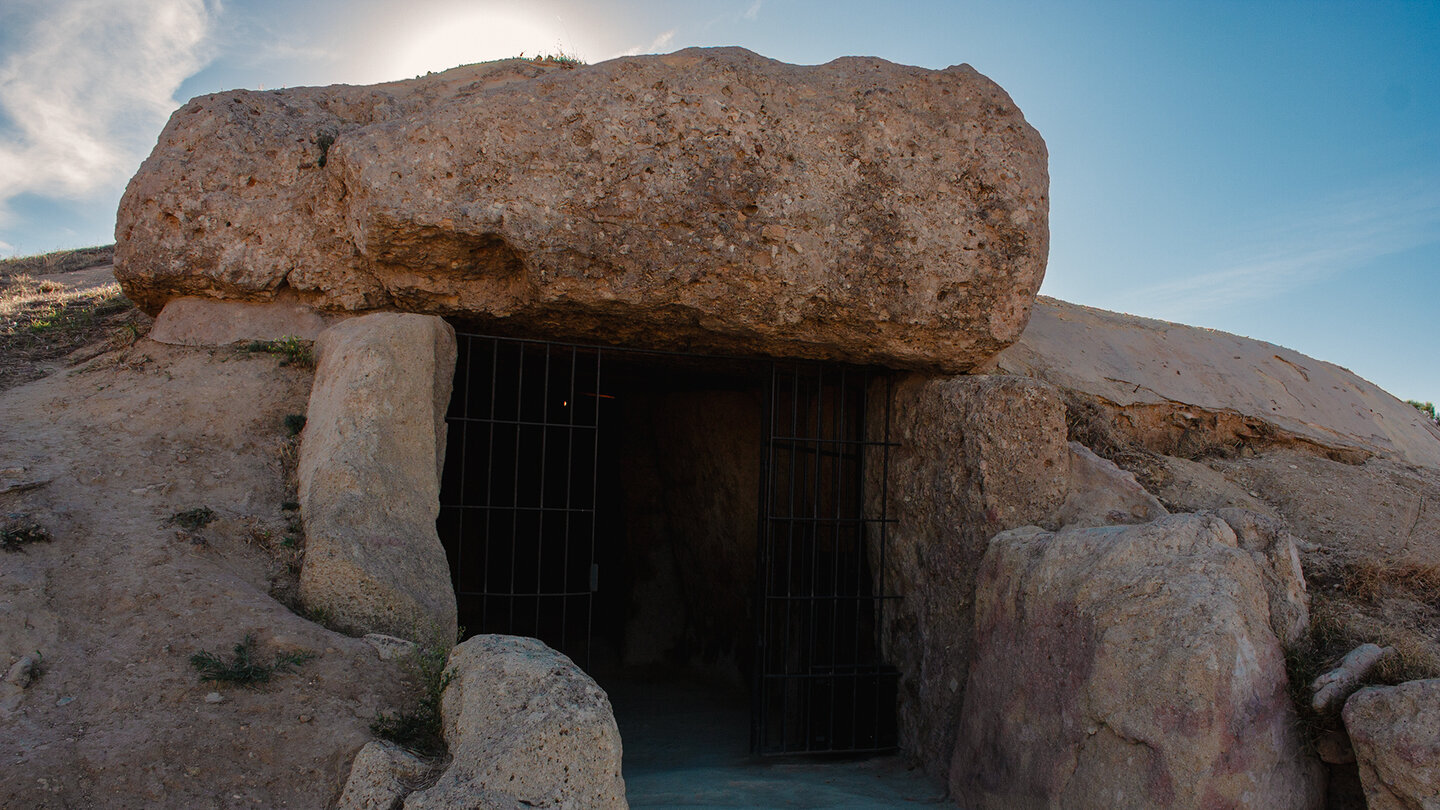
The well still holds water today. Visitors to the dolmen can see the shaft through a grille – entering it is not possible for conservation reasons. Water analysis has shown that it is groundwater from the Vega de Antequera, rich in minerals but without any demonstrable medicinal properties.
What the medieval legend described as a healing power cannot be reproduced today – it was probably the psychological effect of the place itself, along with the pure mineral-rich water, which, in an age of inadequate drinking-water supply, may indeed have had advantages over the town’s water.
Conclusion: A legend as an echo of a forgotten religion
The legend of the woman in the dolmen is an example of how folk belief preserves memories of places over millennia, even after their original meaning has long been forgotten. The medieval settlers of Antequera did not know that, in the well of their leprous Margarita, they were looking at the water religion of a culture 5,000 years older. They reinterpreted what they did not understand – giving the structure a second layer of meaning. A final recommendation: anyone visiting the Menga Dolmen should keep the legend in mind. Looking into the shaft – through the narrow grille at the rear of the chamber – then becomes an encounter with a story that has been passed down for five centuries.
More on the region: the dolmen itself and its UNESCO significance: Dolmen von Menga. The mountain the dolmen is aligned with: Peña de los Enamorados. A second legend from the region: The Legend of the Lovers of the Peña. The town of Antequera as a location: Antequera Spain.
Frequently Asked Questions about the Legend of Menga
Who was Menga – human or myth?
When was the legend first mentioned?
Does the shaft in the dolmen really contain healing water?
Can I enter the shaft today?
What other versions of the legend exist?
This article is based on the on-the-ground knowledge of the Gequo editorial team – publishers of several travel-time hiking guides and operators of Sunhikes.com. As of: May 2026