Dolmen de Menga: the largest dolmen in Europe stands in Antequera
5,000 years ago, people moved stones weighing 180 tonnes. Without wheels, without cranes, without steel. The Dolmen de Menga in Antequera is the result of this feat – and remains the largest dolmen in Europe to this day. A 27.5-metre burial chamber, capstones of 250 tonnes each, supported by three pillars and a system of upright stones that still stands after almost 5,000 years. Not as a ruin. As a building.
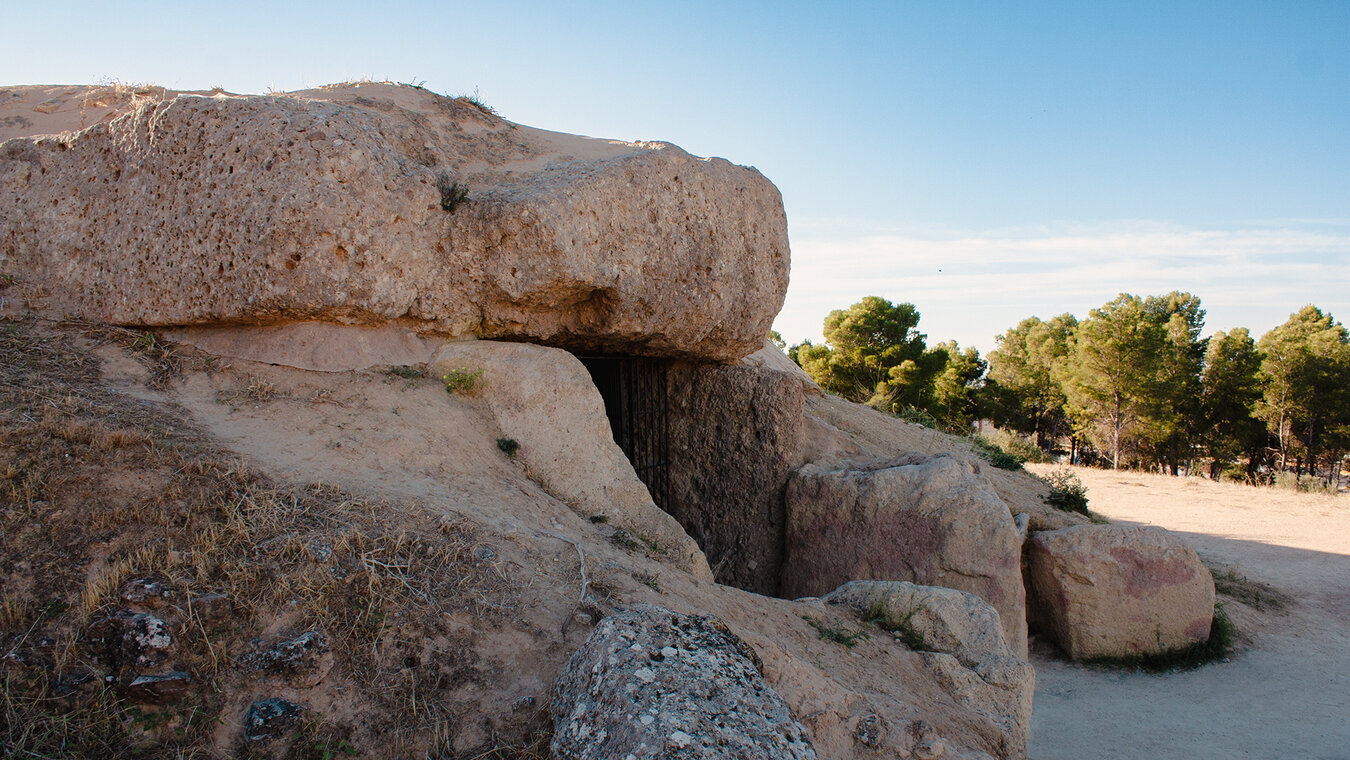
What makes the Dolmen de Menga special is not just its sheer size. It is its alignment: the entrance faces 045° north-east – directly towards the Peña de los Enamorados, a striking table mountain north of Antequera. At the summer solstice, the morning sun shines over the summit of the Peña and directly into the dolmen’s entrance corridor. This connection between burial chamber, landmark and the sun’s path is unique in mainland Europe and one of the reasons why the Antequera Dolmens Site has been a UNESCO World Heritage Site since 15 July 2016.
The dolmen is less than two kilometres from Antequera’s town centre, next to the Dolmen de Viera and close to the Tholos de El Romeral. You don’t need a whole day for the visit – a morning is enough. But you won’t come out unmoved.
Fact file: The Dolmen de Menga at a glance
All the facts about the largest dolmen in Europe
| Origin | c. 3,500–3,000 BC |
| Length of the burial chamber | approx. 27.5 m |
| Height | 2.7 m at the entrance · 3.5 m at the rear end |
| Heaviest stone | 180 tonnes (Stonehenge max. 40 t) |
| Capstones | 5 (originally 6), approx. 250 tonnes each |
| Pillars | 3 – supporting the four central capstones |
| Orthostats | 12 per side + end stone |
| Shaft | 19.5 m deep, 1.5 m in diameter (6 m from the entrance) |
| Tumulus (burial mound) | 50 m in diameter |
| Alignment | 045° north-east – towards Peña de los Enamorados |
| Summer solstice | 21 June – morning sun shines directly into the entrance |
| UNESCO World Heritage | since 15 July 2016 (Sitio de los Dólmenes de Antequera) |
| Location | approx. 1.5 km north-east of Antequera town centre |
| Admission / Opening hours | www.museosdeandalucia.es |
Construction: How the Dolmen de Menga was built
Orthostat technique and the problem of the 180-tonne stones
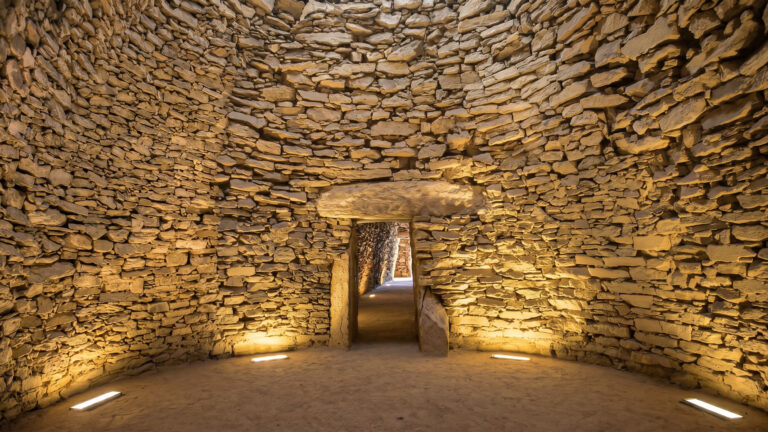
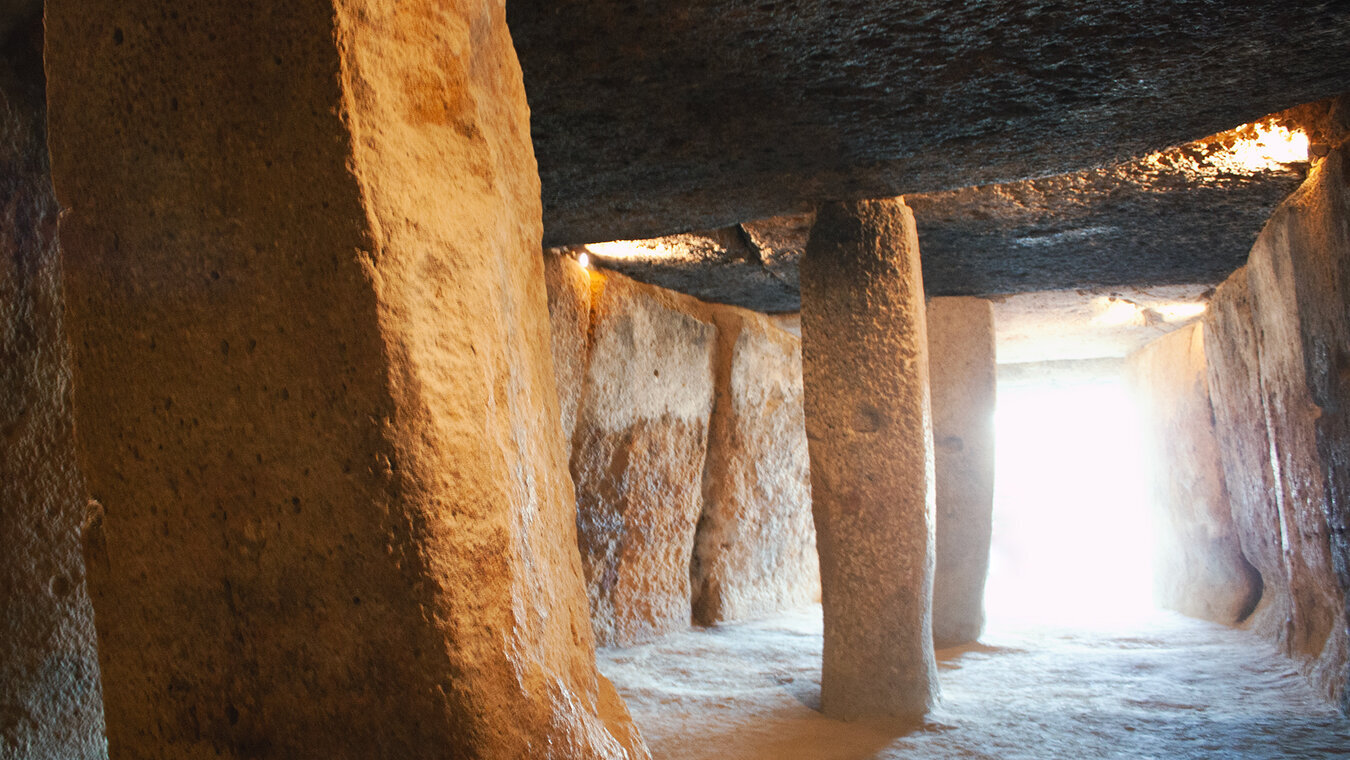
The construction method of the Dolmen de Menga follows what is known as the orthostat technique: large upright stones – the orthostats – support horizontal capstones. It sounds simple, but it isn’t. The four central capstones of the Menga Dolmen weigh around 250 tonnes each. They rest on three pillars standing in the middle of the burial chamber – a structural decision that shows the builders understood what statics meant.
The largest upright orthostat weighs 180 tonnes. By comparison, the heaviest stone at Stonehenge tips the scales at 40 tonnes. The Menga stone is therefore four and a half times heavier – and has been standing for almost 5,000 years. How the Neolithic farmers of the Guadalhorce Valley transported, erected and aligned these stones has still not been fully explained. What is certain is that they pooled resources from several settlements, and they knew exactly what they were doing.
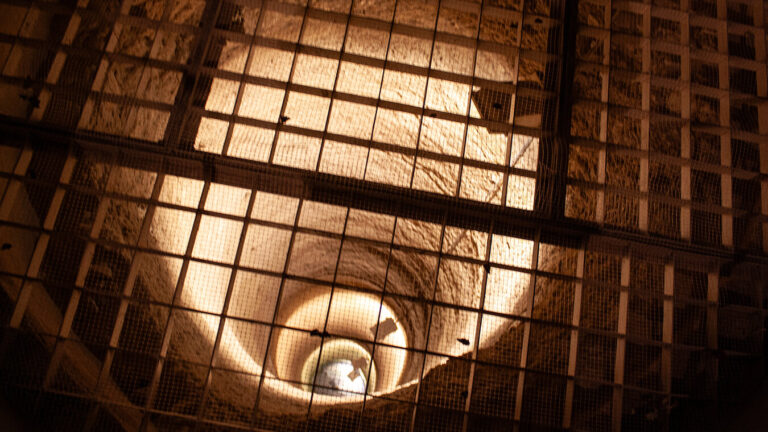
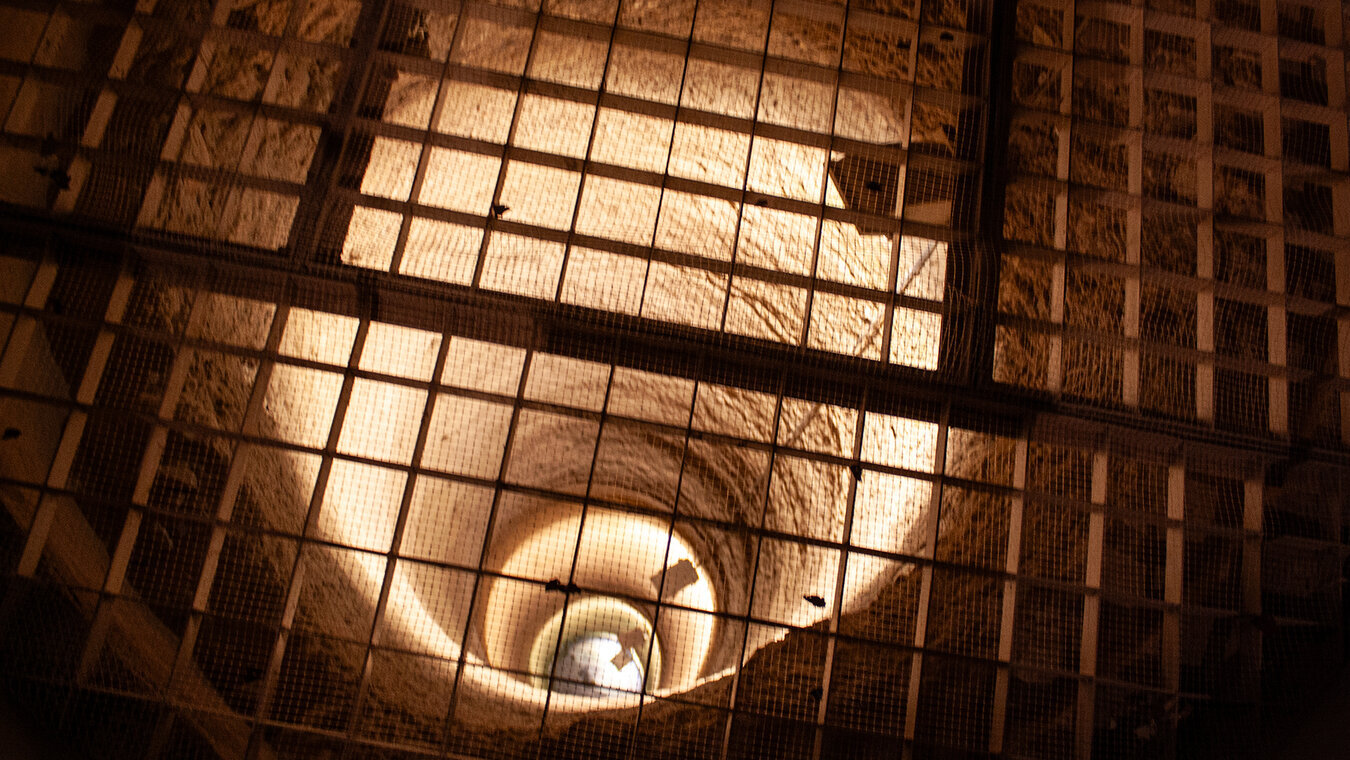
Also unusual is the shaft inside the burial chamber: 1.5 metres in diameter, 19.5 metres deep, only 6 metres from the entrance. Its function remains unclear – perhaps a ritual access point to an underworld, perhaps a well, perhaps something we simply don’t understand.
Astronomy: The summer solstice and the Peña de los Enamorados
Why the alignment of the Menga Dolmen is unique
Most dolmens on the Iberian Peninsula are aligned to the east – towards sunrise. The Dolmen de Menga faces 045° north-east. That sounds like a small deviation, but it is a huge difference: this alignment does not target the general sunrise, but a specific point – the summit of the Peña de los Enamorados, a striking table mountain that is today also part of the UNESCO World Heritage Site.
At the summer solstice, on 21 June, the sun rises exactly behind the summit of the Peña and shines directly into the dolmen’s entrance corridor. The Neolithic builders therefore did not just build a tomb – they placed an astronomical instrument in the landscape, based on a natural landmark. This connection between funerary architecture and natural monument is unique in mainland Europe and was one of the central arguments UNESCO used for its inclusion on the World Heritage list.
UNESCO World Heritage: Sitio de los Dólmenes de Antequera
Since 15 July 2016, the three dolmens of Antequera (Menga, Viera, El Romeral), the Peña de los Enamorados and the Paraje Natural El Torcal have together been part of the UNESCO World Heritage Site – as Andalusia’s seventh World Heritage Site. In doing so, UNESCO recognised the unique combination of megalithic architecture, natural landmarks and prehistoric astronomy.
The three dolmens of Antequera at a glance
Menga, Viera and El Romeral – an ensemble spanning over 1,000 years
The Dolmen de Menga does not stand alone. Right next to it lies the Dolmen de Viera – built around the same time, classically aligned to the east, with a 21-metre-long passage and a small square end chamber. Both dolmens share a car park and are usually visited together. About three kilometres away stands the Tholos de El Romeral, roughly 500 years younger and built using a completely different technique: as a beehive tomb with a false dome made of layered stones. Its alignment points towards the Camorro de las Siete Mesas in El Torcal – a second astronomical reference, this time to the nature park.
These three sites, together with the Peña de los Enamorados and El Torcal, make up the UNESCO World Heritage Site Sitio de los Dólmenes de Antequera – the Antequera Dolmens Site. They were built by farming communities who lived in the fertile Guadalhorce Valley between 5,000 and 2,200 BC. The nearest Neolithic settlement lay just 200 metres east of the Menga Dolmen, at Cerro de Marimacho. Quarrying, transporting and erecting the huge stones must have required the coordinated resources of several such settlements.
Practical tips – Dolmen de Menga
Location: Approx. 1.5 km north-east of Antequera town centre, right next to the Dolmen de Viera. Well signposted from the town centre.
Admission & opening hours: ⚠️ Opening hours & admission: turismo.antequera.es · museosdeandalucia.es
Combination: The Dolmen de Menga and Dolmen de Viera lie directly next to each other and are usually visited together. The Tholos de El Romeral is about 3 km away – reachable by car or bicycle.
Best time: At the summer solstice (21 June) – when the morning sun shines over the summit of the Peña de los Enamorados directly into the entrance. Otherwise: in the morning, before tour groups arrive.
Getting there: By car or on foot from Antequera town centre (approx. 20 minutes’ walk). Public bus or taxi from the town centre also possible.
Conclusion: The Dolmen de Menga is a must for every visit to Antequera
180 tonnes of stone, 5,000 years of history, an astronomical alignment that finally made UNESCO take this place seriously. The Dolmen de Menga is not just one excursion destination among many – it is the reason Antequera is on the World Heritage list.
The other dolmens right next door: Dolmen de Viera · Tholos de El Romeral · All sights in the Magazinee.
Frequently asked questions about the Dolmen de Menga
Why is the Dolmen de Menga the largest dolmen in Europe?
What does the alignment towards the Peña de los Enamorados mean?
Is the Dolmen de Menga part of the UNESCO World Heritage Site?
Can you visit the inside of the Dolmen de Menga?
This article is based on the on-the-ground knowledge of the Gequo editorial team – publisher of several Reisezeit hiking guides and operator of Sunhikes.com. As of: May 2026