Alcazaba de Antequera: Where a Moorish castle towers over the town
Anyone walking through Antequera’s old town has it constantly in view: above the rooftops, behind the white façades, at the town’s highest point stands a defensive ring of walls built from reddish stone. The Alcazaba de Antequera is the Moorish fortress that has towered over the town since the 14th century — and long before it fell into Christian hands in 1410, it was one of the most important strongholds in western Andalusia.
Antequera lies at the geographical centre of Andalusia, roughly equidistant from Seville, Granada, Córdoba and Málaga. Anyone wishing to exert power in the region had to pass through or by Antequera. The Alcazaba was the architectural expression of this strategic position.
Where the fortress stands, what makes it special, who conquered it, and what view awaits visitors at the top today — step by step through one of the town’s most impressive buildings.
A fortress that guarded Antequera
The Alcazaba is not just a building but a physical record of more than seven centuries of Spanish history. Its ring of walls encompasses phases from the 8th century right through to well into the Christian era — although what visitors see today dates mainly from the late Middle Ages.
The Moorish period: 8th to 15th century
With the conquest of the Iberian Peninsula by Arab and Berber forces from 711 onwards, the area around Antequera soon became part of Al-Andalus. The fertile plains surrounding the present-day town made it an important agricultural and military base. In Arabic, the settlement was called “Madīnat Antaqīra” — a rendering of the Roman name “Antikaria”.
What stands today as the Alcazaba dates essentially from the 14th century — a period in which the Nasrids of Granada were defending the last Muslim-ruled territory on the Iberian Peninsula. Antequera lay on its north-western flank. The walls, towers and inner defensive system were designed during this phase in the form still recognisable today.
The siege of 1410: the Reconquista
The decisive siege began in spring 1410. A Castilian army led by Infante Fernando, uncle of the underage King John II of Castile, approached the town. The siege lasted five months and ended on 16 September 1410 with the surrender of Antequera — a strategically outstanding success on the road to the complete Reconquista, which was not concluded until 1492 with the conquest of Granada.
Antequera thus became one of the first major towns of the Emirate of Granada to come under Christian control. The fortress itself remained essentially unscathed — it was not destroyed but taken over by the new rulers and, over the following centuries, partly rebuilt and supplemented with Christian structures.
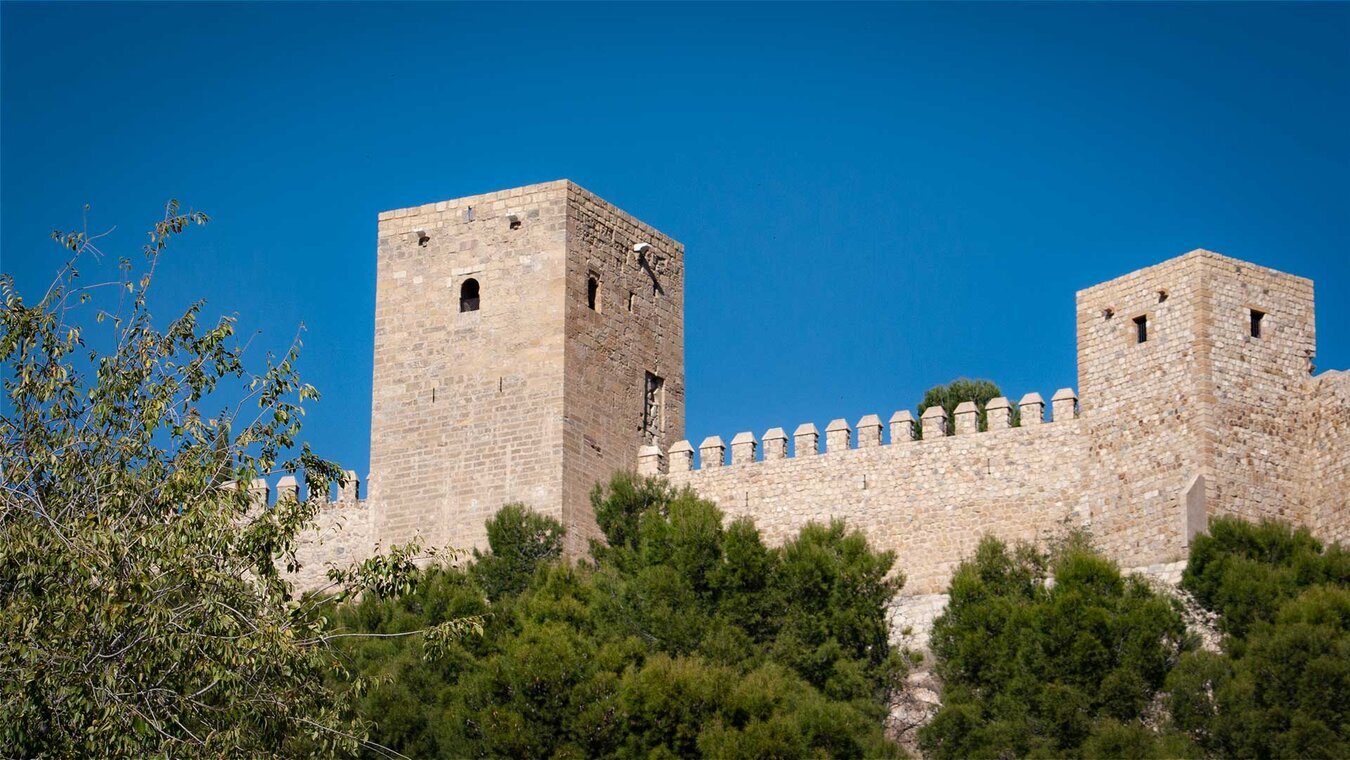
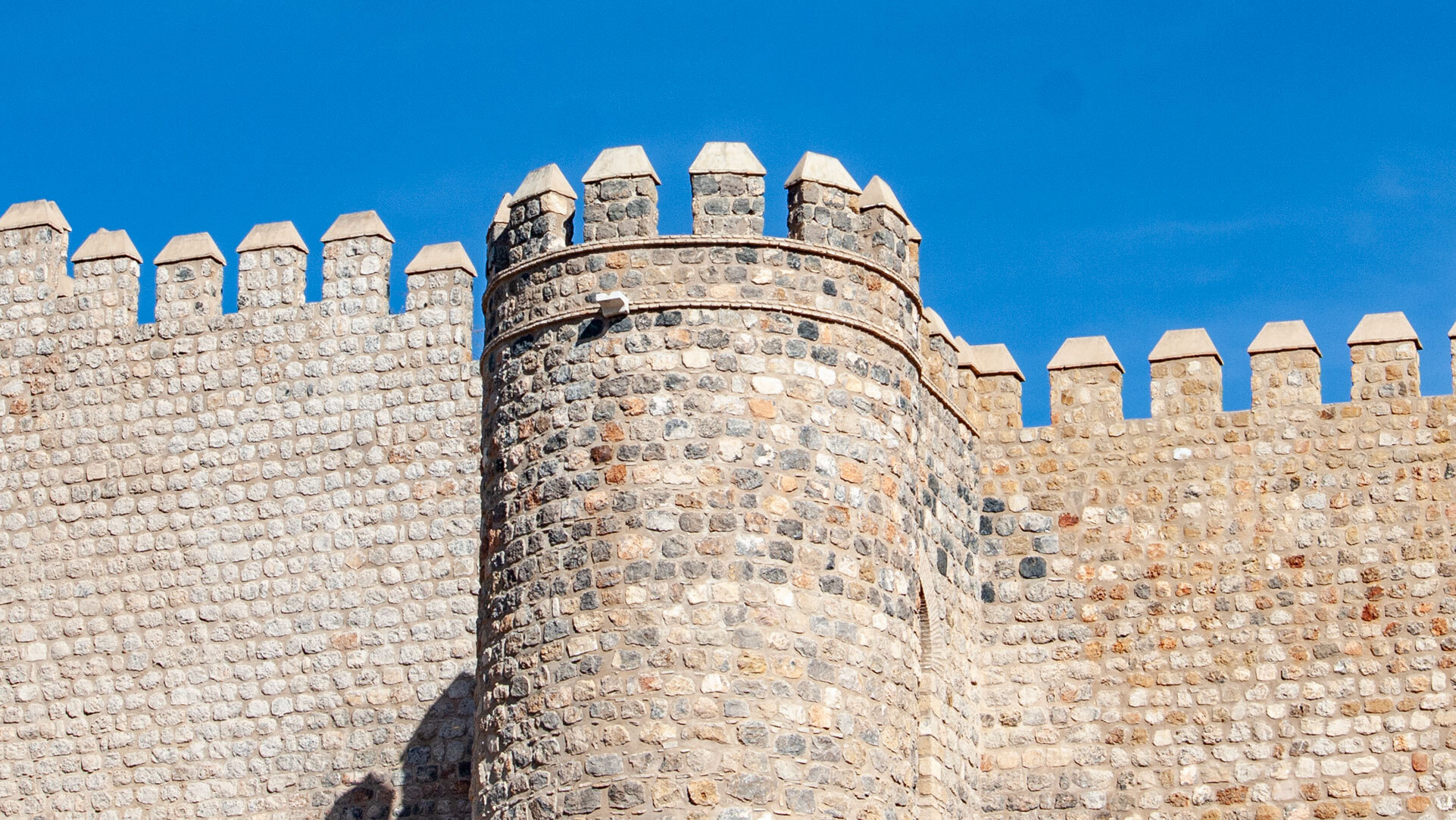 The fortress walls of the Alcazaba de Antequera – testimony to Moorish architecture from the 14th century
Infante Fernando “el de Antequera”
The successful besieger still carries his epithet today: after the conquest, Fernando was called “el de Antequera” — Fernando “of Antequera”. Three years later, in 1412, he was elected King of Aragón in the so-called “Compromise of Caspe” and reigned as Ferdinand I until his death in 1416.
The architecture of the 14th century
What visitors see today on the fortress plateau is a mixture of Moorish fabric and Christian additions. The basic structure — the ring of walls, the two striking towers, the inner fortress gate — is essentially medieval.
Walls and towers from the 14th century
The Alcazaba’s ring of walls encloses the high plateau on which the Real Colegiata Santa María la Mayor also stands. Seen from the valley, the walls look like a compact crown — from above, you can see that they follow the terrain irregularly. Two towers dominate the skyline: the mighty Torre del Homenaje (the main tower) and the somewhat smaller Torre Blanca (the White Tower). Both date from the late Moorish period. Today, a bell from the Christian era hangs in the Torre del Homenaje, the “watchtower” having been repurposed as a “bell chamber”.
The masonry consists of the reddish sandstone typical of the region, which can also be found in the surrounding area at the dolmen sites. Overall, the Alcazaba ranks among the best-preserved Moorish fortifications in Andalusia — precisely because it was never demolished but continued to be used after the Reconquista.
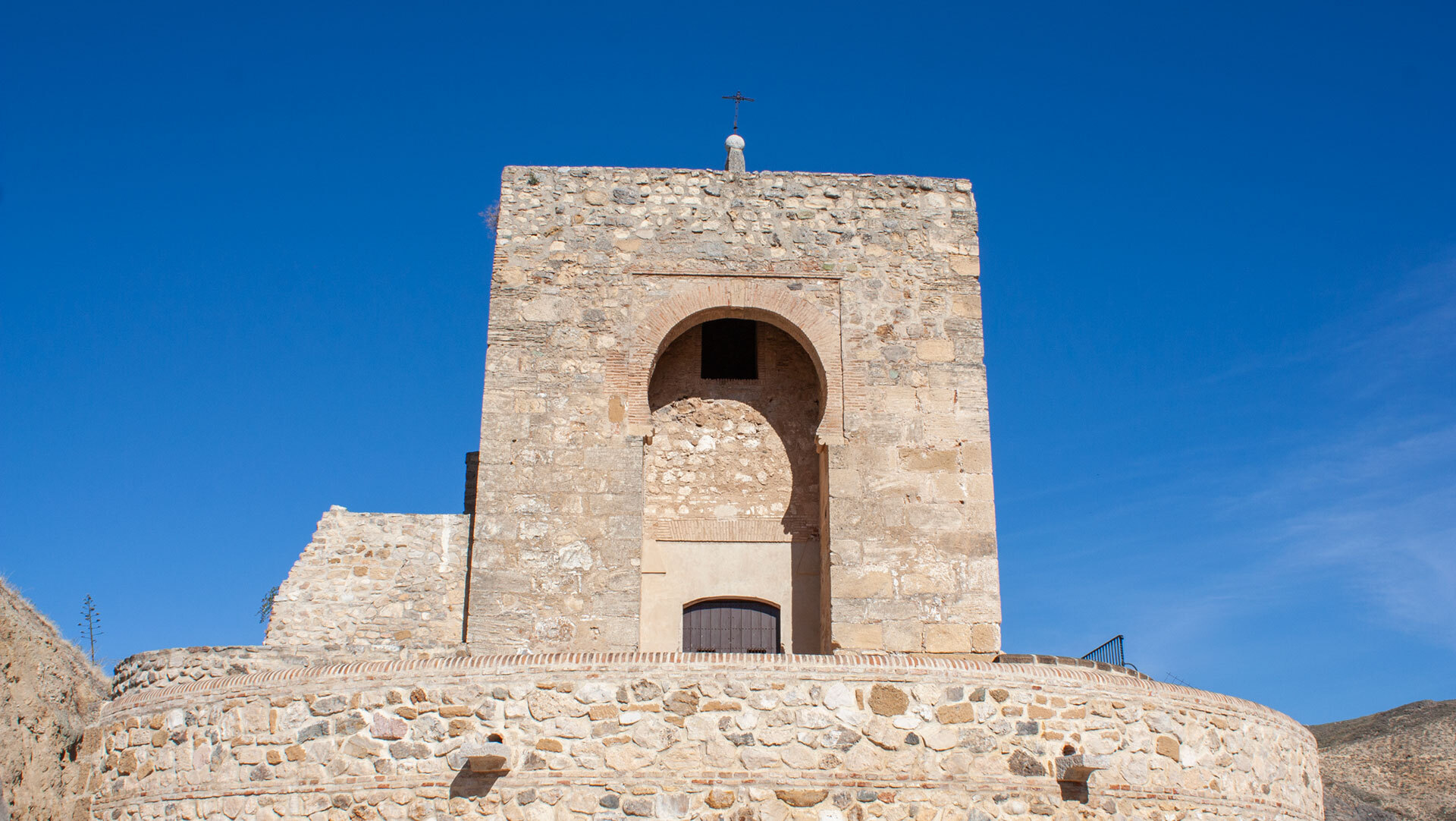
The strategic position above the town
Antequera’s location is still visibly what it was for centuries: a crossroads. Anyone looking out from the Alcazaba over the Vega de Antequera — the fertile plain with its asparagus, cereal and olive fields — immediately understands why it was worth maintaining a fortress of this size here.
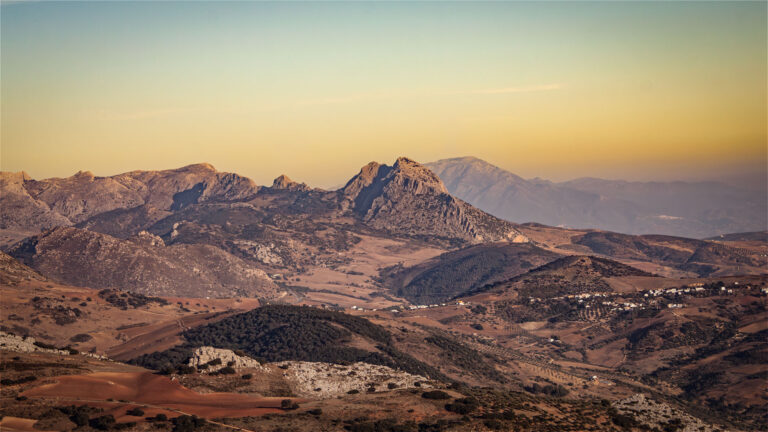
The elevation of the fortress hill is enough to provide clear views to the north, west and east. To the south, the karst massif of El Torcal adjoins directly, its rocky silhouette clearly visible from the Alcazaba.
The Alcazaba and its neighbours: a historic ensemble
Alcazaba, Colegiata and Arco de los Gigantes
Directly next to the Alcazaba stands the Real Colegiata de Santa María la Mayor – one of the earliest and most significant Renaissance church buildings in Andalusia. Its 16th-century west façade is regarded as a pioneering work of Andalusian Renaissance architecture. The church was built immediately after the Reconquista on the site next to the fortress and used its walls for support.
Just a few steps away lies the Arco de los Gigantes, a triumphal arch from 1585 built in honour of King Philip II. Ancient reliefs and inscriptions are set into the archway – Roman spolia from earlier excavations in the surrounding area. Together, the Alcazaba, the Colegiata and the Arco de los Gigantes form Antequera’s densest historic ensemble.
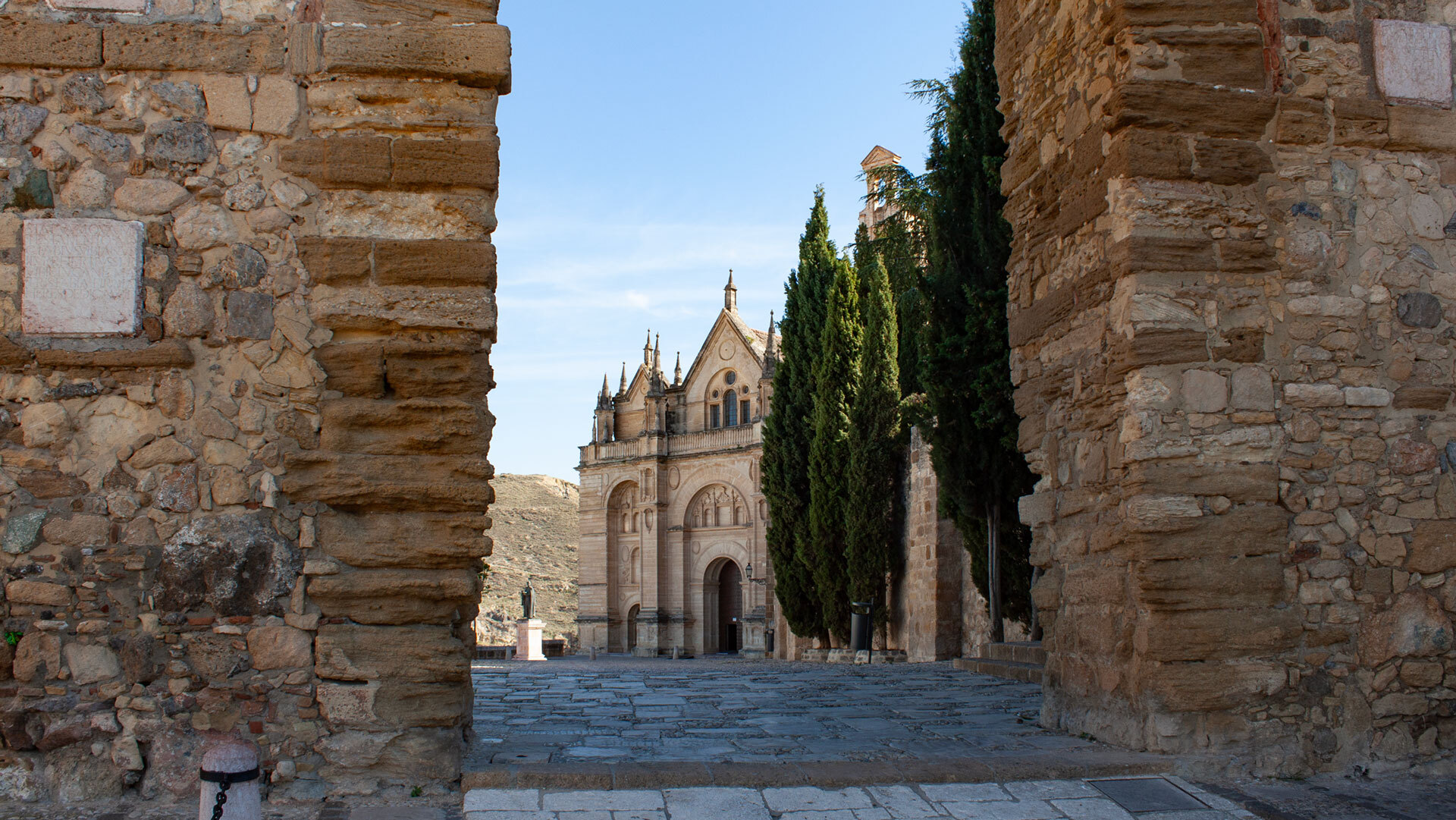
The panoramic view — Antequera, town of bell towers
Anyone reaching the plateau of the Alcazaba is faced with one of the best viewpoints in Andalusia. In clear weather, the view stretches from the karst massif of El Torcal in the south to the Peña de los Enamorados in the east and the broad Vega de Antequera in the north.
What you can see from above
Directly beneath the walls lies the old town with its whitewashed façades, red roof tiles and a strikingly high density of bell towers. Antequera was once regarded as “the town with the most churches per inhabitant in Andalusia” — and this is immediately apparent from the Alcazaba. More than a dozen towers rise up from the sea of houses, from the Iglesia del Carmen to the Real Colegiata right next to the fortress.
Further afield, the striking silhouette of the Peña de los Enamorados stands out — the limestone rock, around 880 metres high, which has been part of the UNESCO World Heritage Site since 2016 together with the dolmen sites and El Torcal. To the south, the jagged rock landscape of El Torcal is outlined. To the west, the Vega stretches out.
The best time of day for the climb
The climb is worthwhile at any time of day. In the late morning, the light is hard and clear — ideal for long-distance views and photos of the mountain silhouettes to the south. In the late afternoon, roughly one to two hours before sunset, the warm light captures the reddish walls and the town’s white façades more beautifully.
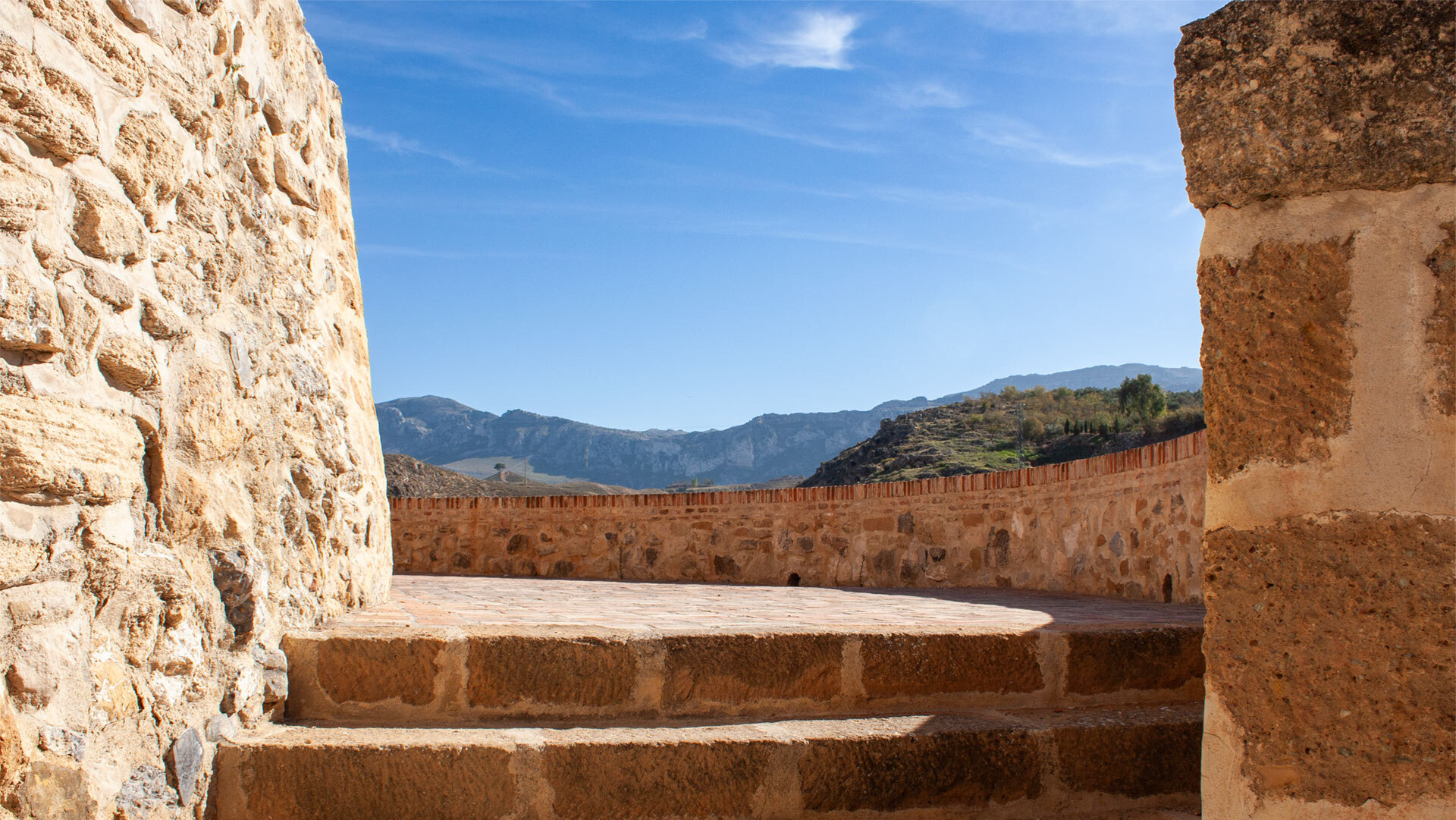
Practical tips – Alcazaba de Antequera
Combine with the Colegiata Both buildings stand on the same plateau — the visit can easily be combined in two to three hours, often with a combined ticket.
Sturdy footwear The climb up the Cuesta de San Judas and the fortress grounds are unevenly paved. Sandals or high heels are not a good idea.
Mind the summer heat There is little shade on the plateau. In July and August, visit early in the morning or late in the afternoon; a sun hat and water are essential.
Photographers’ hour The best light for the town and walls comes one to two hours before sunset. For clear long-distance views to the south, it is better to come in the late morning.
Head straight into the old town afterwards From the fortress exit, it is only a few minutes to the Plaza de San Sebastián and Antequera’s tapas lanes — a lunch break including Porra antequerana is well worth it.
Eintritt & Öffnungszeiten: ⚠️ Aktuelle Öffnungszeiten und Eintrittspreise auf turismo.antequera.es prüfen.
A combined ticket with the Real Colegiata Santa María la Mayor is often available — visitors to both attractions usually save a few euros this way.
Conclusion: The Alcazaba is the architectural heart of Antequera
The Alcazaba de Antequera is more than a historic building — it is the place where the town’s strategic importance becomes visible. From the plateau, you understand why Antequera has been fought over since antiquity and why the Moors maintained one of their most important western fortresses here. And you understand why Infante Fernando received his epithet for 1410 — the conquest of this fortress was no minor detail but a milestone.
More sights: Real Colegiata Santa María la Mayor · Dolmen von Menga · All sights in the Magazinee.
Frequently asked questions about the Alcazaba de Antequera
What is the Alcazaba de Antequera?
When was the Alcazaba conquered by the Christians?
What can you see from the Alcazaba?
What stands next to the Alcazaba?
This article is based on the on-the-ground knowledge of the Gequo editorial team – publishers of several Reisezeit hiking guides and operators of Sunhikes.com. Last updated: May 2026