The Legend of the Lovers of the Peña: Where Two Worlds End in a Single Leap
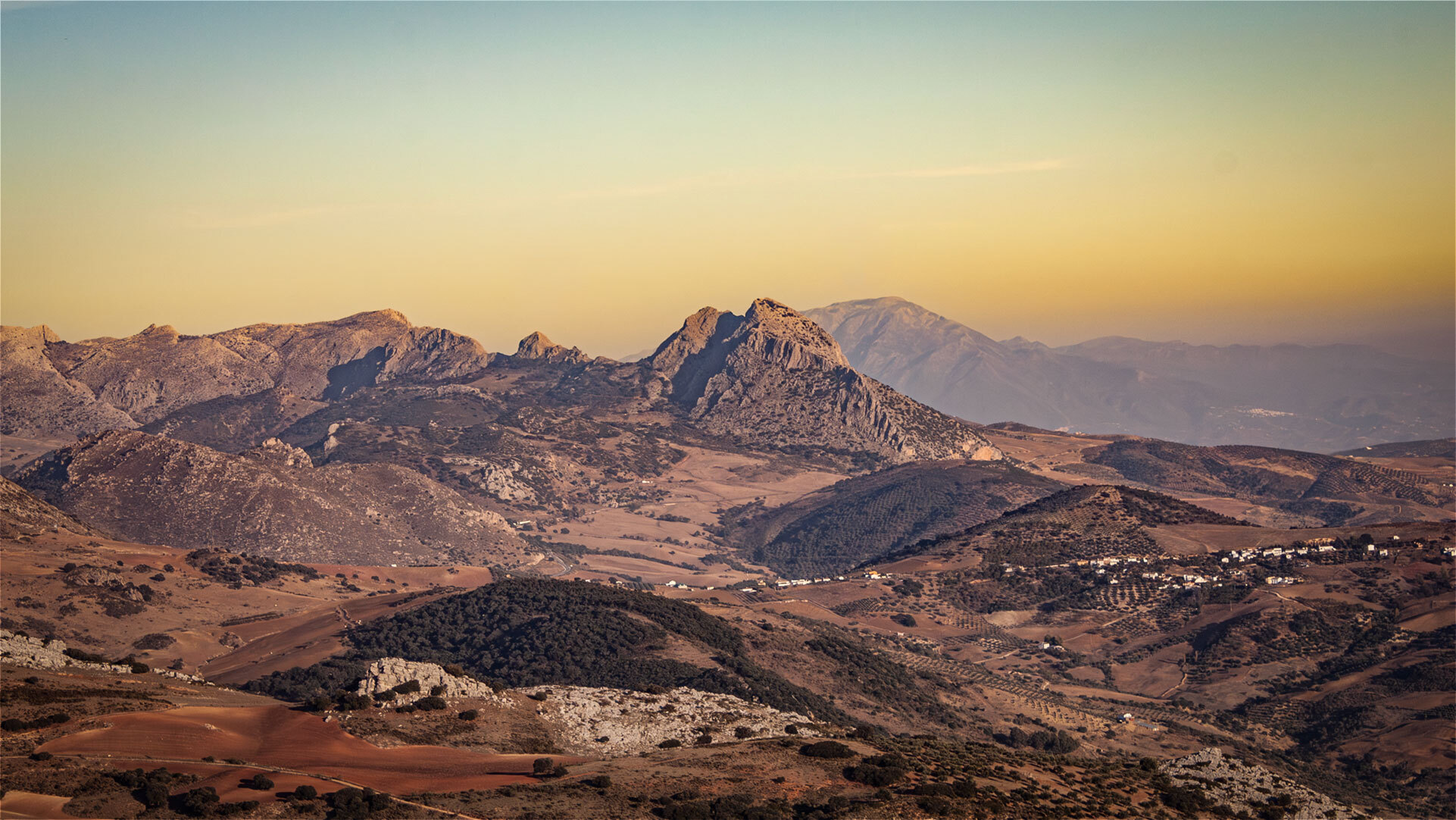
Anyone looking north-east from the Alcazaba in Antequera sees it on the horizon: a table mountain whose silhouette against the sky resembles a reclining human profile. Today the mountain is called Peña de los Enamorados – the Lovers’ Rock. Behind this name lies one of the oldest legends in Andalusia. A tale of forbidden love during the Reconquista, of flight, pursuit and a final leap into the abyss – a story that hovers between historical plausibility and folkloric embellishment, and has been retold for centuries precisely because of that.
The legend was first written down in the 16th century, roughly a hundred years after the Christian conquest of Antequera (1410). Various versions have circulated ever since. The main characters are usually called Tello and Tagzona – a Christian soldier and a Moorish princess who meet on the borderline between two cultures, at a time when Antequera was still under Moorish rule and the Reconquista lay at the gates of the city.
What the legend tells, where its historical echoes come from, which versions are in circulation, and why the tale is attracting fresh attention today – a literary approach to the myth behind the Lovers’ Rock.
The Tale: Tello and Tagzona Between Two Kingdoms
The best-known version of the legend
In the early 15th century, in the last decades of Moorish rule over Antequera, a young Christian soldier named Tello is taken prisoner by the Moors. He is held in the dungeons of the Alcazaba of Antequera. From there, through an opening in the walls, he can see the strange table mountain to the north-east, shaped like a reclining human figure. Tello sits there, captive, with no prospect of freedom – until one morning the door opens.
Tagzona, the beautiful daughter of the king or of a powerful Moorish nobleman from Archidona, visits the prisoner. A single glance is enough to kindle a love that is impossible: she is Muslim, he is Christian. Neither culture has any tolerance for such a union. Tagzona returns daily, always with new pretexts, always staying longer. Eventually the two decide to flee together.
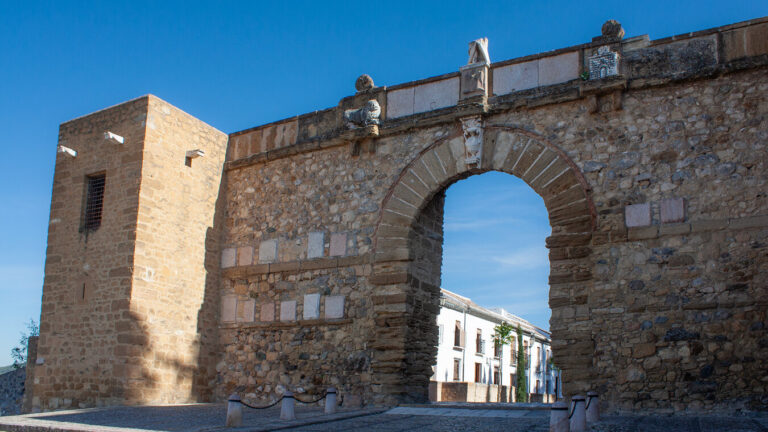
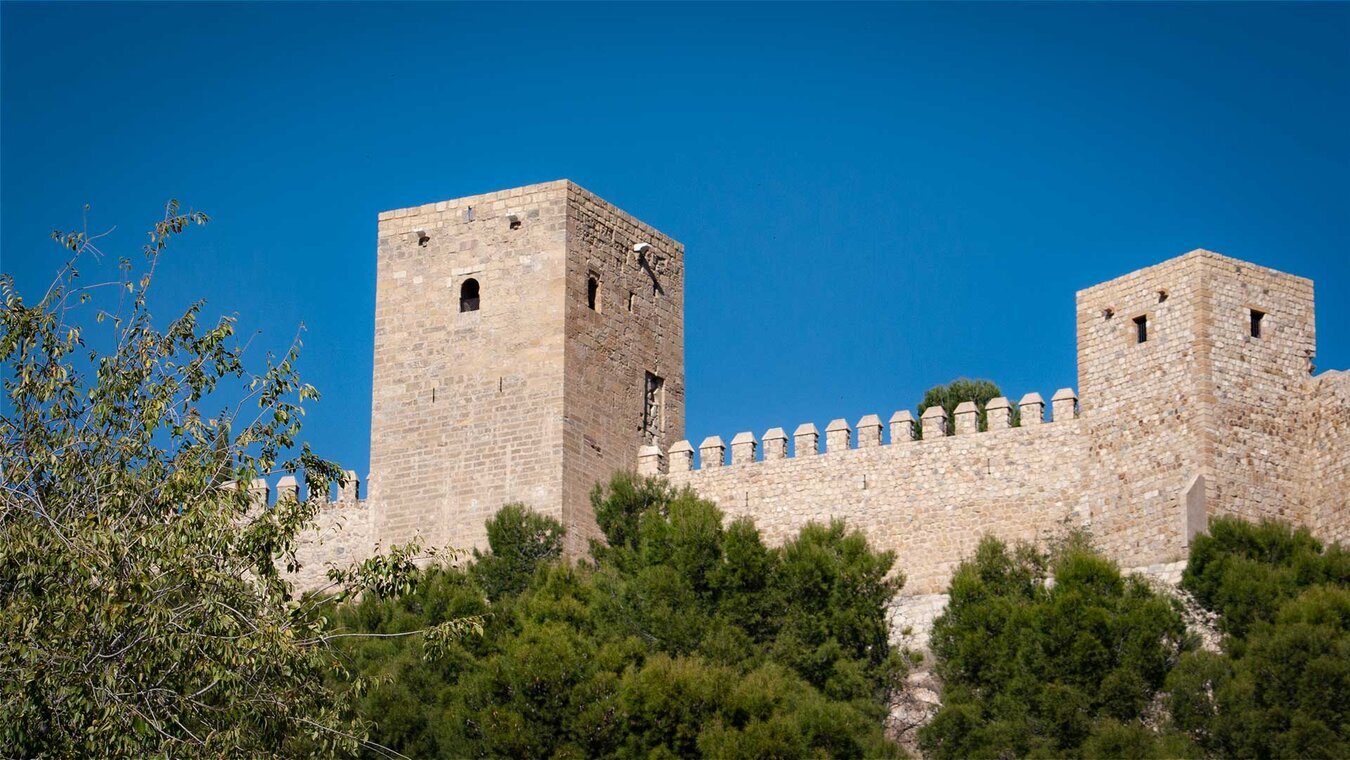 The Alcazaba of Antequera – setting of Tello’s captivity and starting point of the escape in the legend
The escape begins on a night when, by coincidence, the Christian King Fernando is also massing his troops before the gates of Antequera. The city is surrounded. Tagzona’s father discovers his daughter’s disappearance, has the gates sealed and his riders mount up. Tello and Tagzona, caught between two armies, flee the Alcazaba through the sleeping streets, out into the open countryside and up into the hills.
They head for the mountain Tello had seen from his cell – the tall table mountain halfway between Antequera and Archidona. A long climb in the darkness, guided by the moon, driven on by the sound of hooves behind them. As the sun rises and the two lovers reach the summit, they see both armies already gathered below them. Hand in hand, they stand at the edge of the sheer southern cliff face. There is no way out any more.
The Leap: Where Love Proved Stronger than Separation
The final image of the legend
What follows is the image that made the legend famous. Tello and Tagzona, now hemmed in by their pursuers on one side and the abyss on the other, make their decision. Better to die together than live apart. Hand in hand, they leap over the edge of the cliff. At the foot of the mountain, so the legend says, both armies find their bodies. And in a moment of rare accord, the Moorish king and the Christian king come together and agree to a temporary truce.
The literary form of the legend
Die ältesten erhaltenen schriftlichen Versionen stammen aus dem 16. Jahrhundert, Hinweise finden sich aber bereits in Chroniken des 12. Jahrhunderts. Im 19. und 20. Jahrhundert wurde die Geschichte in Gedichten, Dramen und Romanen verarbeitet – darunter Werke von Lope de Vega und romantischen Dichtern aus Sevilla und Málaga.
Eine Sammlung der wichtigsten Antequera-Legenden hat in jüngerer Zeit Eugenia María Acedo zusammengetragen – ihr Buch dokumentiert die verschiedenen Versionen und zeigt, wie sich die Legende über die Jahrhunderte gewandelt hat.
Other versions of the legend tell the story slightly differently. In one variant, Tagzona is not a princess but the daughter of a wealthy merchant; in another, the lovers initially escape and are only caught up with later on the mountain. The central movement, however, always remains the same: two young people from different worlds, an impossible love, a voluntary death at the edge of the rock.
The reconciliation of the two kings at the foot of the Peña is particularly interesting from a literary point of view – it gives the tragedy a political dimension. The love between the two young people symbolically reconciles what politics cannot: two cultures, two religions, two kingdoms. It is the Andalusian counterpart to Romeo and Juliet, with a concrete geographical setting and a historical anchor in the Reconquista. Antequera fell into Christian hands in 1410 – the legend places the tragedy in the years immediately before that.
Historical Reality: What Might Be True in the Legend
Between the Reconquista, folklore and literary invention
How much of this legend is historical memory, and how much literary invention? The question can no longer be definitively answered today. What is historically certain is this: Antequera was under Moorish rule from the middle of the 8th century until 1410, and in the last decades before the Christian conquest it stood as a border town between al-Andalus and the Christian kingdoms of Castile and Aragón. Mixed relationships between Christians and Moors are documented during this period – though not to the romantic degree the legend conveys.
| Antequera under Moorish rule | yes – approx. 8th century to 1410 |
|---|---|
| Siege of Antequera by Fernando | yes – several months in 1410 |
| Conquest by Christian troops | yes – 24 September 1410 |
| Tello as a historical figure | not documented – a common name of the period |
| Tagzona as a historical figure | not documented – the name follows Arabic patterns |
| Leap from the Peña | not documented – a literary convention |
| Pact between the kings at the foot of the Peña | not documented – a literary embellishment |
| First written source | 16th century – so roughly 150 years after 1410 |
This constellation – forbidden love between two worlds, a shared death in a leap from a rock – is a literary motif found in several Mediterranean cultures. Similar legends exist in Sicily, Calabria and Anatolia. The Antequera version is notable in that it is linked to a specific geographical landmark whose silhouette really does resemble a reclining human profile. It is likely that the shape of the mountain gave rise to the story – not the other way round.
Whether there is a historical kernel can no longer be established. It is more likely that the legend arose in the decades after the conquest, as Antequera became a Christian city and the Moorish heritage was romanticised in local memory. Other legends of the region were also shaped during this period – such as the story of King Fernando and his vision of the white woman, who foretold to him the conquest of El Torcal. Both legends are sister tales from an era in which Antequera wrote its own mythology.
Conclusion: A legend that gives meaning to the landscape.
The legend of the Lovers of the Peña is an example of how landscape and story reinforce one another. The mountain’s striking silhouette gave rise to the story, and the story gave the mountain its name. Anyone who looks at the Peña today knowing the legend sees not just a table mountain, but a reminder of the cultural border on which Antequera stood for five centuries. One final recommendation: anyone who has heard the legend should view the Peña at sunrise – most impressively from the Plaza del Coso Viejo or on the approach to the dolmen sites. In the morning light, the reclining profile stands out especially sharply against the sky.
More about the region: the mountain itself and its UNESCO significance: Peña de los Enamorados. The fortress where, according to the legend, Tello was held captive: Alcazaba of Antequera. A second legend from the region: The Woman in the Dolmen – The Legend of Menga. The town of Antequera as a destination: Antequera Spain.
Frequently Asked Questions about the Legend
Who were Tello and Tagzona?
When did the legend originate?
Is there a historical kernel to the story?
Where has the legend been treated in literature?
Where is the best place to view the Peña?
This article is based on the on-the-ground knowledge of the go Torcal Antequera editorial team – publishers of several travel-season hiking guides and operators of Sunhikes.com. As of: May 2026.