Bird protection area El Torcal: where 82 species are protected
Anyone studying the map in El Torcal will sooner or later come across four letters that are explained nowhere: ZEPA. Behind the abbreviation lies a European protection concept that has formally made the entire nature park a bird protection area for more than twenty years — with concrete consequences for every visitor, from the question of why drone flying is banned to the question of which birds you can actually expect to see here.
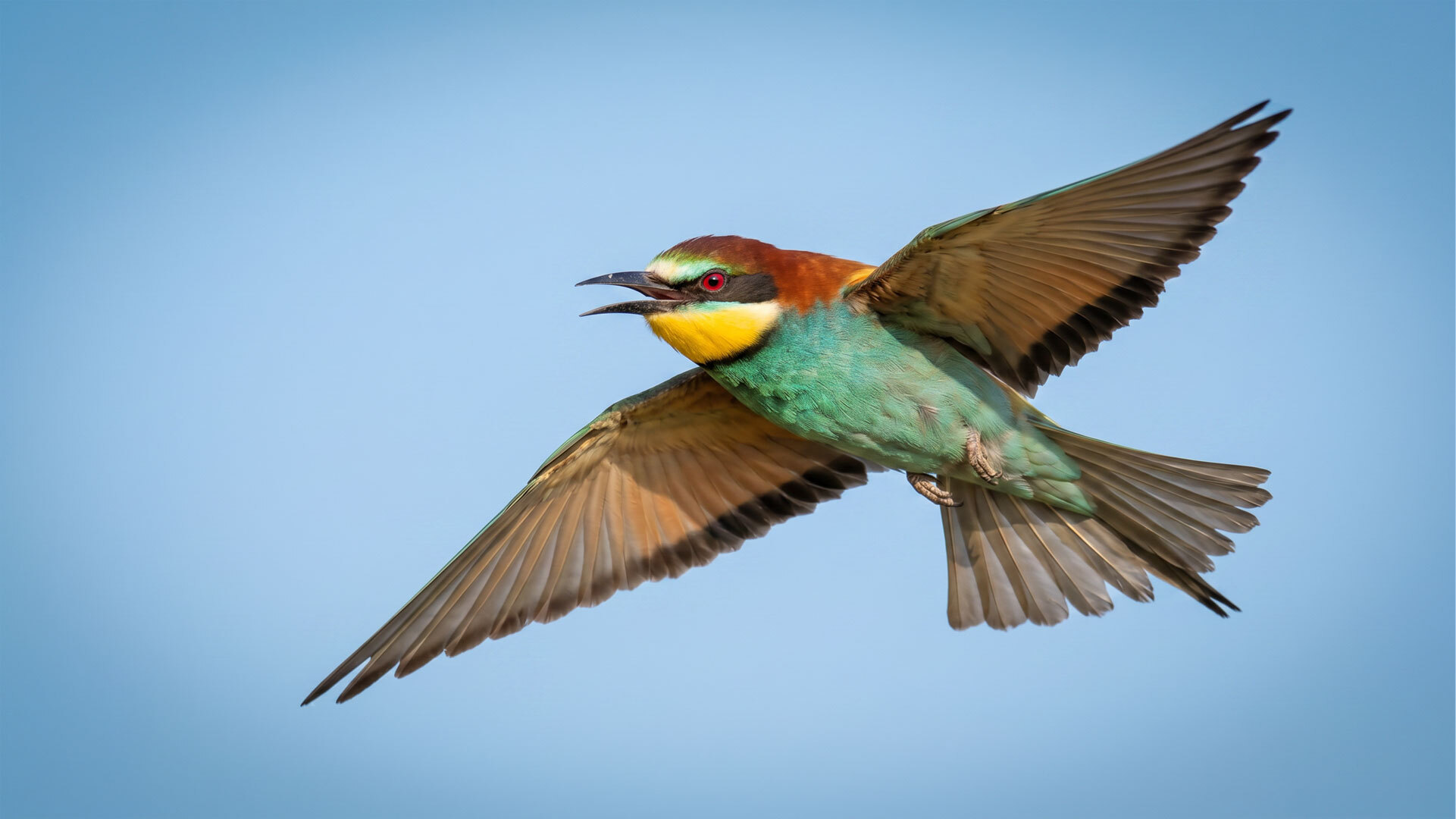 Bee-eater (Merops apiaster)
ZEPA stands for Zona Especial de Protección de Aves — roughly translated: Special Bird Protection Area. El Torcal has held this status since 2002 and is thus part of a Europe-wide network of protected areas that binds member states to safeguard breeding bird species and their habitats. In the karst massif this concerns 82 bird species specifically: from the frequently circling griffon vulture to the shy peregrine falcon on the cliffs.
What the protection scheme covers, which species it concerns, and how the park’s rules of conduct follow from it.
ZEPA – what the abbreviation really means
The ZEPA sign at the entrance to the nature park is more than an administrative formality. It marks membership of a European protection system that was introduced in the mid-1980s as a direct response to the dramatic decline of many bird species in Europe.
Zona Especial de Protección de Aves
The Spanish abbreviation ZEPA corresponds to the English category SPA (Special Protection Area) — both denote protected areas designated on the basis of the EU Birds Directive. The directive obliges every EU member state to provide binding protected areas for endangered or vulnerable bird species.
In plain terms: the list of species to be protected is standardised across Europe, while the specific extent of the area is determined by the member state. A ZEPA is therefore not a Spanish invention but part of a continent-wide network — together with the Habitats Directive sites (Fauna-Flora-Habitat), it forms the overarching Natura 2000 protection network.
In practice this means: whatever counts as a protection rule in El Torcal applies by the same standard in bird protection areas in France, Germany or Poland.
How El Torcal made the EU list in 2002
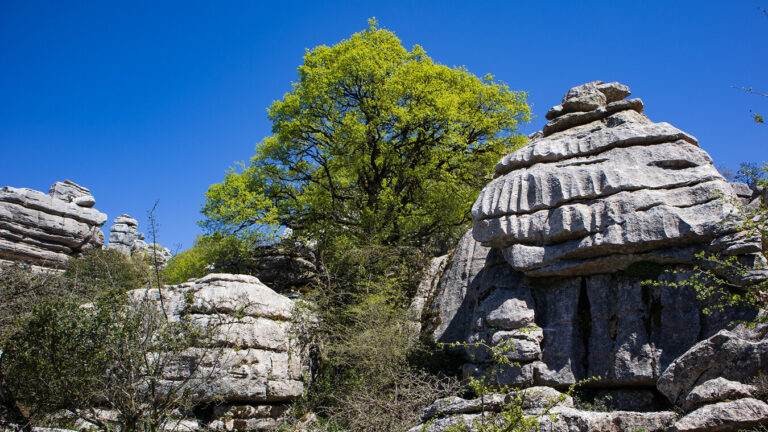
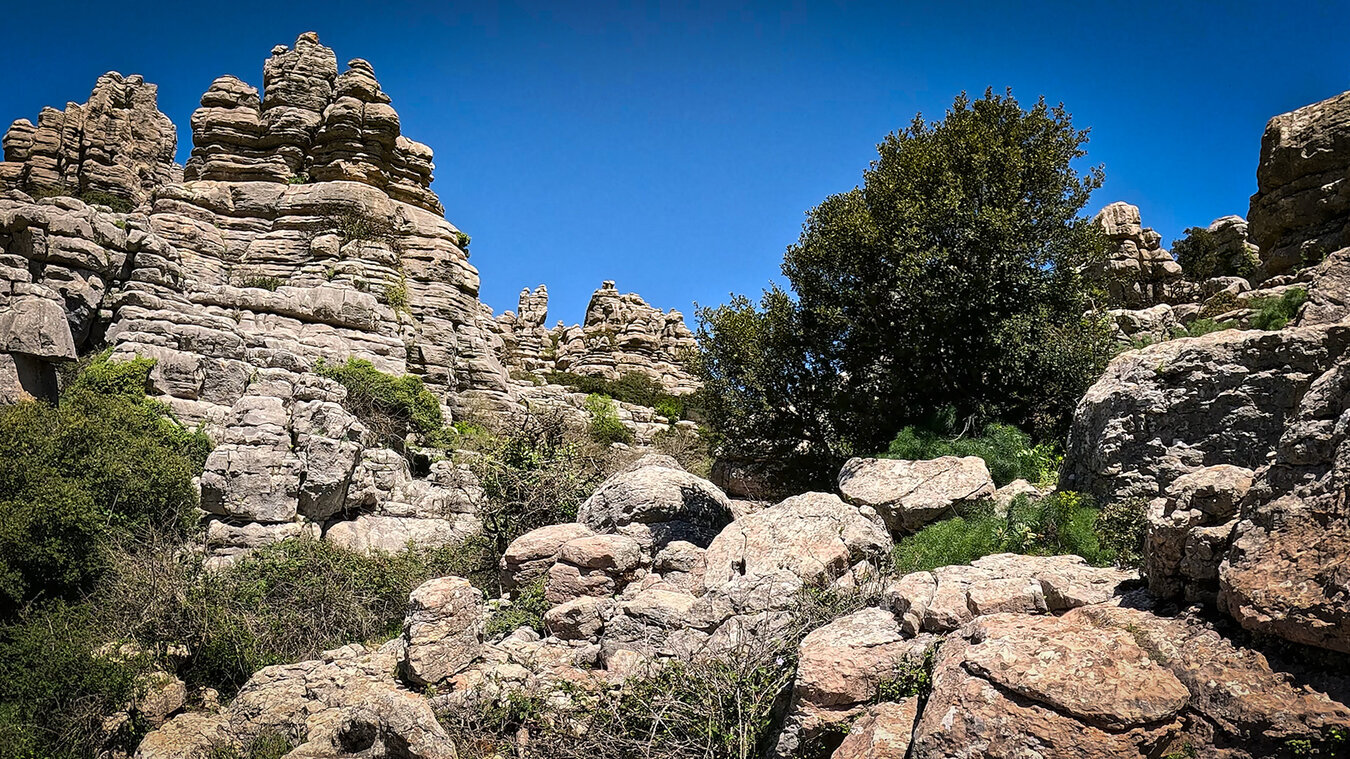
El Torcal was officially designated a ZEPA in 2002. The reasoning stems from the bird life itself: the karst massif, with its sheer cliffs, deep gorges and caves, offers ideal habitat for cliff-nesting birds of prey. Golden eagles, Bonelli’s eagles, peregrine falcons and Eurasian eagle-owls nest in walls that are unreachable for ground predators. Griffon vultures circle over the plateau day after day, making use of the updrafts along the rock ledges.
The designation was not the beginning of protection but a formalisation of it. El Torcal has been a protected area since 1978 and a recognised nature park since 1989. The ZEPA status added the extra EU-legal dimension in 2002 — and with it, concrete consequences for the use of the site.
What breeds in the ZEPA: an overview of the 82 bird species
The figure sounds abstract at first: 82 bird species. These are all the confirmed species, from the small wheatear on the rock slabs to the large griffon vulture riding the thermals. In total, biologists count 116 vertebrate species in El Torcal: 1 amphibian, 11 reptiles, 22 mammals — and those very 82 birds that make up the range of this protected area.
The birds of prey on the cliffs
Birds of prey are at the heart of the protection concept. They breed in the sheer rock faces, often in spots that are barely visible even from above. The golden eagle and Bonelli’s eagle are the most exclusive representatives — rare, shy, and tied to fixed breeding sites. The Eurasian eagle-owl, Europe’s largest owl species, nests in rock crevices and caves and is mainly active at dusk. The peregrine falcon, which declined in many regions during the 20th century due to human pressure, maintains a small but stable population in El Torcal.
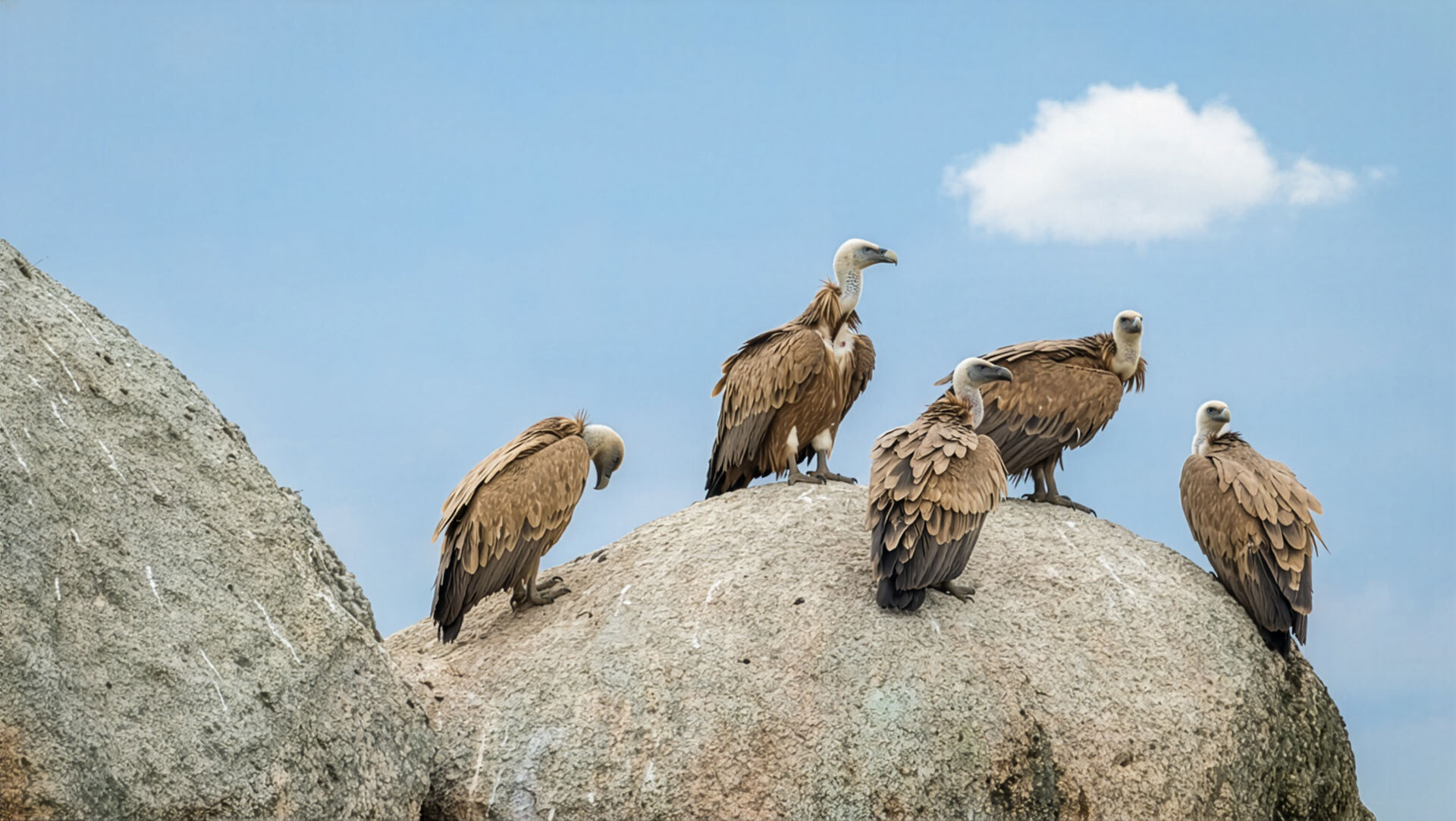
Griffon vultures are seen more often. With a wingspan of up to 2.80 metres, they circle during the day and make use of the updrafts along the edge of the plateau. They feed exclusively on carrion and are harmless to people. The Egyptian vulture is a seasonal visitor: as a migratory bird it spends the summer in Andalusia and moves on to Africa in winter. Aside from the now-rare peregrine falcon, the common kestrel and little owl round out the picture of more frequently seen daytime hunters.
High-altitude species and cliff-ledge dwellers
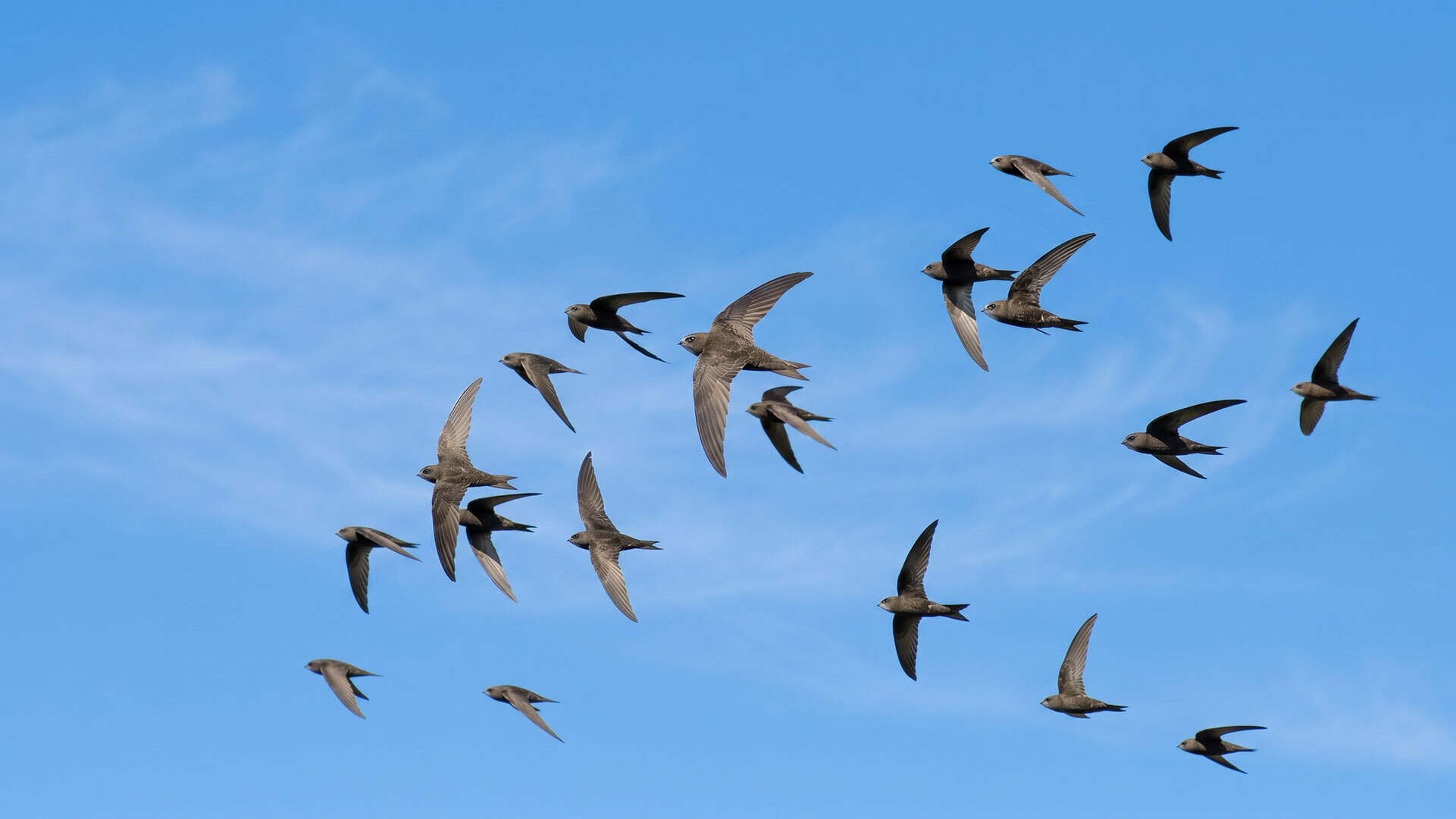
At the highest points of El Torcal lives a distinct group of birds that is atypical for the region. The red-billed chough — a crow species with a red bill and acrobatic flight — and the alpine swift, a long-winged relative of the common swift, are among the high-altitude dwellers that use the plateau as a breeding ground. Both species are rare outside high mountain ranges, making El Torcal de Antequera a special site from an ornithological point of view.
On the rock ledges and in the scrubland you regularly see black-eared wheatears and black wheatears — unassuming songbirds with striking contrasting colouring. Then there are bee-eaters, a summer-breeding migratory bird with strikingly colourful plumage, which ranks among the park’s most photogenic sights — and is exactly the bird species that symbolically embodies the protected area.
What the protected area means for visitors
The ZEPA status sounds at first like an administrative formality. In practice, it gives rise to concrete rules of conduct that are not merely recommended but binding. Anyone entering El Torcal implicitly accepts these rules.
Drone flying is taboo – and why
The most important point for modern travellers: drone flying is banned throughout the entire nature park. The ban is no petty restriction — it follows directly from the ZEPA’s protection mandate. Drones trigger massive stress responses in breeding birds of prey. In the worst case, adult birds abandon their clutch or chicks — the breeding attempt is lost.
For species such as the griffon vulture, this carries particular weight: a breeding pair raises only a single chick per year. Every lost breeding attempt is a permanent loss for the regional population. What might be a brief, spectacular video for the drone pilot can mean the end of an entire breeding season for the bird family.
What else is not allowed
Drones are only one side of it. Other activities are also explicitly prohibited in the ZEPA. Climbing on the rock faces is banned. Paragliding and hang-gliding over the plateau are likewise taboo, because the flying equipment interacts directly with the birds of prey’s breeding grounds.
Leaving the waymarked paths is also not just a safety issue but a conservation one. Ground-nesting birds and hidden nesting sites are regularly disturbed by walkers cutting across country. For the same reason, dogs must be kept on a lead — a dog running loose can scare a group of griffon vultures away from a carcass or drive a peregrine falcon family from its hiding place.
How to watch the birds responsibly
The bird protection area is not a no-go zone. On the contrary: the protection rules are designed so that observation remains possible without endangering the population. Anyone who knows the rules can experience the park’s ornithological richness up close.
Binoculars instead of drones
The simplest substitute for the drone’s-eye view is a good pair of binoculars. A magnification of 8×42 is enough for most observations; anyone wanting to make out birds of prey clearly in the thermals should go for 10x magnification. Spotting scopes are worthwhile if you plan to spend longer at a viewpoint and want detailed observations.
The Mirador de las Ventanillas by the visitor centre offers a clear view over the Río Campanillas valley and the open rock platforms — an ideal starting point for watching griffon vultures. The Ruta Amarilla and the Grand Circuit cross several spots with an unobstructed view of the sky.
Best time, best places
Viewing conditions vary with the season and time of day. Birds of prey rely on updrafts, which form when the ground heats up and warm air rises. In concrete terms, that means from midday until early afternoon, ideally between 11am and 3pm. In the morning hours the air is still too cool, and the updrafts ease off again in the late afternoon.
Across the year, March to October are the most productive months: long days, strong sunshine, optimal thermals. In winter, birds of prey often stay longer at their roosts because the thermals are weaker. Spring and early summer are additionally the breeding season — observation then calls for particular care, without approaching nests.
| Rules of conduct in the bird protection area | |
|---|---|
| Drones | Drone flying is banned throughout the entire nature park. This applies to all types of drone — including small toy models and action cams mounted on quadcopters. Violations are penalised. |
| Climbing | Climbing on the rock faces of El Torcal is banned. The nearby climbing areas at El Chorro and the Caminito del Rey offer legal alternatives. |
| Paragliding and hang-gliding | Banned over the plateau — they disturb the birds of prey’s breeding grounds and intrude directly into the birds’ airspace. |
| Paths | Stay on the waymarked routes. Cutting across country disturbs ground-nesting birds and hidden nesting sites, and is also dangerous in the karst terrain. |
| Dogs | Keep on a lead. Dogs running loose can drive breeding birds from their nests and scare groups of griffon vultures away from carcasses. |
Conclusion – ZEPA makes El Torcal a bird paradise
The ZEPA status held since 2002 is more than an entry on an EU list. It secures the livelihood of 82 bird species that breed or rest in the karst massif — from the bee-eater in summer to the year-round circling griffon vulture. The resulting rules are clear: no drones, no climbing, no paragliding — but open paths for observers with binoculars. For the individual birds of prey: Birds of prey in El Torcal. For the ground-dwelling animals as a complement to the protection concept: Reptiles and amphibians. For the general rules in the karst: Safety rules in the karst labyrinth. Overview of the nature park: The karst landscape of El Torcal.
Frequently asked questions
What does the abbreviation ZEPA mean?
Since when has El Torcal been a bird protection area?
Why is drone flying banned in El Torcal?
How many bird species live in El Torcal?
Which birds of prey can be observed in El Torcal?
This article is based on the on-the-ground knowledge of the Gequo editorial team – publisher of several travel-season hiking guides and operator of Sunhikes.com. As of: May 2026