Walking safely in El Torcal: what you need to know in the karst labyrinth — and why it matters so much here
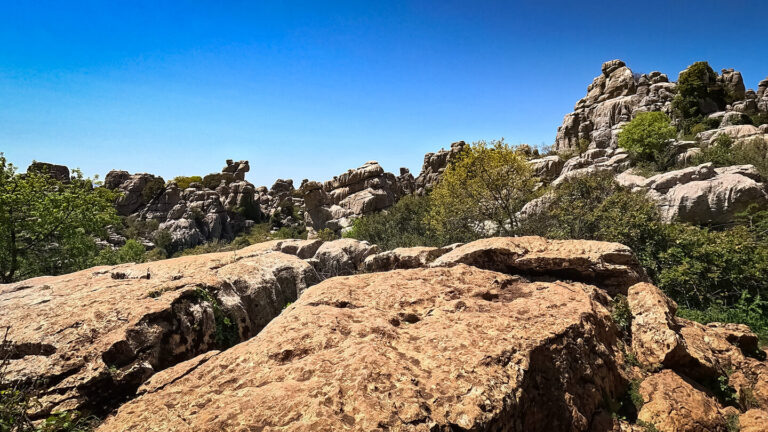
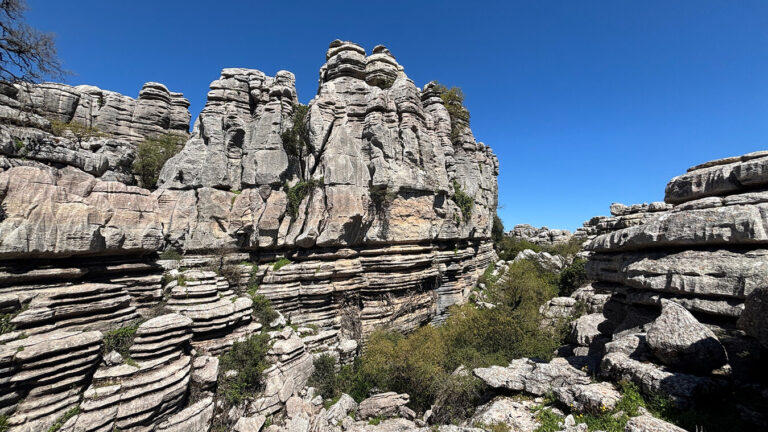
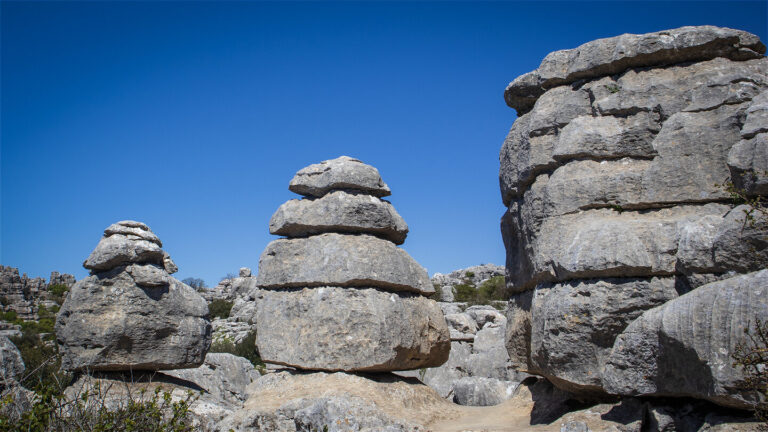
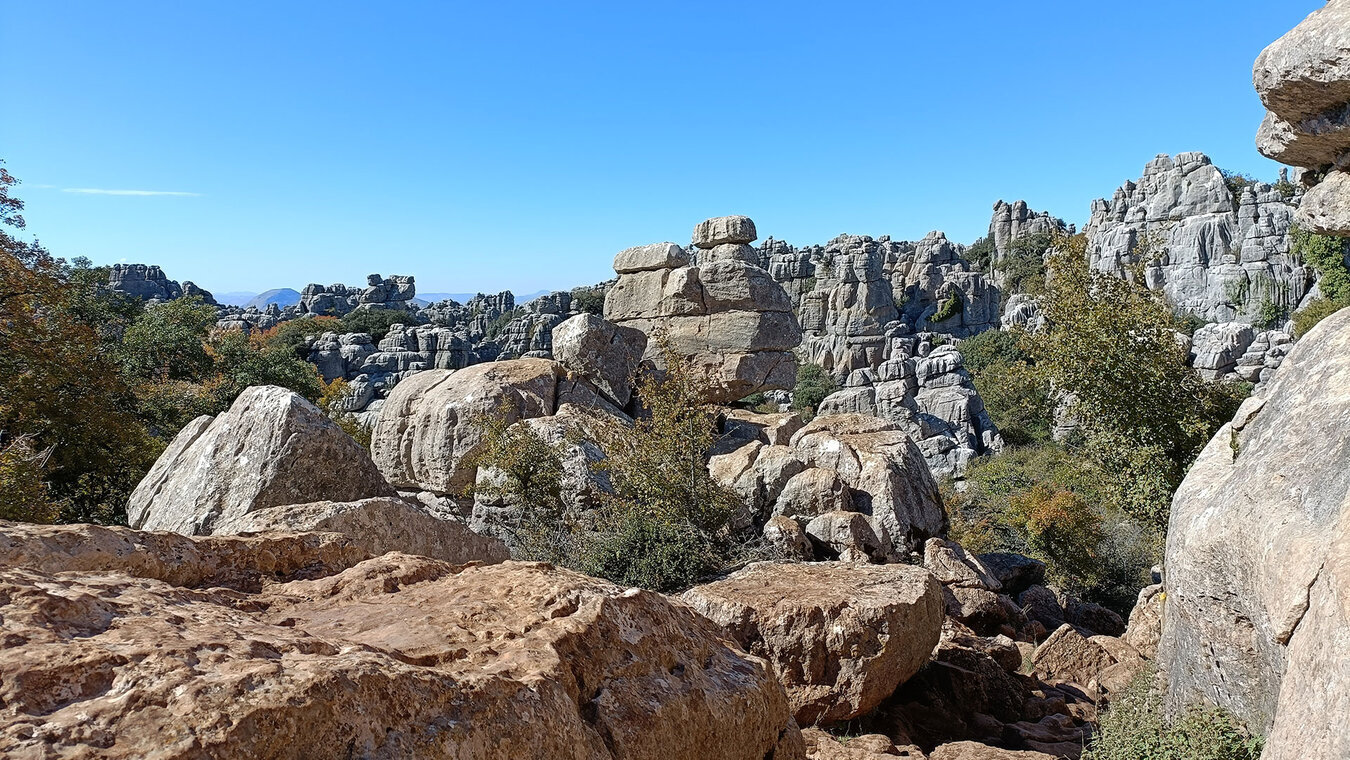
There is one moment in El Torcal de Antequera that stays with everyone. You leave the Torcal Alto visitor centre, walk a hundred metres, and suddenly find yourself in a petrified city. Little towers, narrow lanes, dead ends, rock archways. It looks as though someone commissioned the mountains as a sculpture. And it is precisely at this moment that so many people underestimate just how seriously the park deserves to be taken.
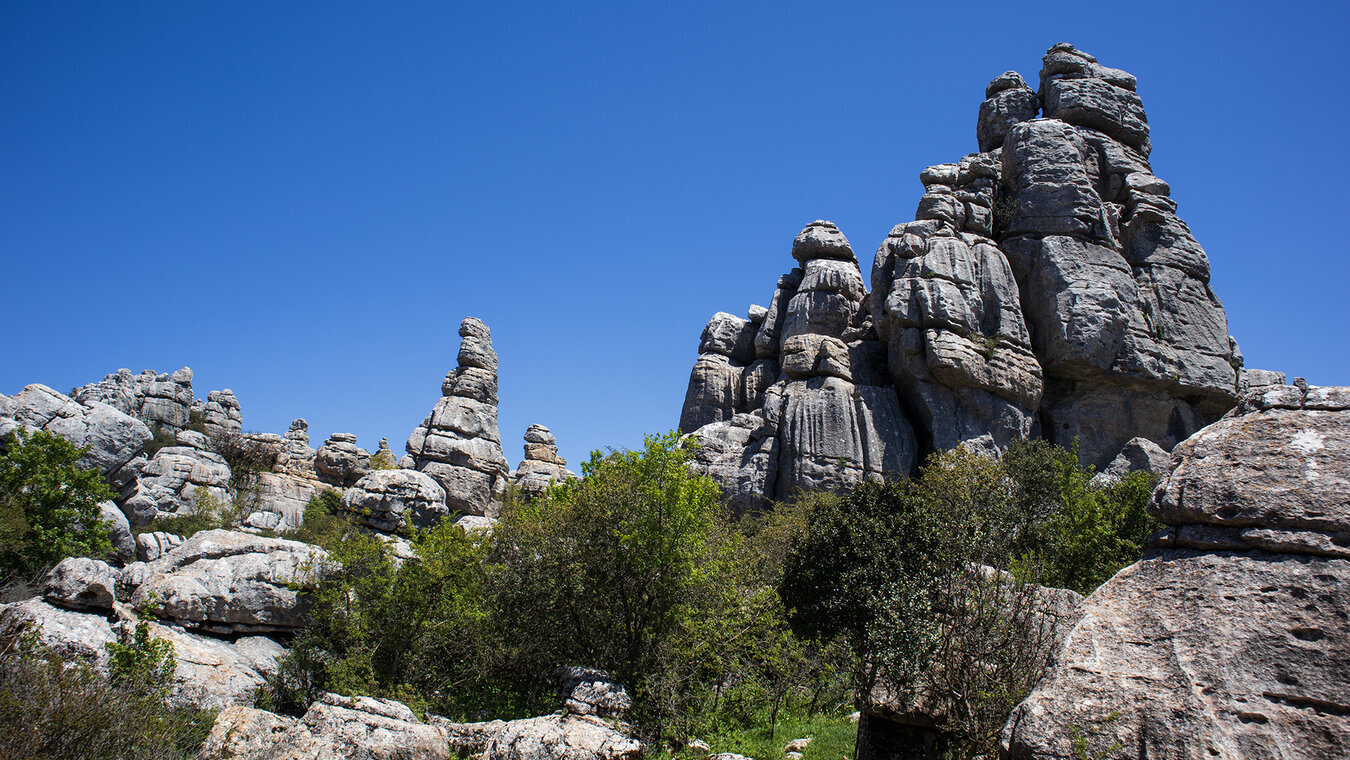
This karst landscape, sitting between 1,100 and 1,400 metres up, is no ordinary walking country. Fog can roll in within ten minutes where, moments before, you could see clear across to the Sierra Nevada. In summer, griffon vultures wheel above the plateau; in winter the thermometer drops well into double figures below zero. All of it is part of the spectacle — and part of the rules the plateau hands you on your way in.
The park authority has distilled all this experience into ten short statements: the golden walking rules for El Torcal. Every one of them has a reason behind it. This guide works through all ten — with the thinking behind them, the emergency number, a few words on the weather, and advice for families.
Protected area, altitude, emergency number: the essentials at a glance
The key facts that frame every safety question
Before we come to the ten rules, here are the numbers that explain everything else. El Torcal lies higher than the coast, and that has consequences for temperature, wind and weather. The park has been a protected area since 1978 and an EU bird protection zone (ZEPA) since 2002. And beneath the surface, the limestone is riddled with shafts — one of them 230 metres deep.
| Plateau height | 1,100–1,400 m · highest point Camorro del Mástil, 1,348 m |
|---|---|
| Protected status | Paraje Natural since 1978 · ZEPA bird protection zone since 2002 |
| Deepest cave | Sima Rasca, 230 m straight down — accessible only with ropes; walkers keep well clear |
| Winter temperature | down to -10 °C possible, snow rare |
| Waymarked routes | Ruta Verde · Ruta Amarilla |
| Notruf europaweit | 112 — works on any mobile, without a PIN, on any network |
| Besucherzentrum | reservas@torcaldeantequera.com · +34 952 243 324 (Mo–Fr 10:00–17:00) |
The 10 golden walking rules — and what they really mean
Rule 1: Stay on the waymarked paths — and only tackle the Grand Circuit with a GPS track
Two routes are waymarked within the park: the short Ruta Verde and the middling Ruta Amarilla. On both, the rule is simple: follow the wooden posts and do not cut corners. The moment you leave the markers, it is easy to lose your bearings among the towering rocks — in this labyrinth it takes only minutes, especially in fog.
The Grand Circuit, by contrast, is not waymarked and is pathless in places. It leads through genuinely alpine karst terrain and is meant for experienced walkers. Anyone attempting it needs a GPS track on a phone or device, good visibility and settled weather. In fog, in winter or without a track, it is no place to go it alone — in which case the guided Old Red Route from the visitor centre is the right alternative.
Even GPS devices work only patchily in the deep lanes, because the rock walls block the signal. A track is no substitute for a sense of direction, then — it merely complements it.
Rule 2: Take no plants or stones
More than 600 plant species grow here, over 30 of them wild orchids — six of which are found nowhere else on earth. Even an ammonite lying by the path belongs to the park and to the story of this landscape; collecting fossils is forbidden. What you take home, in any case, are the memories and a few good photos.
Rule 3: No drones
The plateau is a bird protection zone under EU law (ZEPA / Zona Especial de Protección de Aves). Griffon vultures often circle the massif several at a time, and golden eagles, Bonelli’s eagles, eagle owls and peregrine falcons nest in the crevices. Drones trigger stress responses in nesting birds — in the worst case, the adults abandon their clutch.
Rule 4: Keep dogs on the lead
Iberian ibex, fox, wild rabbit — all of them live in the park, often surprisingly close to the path. A loose dog can separate a mother ibex from her kid. Then there are all those crevices: your own four-legged companion is not safe in the karst either.
Rule 5: No climbing, no paragliding, no wild camping, no campfires
Climbing and air sports such as paragliding or hang-gliding are not permitted in the park — they disturb the birds of prey nesting in the rock faces. Wild camping, sleeping in your car and any open fire are likewise prohibited. This karst upland is Mediterranean-dry, and a single spark in the scrub is enough to start a major blaze. If you want to stay the night nearby, book in Villanueva de la Concepción or Antequera.
Rule 6: Take your litter with you — leave nothing behind
There are bins only at the visitor centre, none out in the park itself. Whatever you carry in, you carry out again — including organic waste. In the dry karst climate, a banana skin takes months to break down.
Rule 7: Take extra care in fog
Fog gives no warning in El Torcal. One minute you can see clear across to the Sierra Nevada; ten minutes later the rock tower twenty metres away is nothing but a dark outline. If fog starts to close in: stop, find the nearest waymarked post, and make your way calmly back to the visitor centre.
Rule 8: Sturdy footwear is a must
The paths are stony and uneven, laced with roots and karst edges. In the rain, smooth slabs of limestone turn into slides. Anyone who turns up in trainers or sandals often gives up after the first hundred metres. Ankle-high walking boots with a good grippy sole are the absolute minimum — there is more on this in the karst packing list.
Rule 9: Leave the higher rock platforms in a thunderstorm
The exposed viewpoint rocks at the Mirador Las Ventanillas, on the Camorros and at the Sombrerillo are the worst places on the plateau when a storm is brewing. As soon as you hear thunder: get down, and steer clear of crevices and lone tall trees. In summer, storms often build in the late afternoon — all the more reason to set off early.
Rule 10: Beware of crevices and shafts — keep your distance
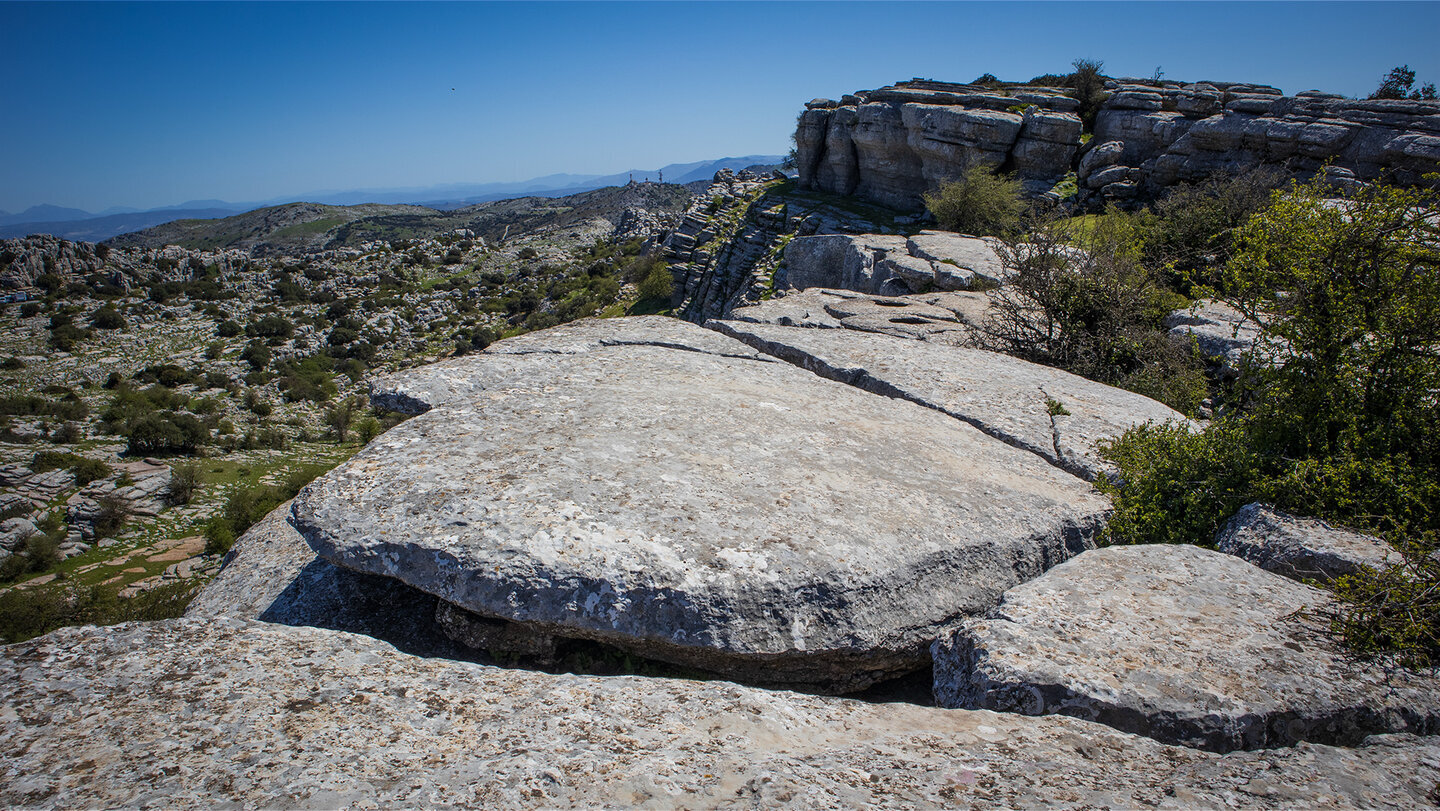
This is the rule most people underestimate. Karst means the rock has been bored through by water over millions of years. Sima Rasca, the deepest cave in the park, drops 230 metres sheer into the ground — walkers keep well back. Even the smaller crevices at the path’s edge are deeper than they look. Do not climb into them, and do not try to balance across them. If you have children with you, take them by the hand the moment the path passes a crevice.
Walking groups, families and solo travellers — what else to bear in mind
Three situations, three points of detail
The ten rules apply to everyone. But three situations call for a little extra guidance.
Walking groups must register in advance by email: reservas@torcaldeantequera.com. Guided tours in languages other than Spanish are arranged directly with the visitor centre on +34 952 243 324 (Mon–Fri, 10:00–17:00).
Families will find good conditions in the park as long as they stick to the Ruta Verde. Pushchairs are no use in the rock labyrinth — the steps, narrow gaps and uneven slabs make pushing one an ordeal. Child carriers can be hired at the visitor centre.
Solo travellers should tell someone down below which route they have chosen and when they expect to be back. Keep your mobile charged and 112 ready to dial. There are signal gaps in the deep lanes on the plateau — often a call only gets through once you reach a rock platform. Anyone walking alone should stay on the waymarked routes, the Ruta Verde or the Ruta Amarilla.
Emergencies, changing weather, contacts — the practical side
What to do if something does go wrong
In an emergency, every minute counts. The most important number is 112, the European emergency line. It works on any mobile, without a PIN, with or without a SIM. Even if your own network drops out in the karst, 112 will connect through any available network. The operator speaks Spanish, English and usually German too.
For smaller problems — a sprained ankle, someone separated from the group — the visitor centre is the place to turn: +34 952 243 324, Mon–Fri 10:00–17:00. Questions beforehand can be sorted out at reservas@torcaldeantequera.com.
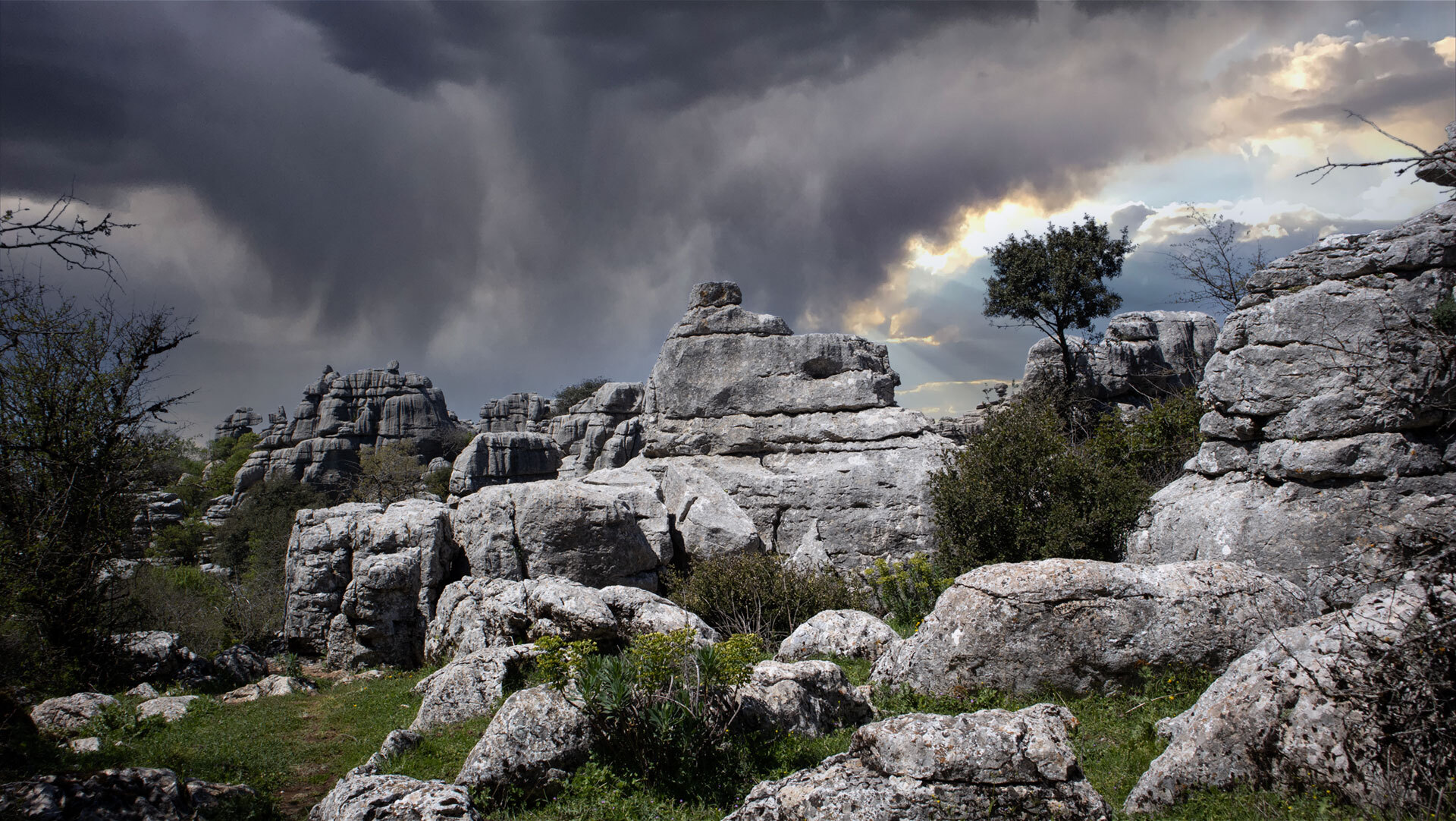
A change in the weather often gives you fair warning: when the sky turns grey over the Sierra Nevada to the south, it rarely takes long for the wind and rain to reach the top as well. If you still have half an hour’s walk back at that point, turn around now.
Before you set off — the quick checklist
Staying safe in El Torcal — the essentials at a glance
Check the weather: not the coastal forecast, but the one for Villanueva de la Concepción or Antequera
Water: at least 1.5 litres per person in summer, 1 litre in winter
Footwear and clothing: ankle-high walking boots, and a light windbreaker even at the height of summer
Let someone know: tell a person down below which route you are taking and when you will be back
Charge your mobile: emergency number 112, visitor centre +34 952 243 324
Start early: at the upper car park things are still relaxed from 9:00 onwards
In closing: respect the karst, and the karst gives back
El Torcal is one of the most spectacular walking areas in Andalusia — not in spite of its rules, but because of them.
Stay on the waymarked paths, keep an eye on the weather, and dial 112 in an emergency, and you are in for an unforgettable day. The ten rules are not a straitjacket but a set of instructions for a plateau you could not otherwise experience quite like this.
Read on for the family-friendly karst circuit, the karst packing list, the Paraje Natural Torcal de Antequera and how to get there. Back to the walking overview
Frequently asked questions about safety in El Torcal
How safe is walking in El Torcal really?
What should you do if fog descends suddenly in the park?
Are you allowed to fly drones in El Torcal?
Can you walk alone in El Torcal?
Which emergency number applies in the park?
This article draws on the on-the-ground knowledge of the Gequo editorial team — publishers of several Reisezeit walking guides and the people behind Sunhikes.com. Last updated: May 2026