Kit for El Torcal: What really belongs in your rucksack
There’s a certain type of visitor you see again and again at El Torcal de Antequera: straight from the car onto the trail, in trainers, no water, wearing a T-shirt in November. Cold after ten minutes, back at the car after thirty. A shame, because the park gives you everything if you meet it halfway. And that doesn’t mean high-tech gear. It means a handful of simple, clear decisions you make the evening before.
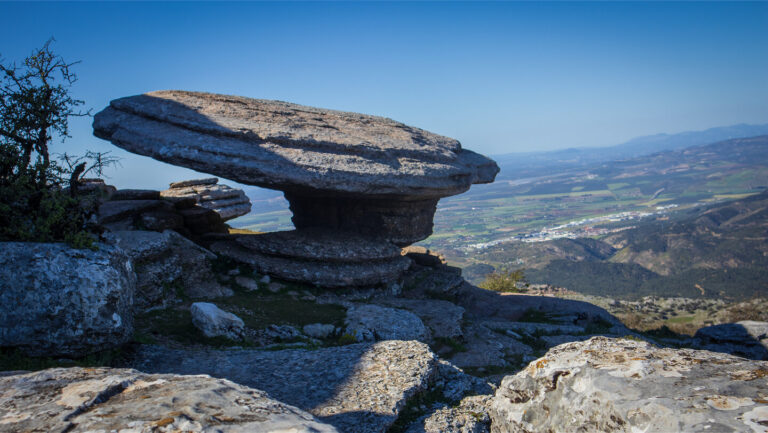
El Torcal isn’t the Sierra Nevada. But it isn’t the local park either. The plateau sits between 1,100 and 1,400 metres, an altitude many visitors underestimate because the coast looks so close and so warm. Up here it’s regularly ten degrees or more colder in winter. In summer the sun blazes off the pale limestone until it dazzles you. And the ground looks more harmless than it is.
This article is the honest karst packing list: what you genuinely need, what’s worth taking, and what you can happily leave at home.
Footwear: the one thing that isn’t up for debate
Why trainers are a bad idea at El Torcal
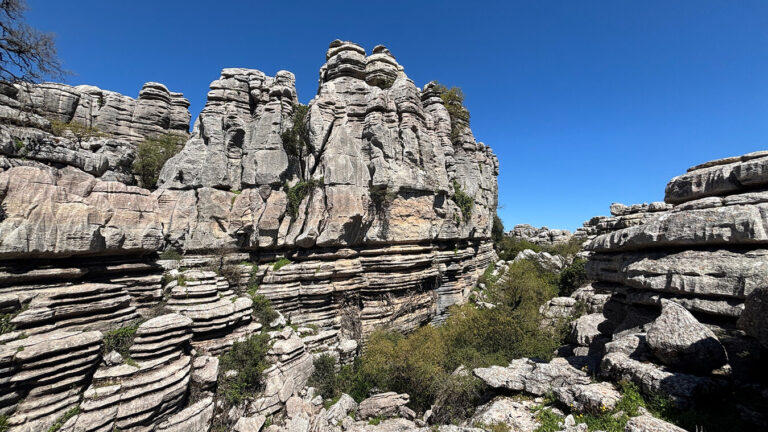
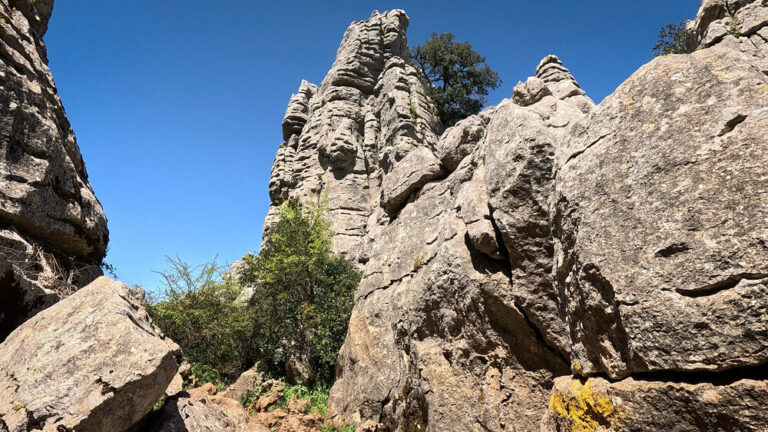
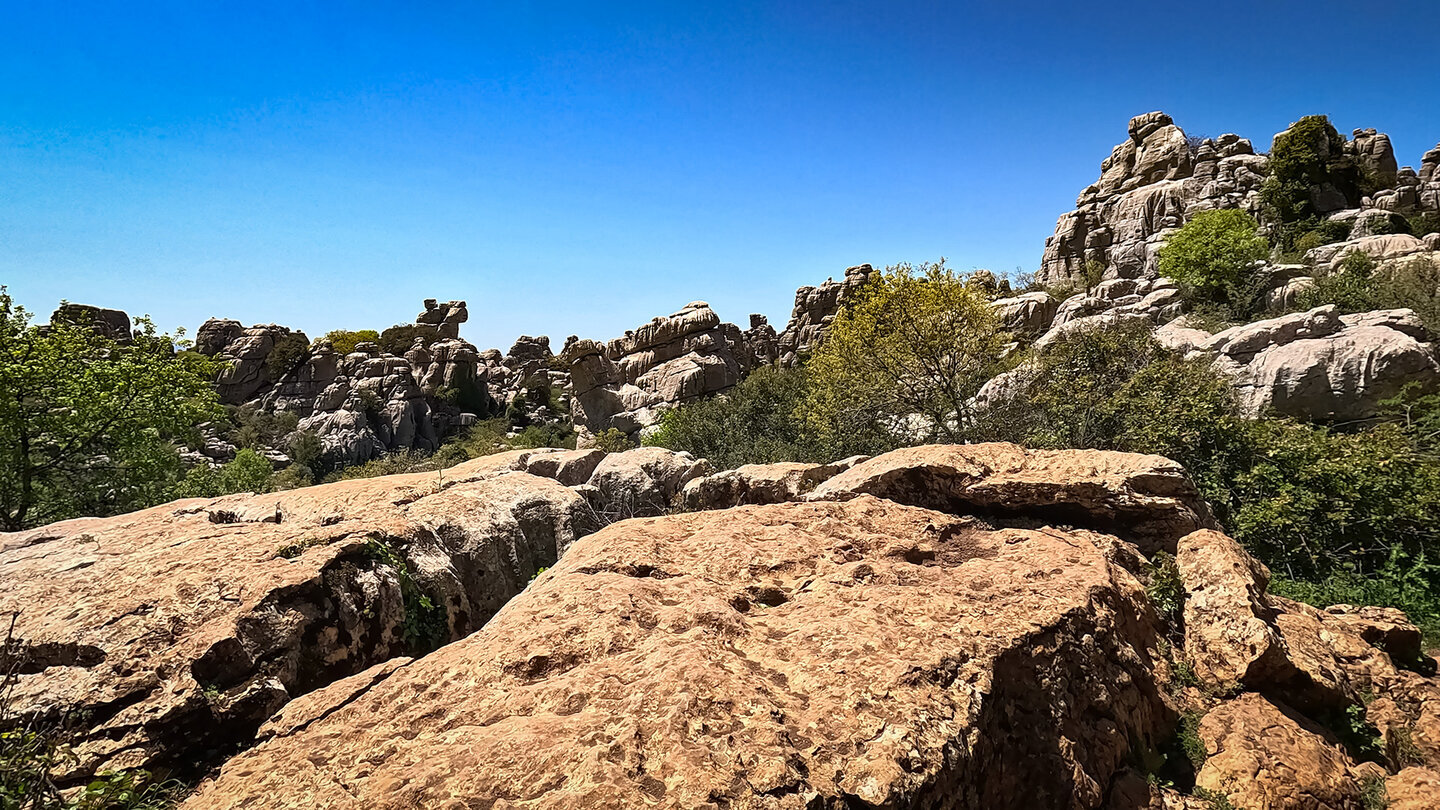
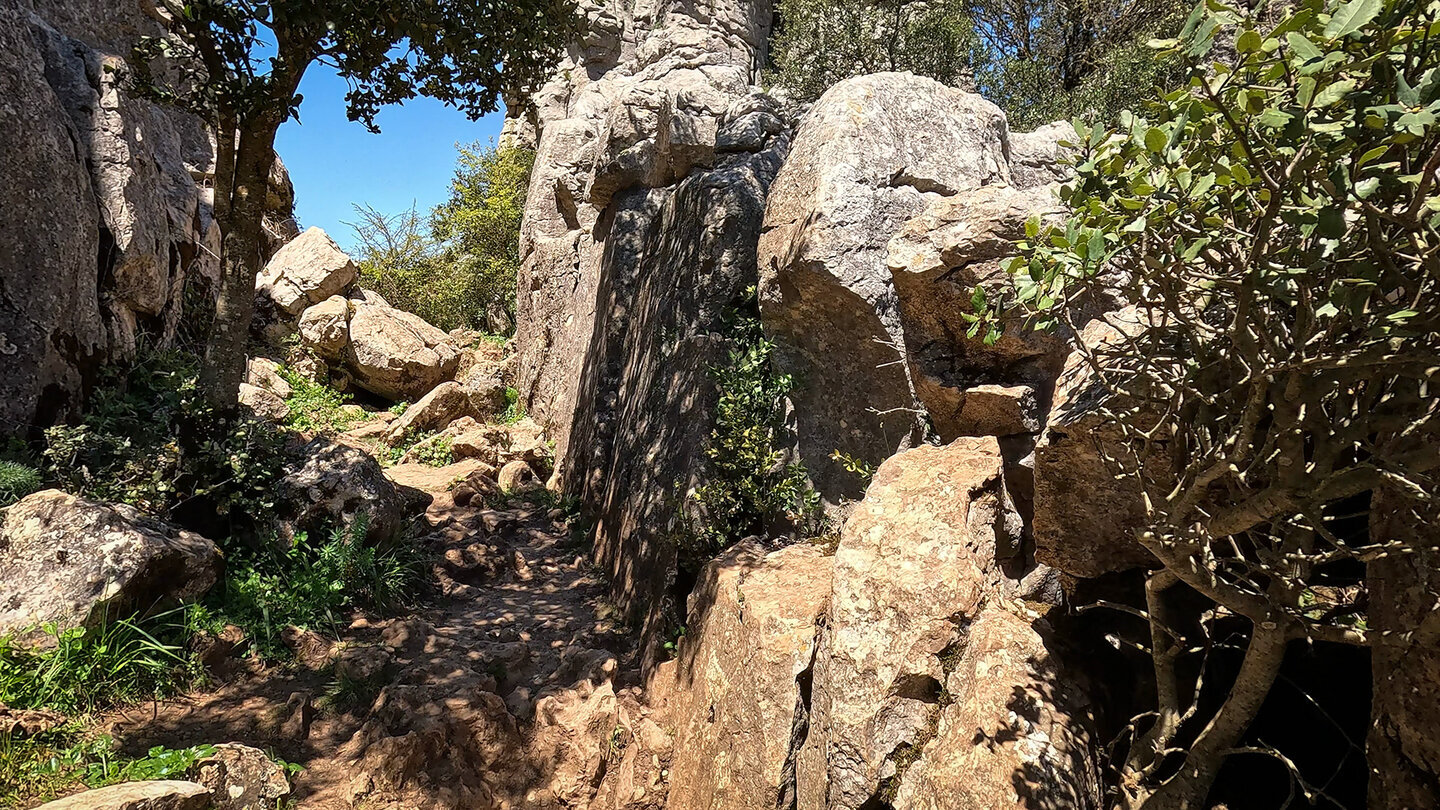
The limestone at El Torcal is sharp-edged, often uneven, in places worn glassy-smooth by millions of footsteps, and after rain it’s as slippery as soft soap. Set off in thin soles with no tread and you’ll feel every single stone through your feet and slide in every damp dip. This isn’t merely “uncomfortable”. At worst it means a sprained ankle on a little step you’d never even register as a step in your everyday shoes.
What does work: a walking boot or trail runner with a decent tread and a solid sole. The eternal question, boots or low-cut shoes, answers itself easily on the three free routes. For the Ruta Verde (1.8 km), any good low-cut shoe or trail runner will do. The same goes for the Ruta Amarilla (3.1 km), as long as the tread is up to it. If you’re tackling the Grand Circuit (8.6 km) or a guided walk out to the Camorro del Mástil, an ankle-high boot honestly makes for a more relaxed day, not because you strictly need one, but because that final hour feels rather different in it.
What doesn’t work: short and to the point
Flip-flops. Sandals. Smooth leather loafers. Ballet flats. Slipper-style trainers with thin fabric soles. Not even for “the short loop”, not even “just as far as the viewpoint”. The Mirador Las Ventanillas is 150 metres from the visitor centre, but in between lie precisely those 150 metres of limestone.
Clothing: the layering principle, explained afresh
Why “but it’s warm in Málaga” doesn’t apply up here
The most common mistake: getting into the car on the coast in a T-shirt and shorts, then realising on arrival that it’s 10 degrees cooler than you expected. El Torcal lies roughly a kilometre higher than the beach. For every 100 metres of altitude the temperature drops by around half a degree. Between the beach at Málaga and the Torcal plateau that can add up to a difference of six to eight degrees in summer. In winter, with the wind up top, those same figures feel cooler still.
The answer is layering, and here’s what that means in practice rather than as a buzzword:
- Layer 1 (next to the skin): a technical base layer in merino or synthetic, not cotton. Cotton soaks through and stays cold.
- Layer 2 (warmth): a thin fleece or a lightweight hoodie. In summer it stays in the rucksack; in winter it never comes off.
- Layer 3 (wind and weather): a windproof jacket, ideally waterproof too. Even in high summer. Up on the rock platforms the wind can howl impressively.
Trousers: long walking trousers, zip-offs in summer. In spring and autumn the thistles and thorny plants often stand tall, so shorts make for an acquaintance you’d sooner avoid.
What sets the seasons apart
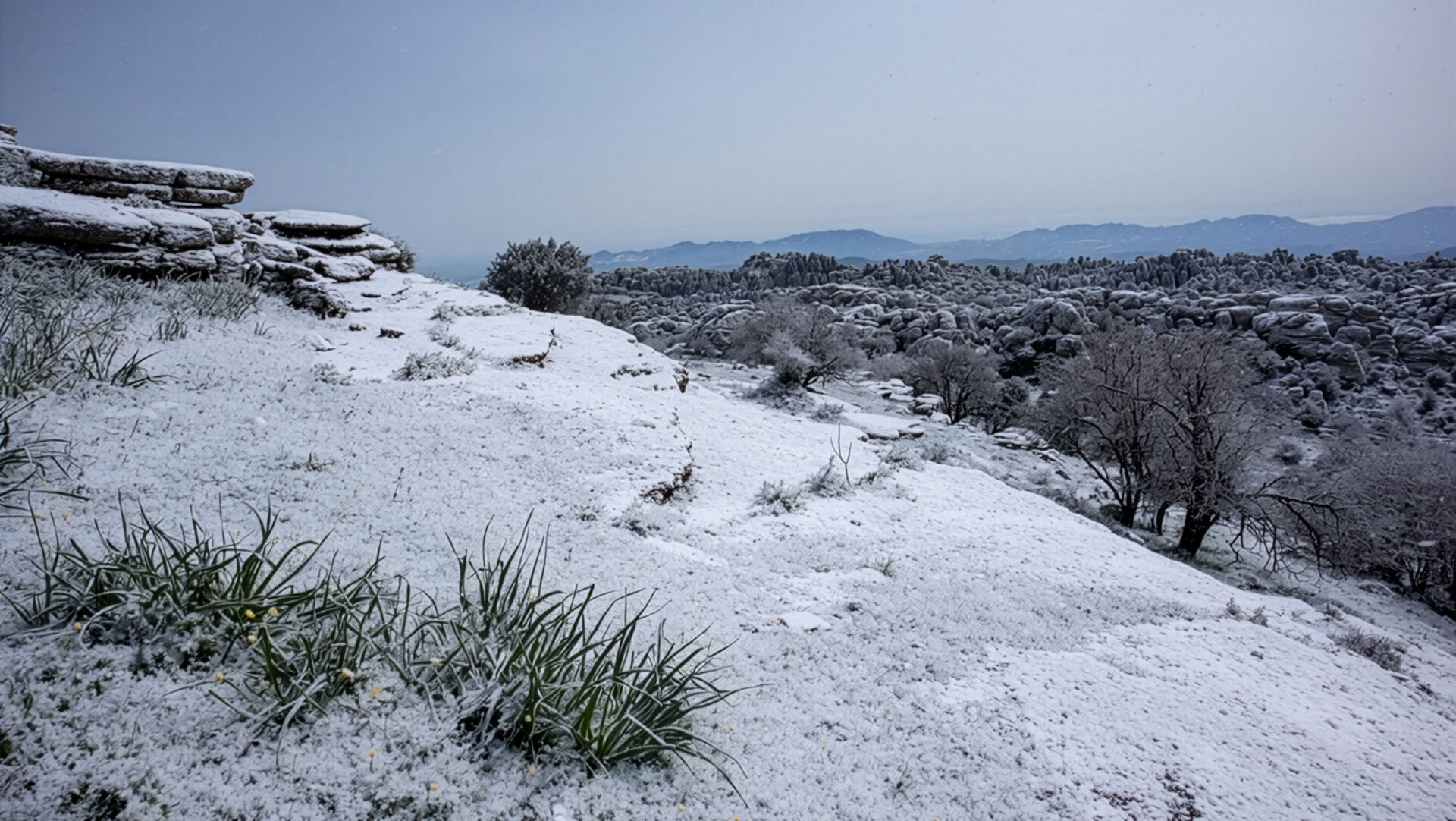
In spring and autumn (April to May, October) the three layers are usually more than enough. In summer, layer 2 goes into the rucksack for sunset and full-moon walks. In winter you need genuinely warm clothing: a thermal top, fleece, an insulated jacket, hat and gloves. El Torcal has seen -10 degrees and the occasional fall of snow.
The wind: your invisible walking companion
One quirk many people underestimate: the Torcal can be extremely windy. The plateau lies open, with no real vegetation to slow things down, so when the wind comes from the north-west it sweeps unhindered across the rocks. On some days it’s dead calm down in Antequera while up top your hair is standing on end. Expect it especially at the highest points, the Mirador Las Ventanillas and the Camorro del Mástil, and on the exposed rock platforms.
In practice that means a windproof outer layer is no gimmick, even in summer. Take a sun hat only if it has a chin strap, or a snug cap. If a storm blows up, the rule is simple: get off the high rock platforms and stay in the sheltered parts of the rock labyrinth.
What else belongs in your rucksack
Water, snacks, sun protection: non-negotiable
There’s a restaurant at the visitor centre, but it isn’t open every day. Plan as though there’s nothing on site. Which means:
- Water: at least 1.5 litres per person in summer. At least 1 litre in winter. Even if you’re only doing “the short loop”, bear in mind that the altitude and the sun make you thirsty long before you notice.
- Snacks: a cereal bar, nuts, dried fruit, a banana. Not because anyone’s going to starve out here, but simply because it’s nicer to sit at the mirador with something decent to eat.
- Sun protection: high-factor sun cream, a hat and sunglasses. The limestone is pale, almost white, and it reflects the sun rather like a mild ski-slope effect. Even in November you can pick up a proper case of sunburn up here.
The underrated star of the show: binoculars
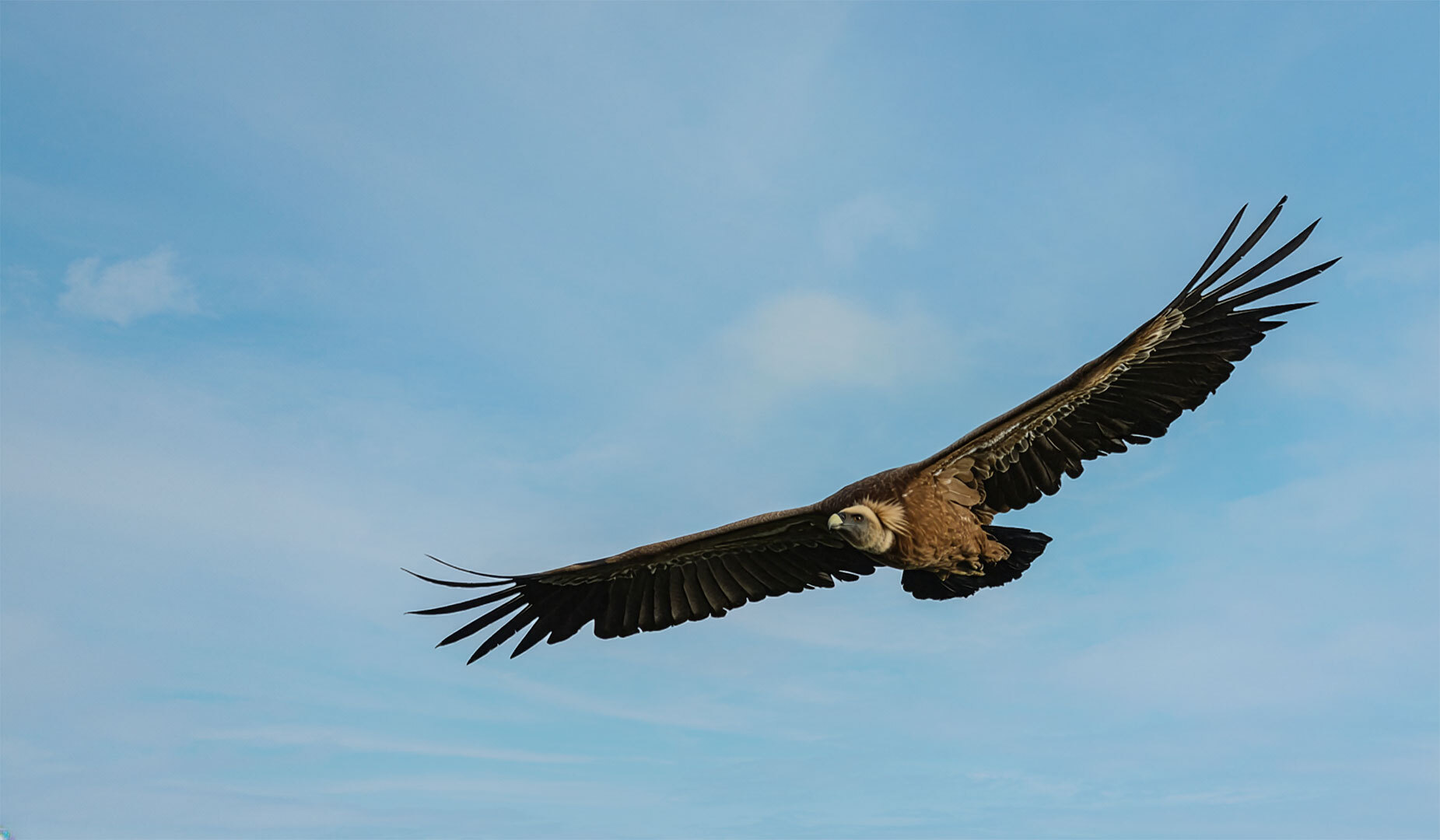
Walk in the Torcal de Antequera without a pair of binoculars and you miss half the show. Griffon vultures often wheel above the plateau in their dozens, sometimes so low you can pick out the individual feathers at their wingtips. The Iberian ibex perches on the rocks, frequently astonishingly close, yet rarely close enough to make out much without magnification. A compact pair of 8×32 binoculars weighs next to nothing and turns “there was a bird” into “that vulture had an injured right wing”.
The small stuff that makes all the difference
- Head torch: essential for sunset and full-moon walks, and worth having as an emergency backup even when you’re not on a tour.
- Power bank: phone reception on the plateau is patchy in places. If you rely on offline maps, you don’t want to be down to 8% battery.
- Rubbish bag: the park has been a protected area since 1978, so the banana skin comes back out with you.
- Mini first-aid kit: plasters, tape and a few wound dressings. Nothing more, but this much is a must.
El Torcal karst packing list, at a glance
On your feet: walking boots or trail runners with a good tread. No sandals, no smooth-soled town shoes
On your body: 3 layers. A technical base layer, fleece and windproof jacket. Long trousers (zip-offs in summer)
In the rucksack: water (1 to 1.5 l per person), snacks, sun cream, a hat, sunglasses, binoculars, a head torch, a power bank, a small first-aid kit and a rubbish bag
Extra in winter: a hat, gloves and a thicker jacket. The thermometer can drop to −10 °C
For a sunset or full-moon tour: a head torch is compulsory
For children: the same as for adults, just smaller. Child carriers can be hired at the visitor centre
What you can leave behind
What isn’t worth it, and what has no business being in your rucksack
Walking poles: on the Ruta Verde and the Ruta Amarilla they’re more of a hindrance, as the paths are too narrow and studded with too many little steps. On the Grand Circuit they can help, but they’re not essential. If you’re used to going without, you’ll rarely miss them.
Drone: banned. El Torcal is a bird protection area (ZEPA). Not even “just for a moment”.
Climbing harness: climbing isn’t permitted in the park. The rocks are there to be admired.
Picnic blanket: it sounds romantic, but in the karst it’s usually impractical, as the rocks are arranged so that you can find a dry spot to sit almost anywhere.
The verdict: three things decide everything
If you turn up at El Torcal with the right footwear, three layers of clothing and enough water, you’ve got 90% of it right. Everything else is comfort. You don’t need expensive brand names or high-tech outdoor gear. What you do need is a willingness to take the park seriously: 1,300 metres of altitude, sharp-edged limestone, no shade, a fierce sun and, at times, a strong wind. With the right preparation it becomes one of the finest days’ walking in Andalusia.
More on the routes: Ruta Verde (1.8 km) · Ruta Amarilla (3.1 km) · Grand Circuit (8.6 km) · All walking routes at a glance
Frequently asked questions about kit for El Torcal
Which shoes are right for El Torcal?
How warmly should you dress for El Torcal?
How much water do you need for a walk at El Torcal?
Are walking poles worth taking to El Torcal?
Do you need a head torch at El Torcal?
This article draws on the on-the-ground knowledge of the Gequo editorial team – publishers of several Reisezeit walking guides and the people behind Sunhikes.com. Correct as of May 2026.