Staying near El Torcal: where Villanueva becomes your base camp
Anyone wanting to spend more than a day at El Torcal faces a choice: stay in Antequera, the town with plenty of hotels and sights, or stay right at the foot of the karst, in a small white village that most travellers to Andalusia don’t have on their radar. Those who choose the second option end up in Villanueva de la Concepción: a Pueblo Blanco with around 3,300 inhabitants, about 14 kilometres south of the nature park, with a campsite, small hotels and holiday flats.
The village lies at the southern foot of the karst massif, and the southern access road to the Torcal Alto visitor centre runs straight through it. Anyone staying here is just 20 minutes from the nature park’s car park — no other place to stay is closer to the karst. What Villanueva offers as a base camp, how getting there works, and what matters when choosing accommodation.
Villanueva de la Concepción: the Pueblo Blanco at the foot of the karst
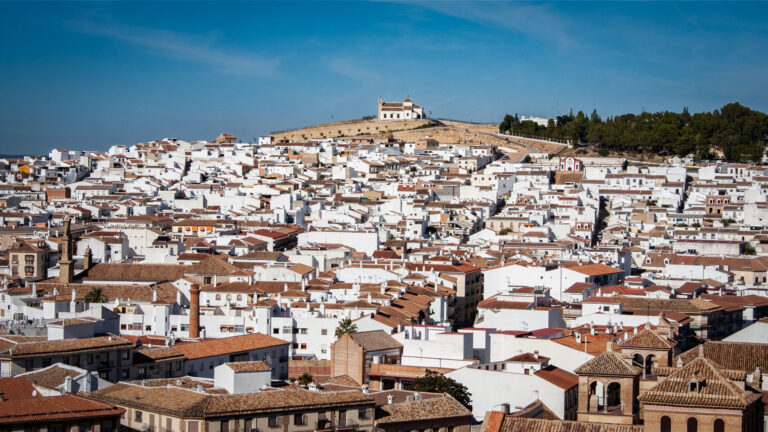
Villanueva is one of the youngest villages in Andalusia. It only became independent in 2009, as the 101st municipality in the province of Málaga — until then it belonged to Antequera. The village’s history is old, but its municipal independence is recent. On the ground, the mix shows: narrow white lanes, small squares, a church, a few tapas bars, and fields and slopes covered in cork oaks all around.
Location between olive groves and karst
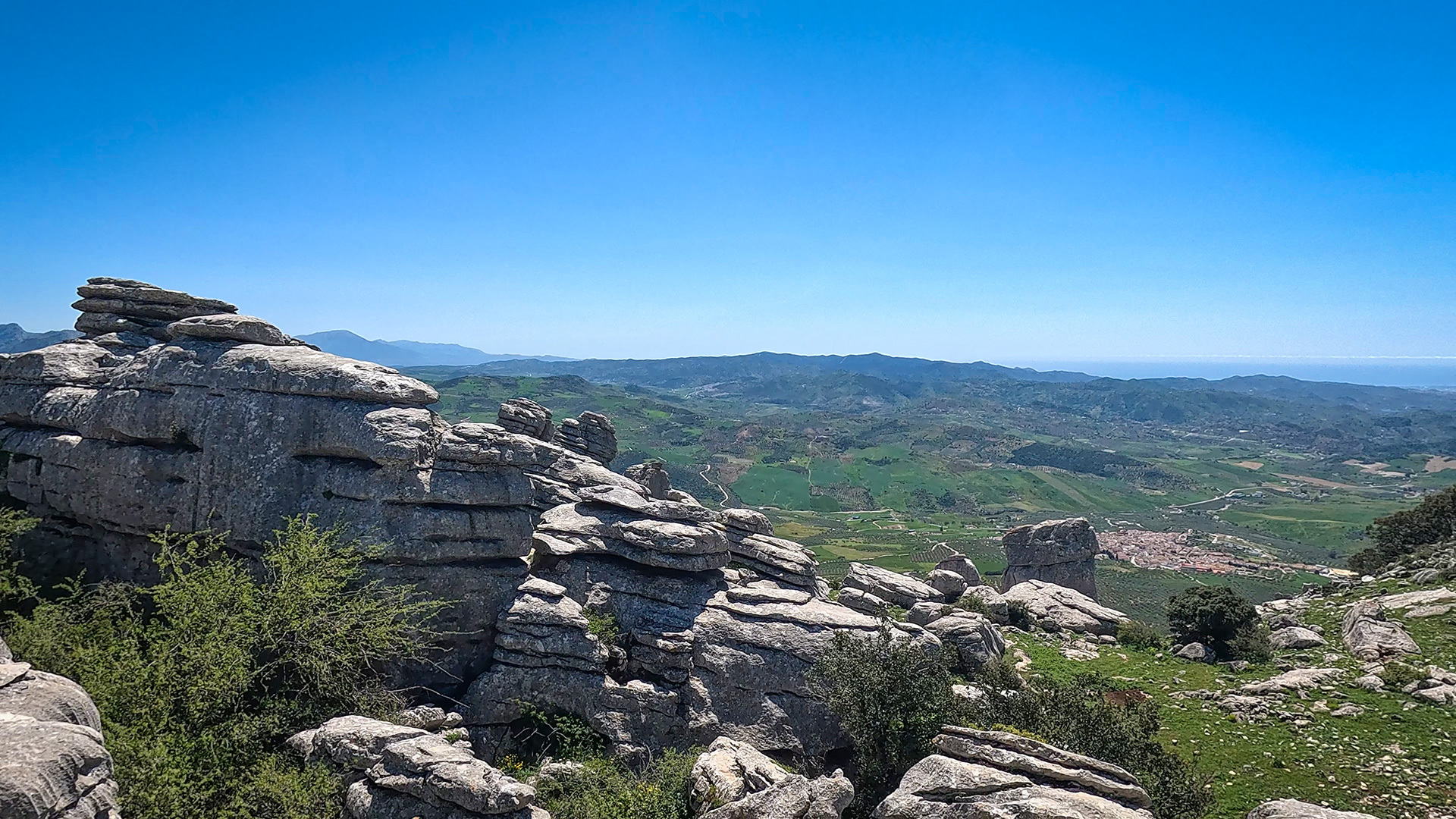
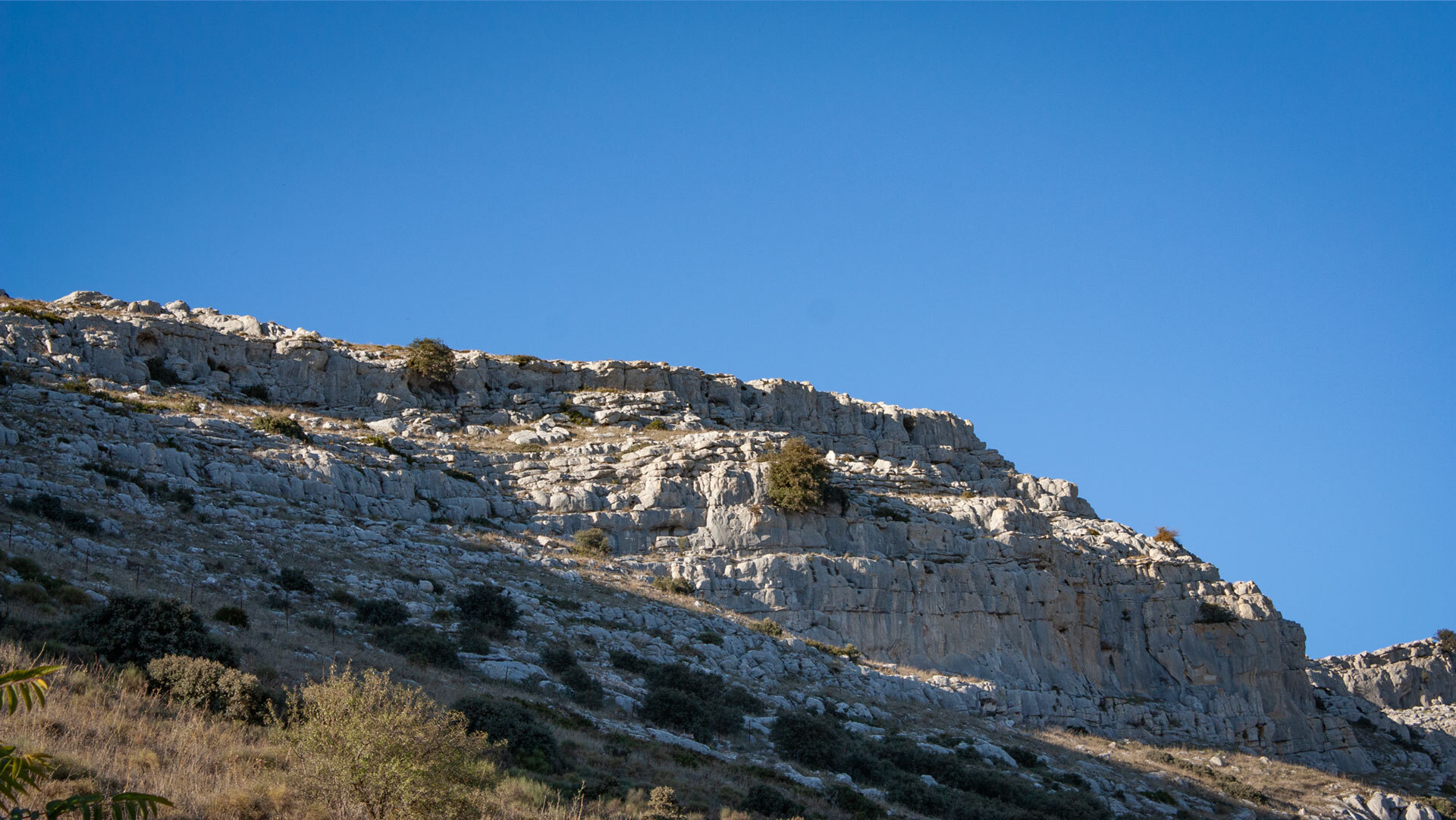
Villanueva sits at about 660 metres above sea level on the southern slope of the El Torcal massif. Olive groves, almond fields and cereal crops dominate the surroundings — the fertile Vega de Antequera reaches right up to the first slopes. Cork oaks and holm oaks grow on the hillsides, and the karst begins above them.
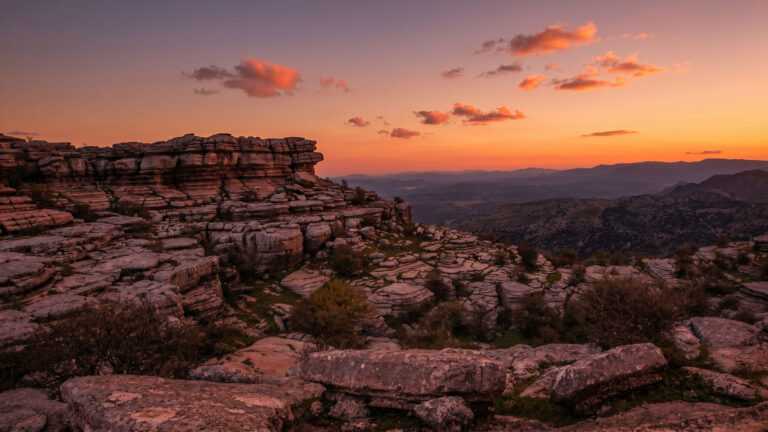
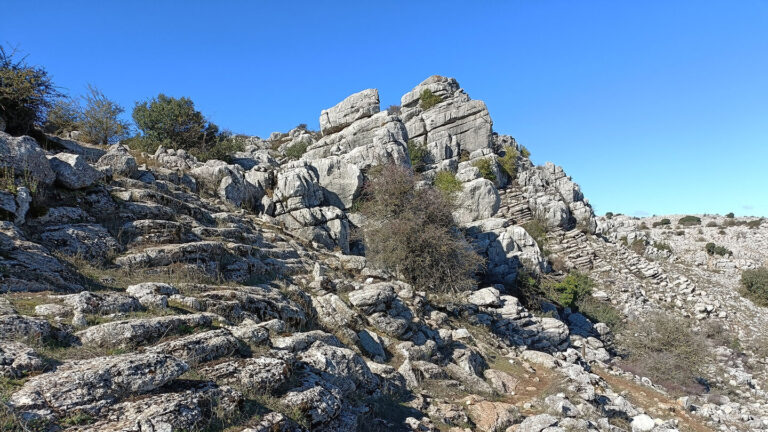
From the Mirador de las Ventanillas in El Torcal, you can see Villanueva from a bird’s-eye view: a small white patch amid green fields, especially photogenic in spring when the almond trees are in blossom. From the village itself, the view runs the other way — the karst of El Torcal rises up to the north, often topped in autumn and winter by the characteristic La Montera cloud over its peaks.
From village to independent municipality
Municipal independence since 2009 has given Villanueva a new dynamic. Its own town hall, its own administration, its own tourism efforts — all just over fifteen years old. The tourist infrastructure is modest but growing. Anyone staying here experiences an Andalusia that does tourism on the side rather than being built around it — which is exactly what many travellers are looking for.
Accommodation: what Villanueva offers
The range of accommodation in Villanueva is small and local. There are no international chains, no large hotels, no resorts. Instead, there are two options that suit the size of the village: a handful of small hotels and a selection of holiday flats.
Small hotels and holiday flats in the Pueblo Blanco
Those who prefer more comfort will find a selection of small hotels and holiday flats in the village. Most are family-run, some restored in historic houses with white walls and blue front doors. Prices and capacities vary, and booking through the usual travel platforms is standard. Anyone keen on authenticity can ask the tourist information office for recommendations — the list is short, but the quality is generally solid.
One advantage of staying in the Pueblo Blanco: you wake up in an atmosphere that has nothing to do with high-rise hotels on the Costa del Sol. Cool lanes, cockerels crowing in the morning, the baker just around the corner.
Why Villanueva works as a base camp
Antequera is 15 kilometres away and has more hotels and more sights. Even so, Villanueva has its own case to make as a place to stay — especially for travellers whose main destination is the nature park.
14 km and 20 minutes to the visitor centre
It’s 14 to 15 kilometres from the village to the Torcal Alto visitor centre, about 20 minutes’ drive along the winding A-7075. That makes two things possible that are less practical from Antequera: first, a very early start to be up on the plateau before 9am — crucial for summer hikes in the heat and for peaceful photo conditions. Second, a late return after sunset or full-moon tours, without having to face a longer drive home afterwards.
Anyone spending several days in the park saves time thanks to the proximity. A morning hike, a lunch break in the village, a second outing in the late afternoon — the logistics become simple.
What else you can do around Villanueva
Villanueva isn’t just a place to sleep for El Torcal. The village has a convenient location between Antequera, Casabermeja and the road to Málaga. Day trips to the Dolmens of Antequera (14 km), to the Caminito del Rey in El Chorro (around 50 km), to the city of Málaga (around 50 km) and to the Sierra de Tejeda are all feasible from Villanueva. Anyone planning a round trip of Andalusia and wanting to fit in an extra day for El Torcal will find a quiet haven here between the big stopping points.
What’s more, the surrounding area itself is worth walking. Olive groves, field tracks and cork oak slopes line the route to El Torcal.
Getting to Villanueva
Villanueva lies at the junction of two routes: the connection from Antequera to El Torcal, and the southern approach from Málaga via Casabermeja. Both routes are well signposted, but the final kilometres have their quirks.
By car via Málaga or Antequera
From Málaga, the route runs along the A-45 north to Casabermeja, then onto the MA-436 and on along the A-7075 to Villanueva — around 50 to 55 kilometres in total, about an hour’s drive. From Antequera the route is shorter: the A-343 to the junction with the A-7075, then towards Villanueva — 14 to 15 kilometres, around 20 minutes.
Anyone coming from Granada, Seville or Córdoba first heads to Antequera (100 to 175 kilometres respectively) and takes the A-7075 from there. Antequera is well connected via the A-92 and A-45, including the Antequera-Santa Ana high-speed rail station — although the station is 20 kilometres outside the town, which means a hire car remains the simplest solution for continuing on to Villanueva and El Torcal.
The A-7075 – take care on the final stretch
Between Villanueva and the Torcal Alto visitor centre, the A-7075 runs over narrow hairpin bends for the last three kilometres — winding, with spectacular views, but with tight spots where oncoming traffic from buses and motorhomes can test your patience. Potholes are possible, and motorhomes drive slowly. Anyone driving a hire car up here for the first time should simply allow an extra ten minutes and enjoy the view instead of pushing ahead.
In snow or thick fog, the route can become difficult at short notice — rare, but possible in the depths of winter. If in doubt, check the current status with the visitor centre.
| Tips for staying in Villanueva | |
|---|---|
| Book in advance? | Not usually necessary outside peak periods (March–May, October). During high season and on long weekends, booking 2–4 weeks ahead is recommended, especially for hotels and popular holiday flats. |
| Supplies in the village | Small supermarkets, bakeries, a few tapas bars. It’s better to do bigger shops in Antequera. There are only a modest number of restaurants, but they’re good value and serve local cuisine. |
| Motorhome note | Getting to Villanueva itself is straightforward. For the climb up to Torcal Alto, it’s recommended to use the lower car park (before the karst area) — the A-7075 is narrow and winding for the last 3 km. |
| Seasonal suggestions | Spring (March–May) for blossom and mild weather, autumn (September–November) for golden light and fewer visitors. High summer in July/August is possible, but hot in the valley — hike on the karst only early or late in the day. |
Conclusion – Villanueva as a base camp at El Torcal
Villanueva de la Concepción isn’t the best-known place in Andalusia, but for a trip to El Torcal it’s often the smartest choice. 14 kilometres and 20 minutes to the visitor centre, a campsite and small hotels in the Pueblo Blanco, olive groves on the doorstep and karst overhead. Anyone planning to hike in the nature park anyway gains time and peace thanks to the proximity. How to get there is covered in the article on Getting to El Torcal. When it’s worth visiting is explained in the article on the Best Time to Visit. For an overview of the nature park, see Karst Landscape of El Torcal.
Frequently Asked Questions
How far is Villanueva from the El Torcal visitor centre?
What accommodation is available in Villanueva?
Is Villanueva worth using as a base camp for a trip to El Torcal?
Is Villanueva also suitable for motorhomes?
This article is based on the on-the-ground knowledge of the Gequo editorial team – publishers of several hiking guides on the best time to travel, and operators of Sunhikes.com. As of: May 2026