Best time to visit El Torcal & Antequera: why spring and autumn are the top choice
Travellers to Andalusia ask themselves two questions: when is the weather pleasant? And when isn’t it too crowded? For El Torcal and Antequera, both answers coincide in two windows: March to May and September to November. In these months the karst landscape is easy to walk, the town pleasant to stroll around – and the biggest crowds stay away.
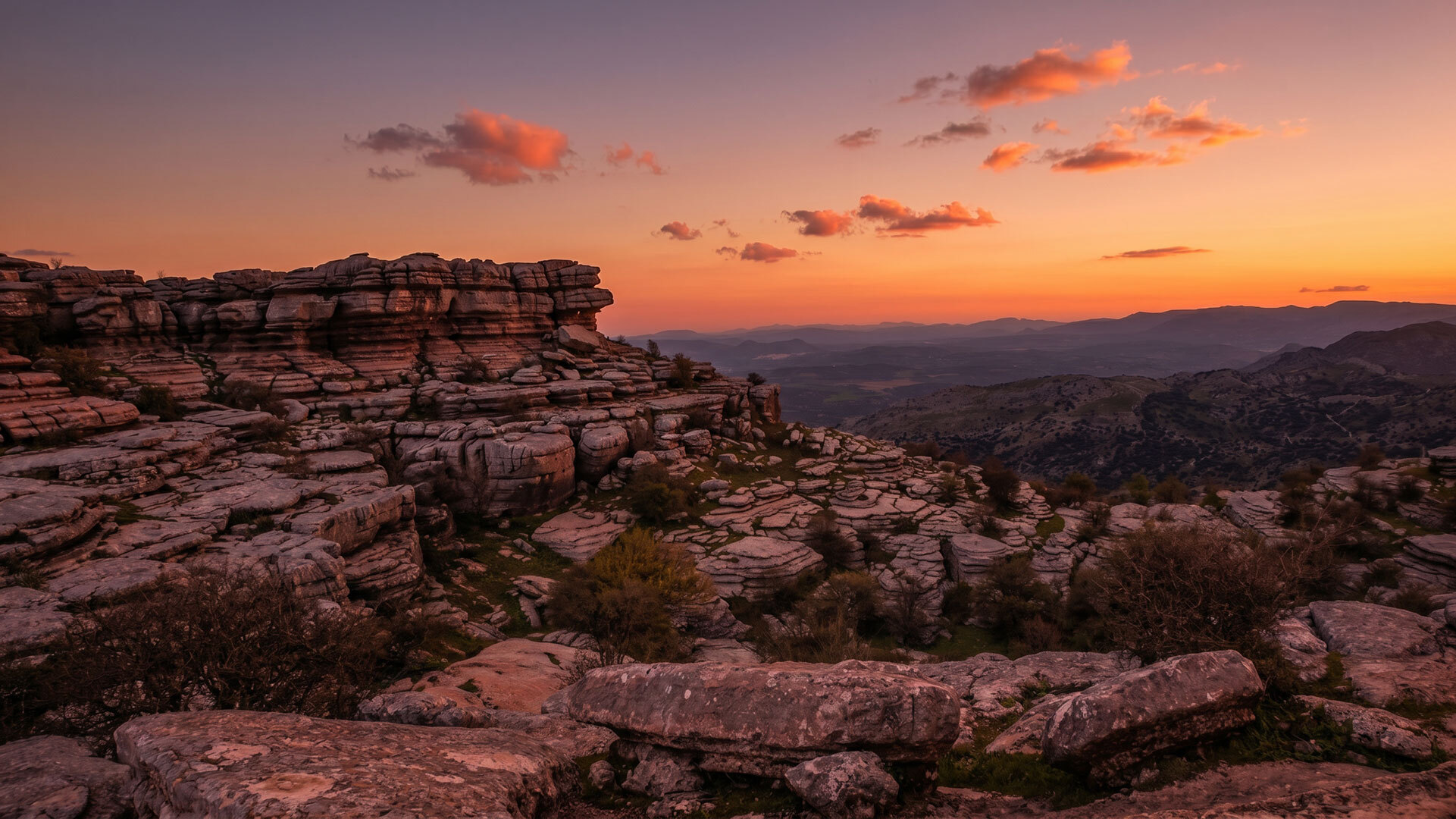
That doesn’t mean summer and winter are ruled out. Both have their own appeal: summer sunsets and full-moon tours are a speciality in El Torcal, and the rare snow transforms the plateau into another world. But every season calls for its own strategy.
What climate, altitude and local tourism mean for your travel planning – month by month, with concrete recommendations depending on the type of trip.
Climate profile at a glance
Why El Torcal is different from the Costa del Sol
| Altitude of El Torcal | 1,100–1,400 m – significantly higher than the coast |
| Climate type | continental Mediterranean climate – hot summers, cold winters |
| Summer (June–August) | often above 30°C, occasionally 40°C – but cooler than the coast |
| Winter (December–February) | cool during the day, down to −10°C possible at night, occasional snow |
| Rainfall | higher than in the surrounding region – clouds get caught on the peaks |
| Local peculiarity | Nebel „La Montera” im Herbst und Winter |
| Antequera town (575 m) | hotter than the plateau in summer (often 38–40°C) |
| Best hiking times | March–May · September–November |
The crucial point: visitors arriving with Costa del Sol experience regularly underestimate the altitude. At 1,300 metres it’s on average 7–8 degrees cooler than on the beach at Málaga – and in winter a mild stroll can turn into a serious snow trek.
Spring (March–May): the ideal hiking season
Mild temperatures, blooming karst flora
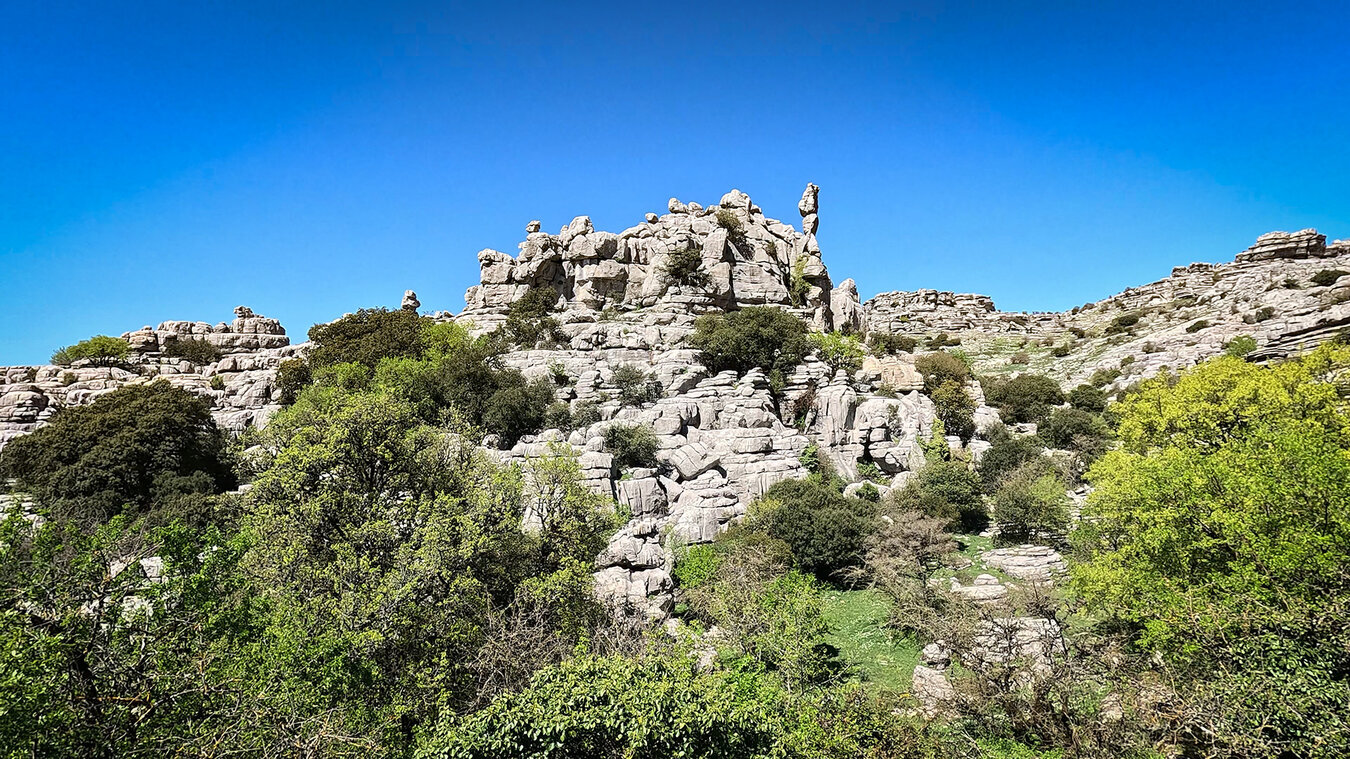
If you can only choose one month to travel: April. Daytime temperatures range between 15 and 20°C, visibility is clear, and the karst shows its most colourful side. Over 30 orchid species bloom in the nature park, six of them endemic, along with peonies and hedgehog broom. Anyone who loves botany should note down March to June – early enough for the wild orchids, late enough for settled weather.
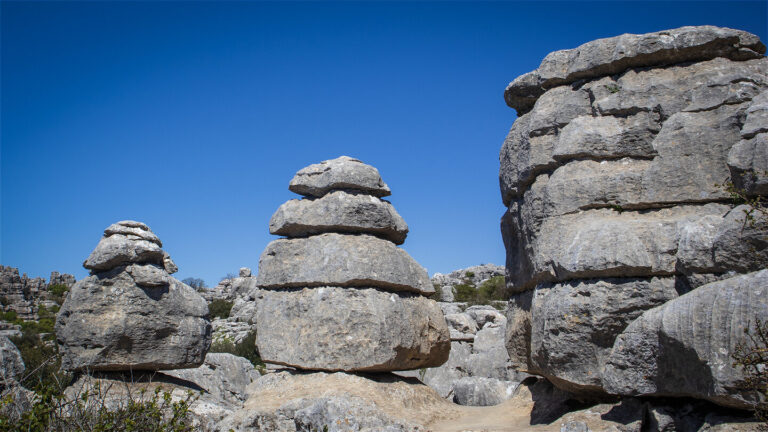
Spring is also the best time for the Grand Circuit (8.6 km). In summer the route would be too hot without any shade, while in winter there wouldn’t be enough daylight left after sunset. In spring everything falls into place: temperatures, visibility, day length. The Ruta Amarilla through the rock labyrinth can also be walked at a relaxed pace.
Take care around Semana Santa (Holy Week, usually in March or April): in Antequera it’s one of the most important religious festivals in Andalusia – over 30 churches, traditional processions, crowded streets. Anyone travelling right in the middle of the festivities should book accommodation early. In El Torcal itself, by contrast, Good Friday is often fairly quiet, since most visitors stay in town.
Summer (June–August): not ideal, but doable
With strategy, rather than head-on into the heat
The Andalusian summer is hot. In El Torcal daytime temperatures are often above 30°C, while down in the valley in Antequera town, 38–40°C is normal in high summer. Hiking at midday on the shadeless karst plateau isn’t just unpleasant, it’s dangerous – heatstroke and dehydration are real risks, especially for older travellers and children.
The solution: hike early in the morning or in the evening. El Torcal opens at sunrise, and anyone setting off at 7am is finished by 10am – before the heat becomes unbearable. Plan for at least 1.5 litres of water per person, a sun hat, sunscreen, and a break in the air-conditioned visitor centre.
Die spannendere Sommer-Option sind die geführten Touren am Besucherzentrum: Sonnenuntergangs-Wanderungen, Vollmond-Touren, Astronomie-Abende am Observatorium. Hier wird die Hitze zur Verbündeten – wenn die Sonne über dem Karst untergeht, wird aus dem feindlichen Sommer plötzlich ein magisches Erlebnis. Die Route „Ammonites at sunset” ist eine der schönsten Sommer-Möglichkeiten.
Autumn (September–November): the second high season
Mild, golden, fewer visitors
Autumn is spring’s quiet twin. Temperatures drop noticeably from mid-September, the heat of summer is over, and the light turns softer. Photographers swear by October and November: golden light in the morning and afternoon, clear views as far as the Sierra Nevada in the north and – on a really clear day – all the way to the African coast in the south.
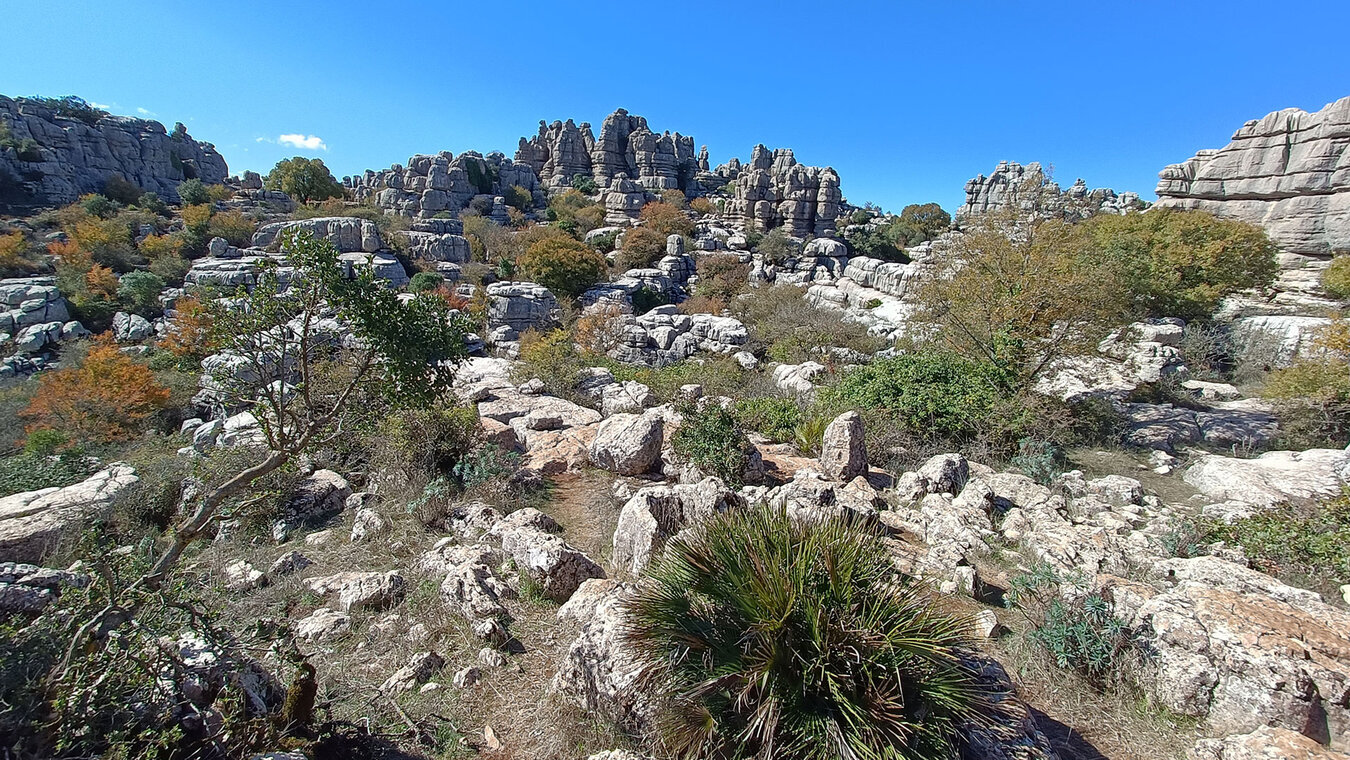
In the karst, autumn shows itself discreetly: the karst flora changes colour, the Montpellier maple turns golden yellow, and carpets of fallen leaves gather in sheltered hollows. It’s no New England Indian summer, but it’s remarkably colourful by Andalusian standards. The hiking trails are often surprisingly empty at this time of year – the summer holidays are over, and the winter season hasn’t yet begun.
Eine Herbst-Spezialität ist der Nebel „La Montera” – das spanische Wort für „Hut” oder „Mütze”. Er entsteht, wenn warme Südwinde auf die kühlere Luft aus der Vega de Antequera treffen und sich um die Karstgipfel legen. Dann sieht El Torcal aus wie ein verzaubertes Massiv aus alten Märchen. Schön zum Fotografieren – aber Vorsicht beim Hiking: Im Nebel verliert man im Felslabyrinth schnell die Orientierung.
Winter (December–February): karst in a special edition
Cold, sometimes snowy, often empty
Winter in El Torcal has two faces. On mild days it’s a crisp hiking season with clear visibility, daytime temperatures around 8–12°C and hardly any visitors. Anyone wanting to experience the silence of the nature park should come in January – outside weekends the karst then feels almost as if it belongs to you alone.
On cold days things get serious. At 1,300 metres the thermometer can drop to −10°C at night, and daytime temperatures often stay below 5°C. Anyone hiking during this period needs winter clothing in layers, a hat, gloves and sturdy footwear – and should factor in the shorter days: sunset in December is shortly after 6pm.
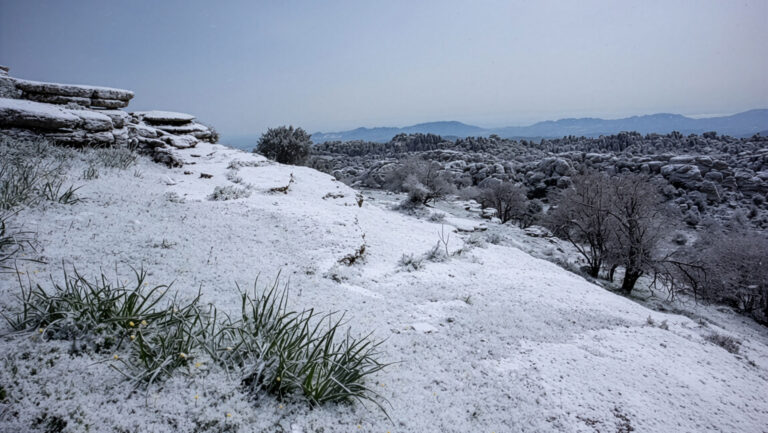
The rare sensation is snow on the karst. Perhaps two or three times a winter, usually in January or February during a shift to southerly weather, a few centimetres fall overnight. The rock labyrinth then turns into a surreal white landscape – karst pillars capped with snow, frozen pilas, icy silence. A rare subject for photographers, often lasting only a few days.
Antequera town, by contrast, tends to stay mild in winter – down in the valley the temperature is 5–7 degrees higher than on the plateau. Anyone wanting to combine the town programme (Alcazaba, Colegiata, dolmens) with snow photos of El Torcal has, with a bit of luck, the best chances in January.
Seasonal recommendations by type of traveller
What suits which kind of trip?
| Botanists · flower seekers | March–June: orchids in bloom, peonies, blooming karst flora |
| Hikers · nature lovers | March–May · September–November: mild temperatures, good visibility |
| Photographers | September–November · February–March: golden light, clear views as far as the Sierra Nevada |
| Families with children | April–May · October: pleasant temperatures, shorter routes easily manageable |
| Stargazers · astronomy enthusiasts | Clear summer nights – observatory at the visitor centre, guided full-moon tours |
| Snow fans | January–February during a change in the weather – very rare, but spectacular |
| Culture travellers to Antequera | Early spring and early autumn – pleasant for strolling around town and exploring the fortresses |
| Those interested in Semana Santa | March/April around Easter: processions, but very busy |
Antequera town: different climate, different logic
Why the town has its own season
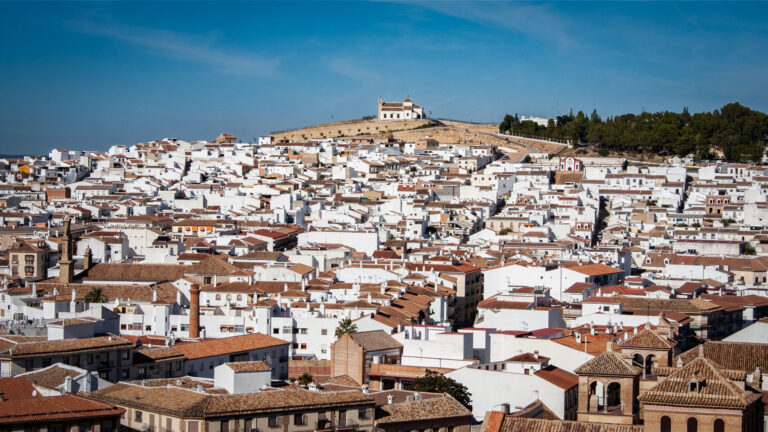
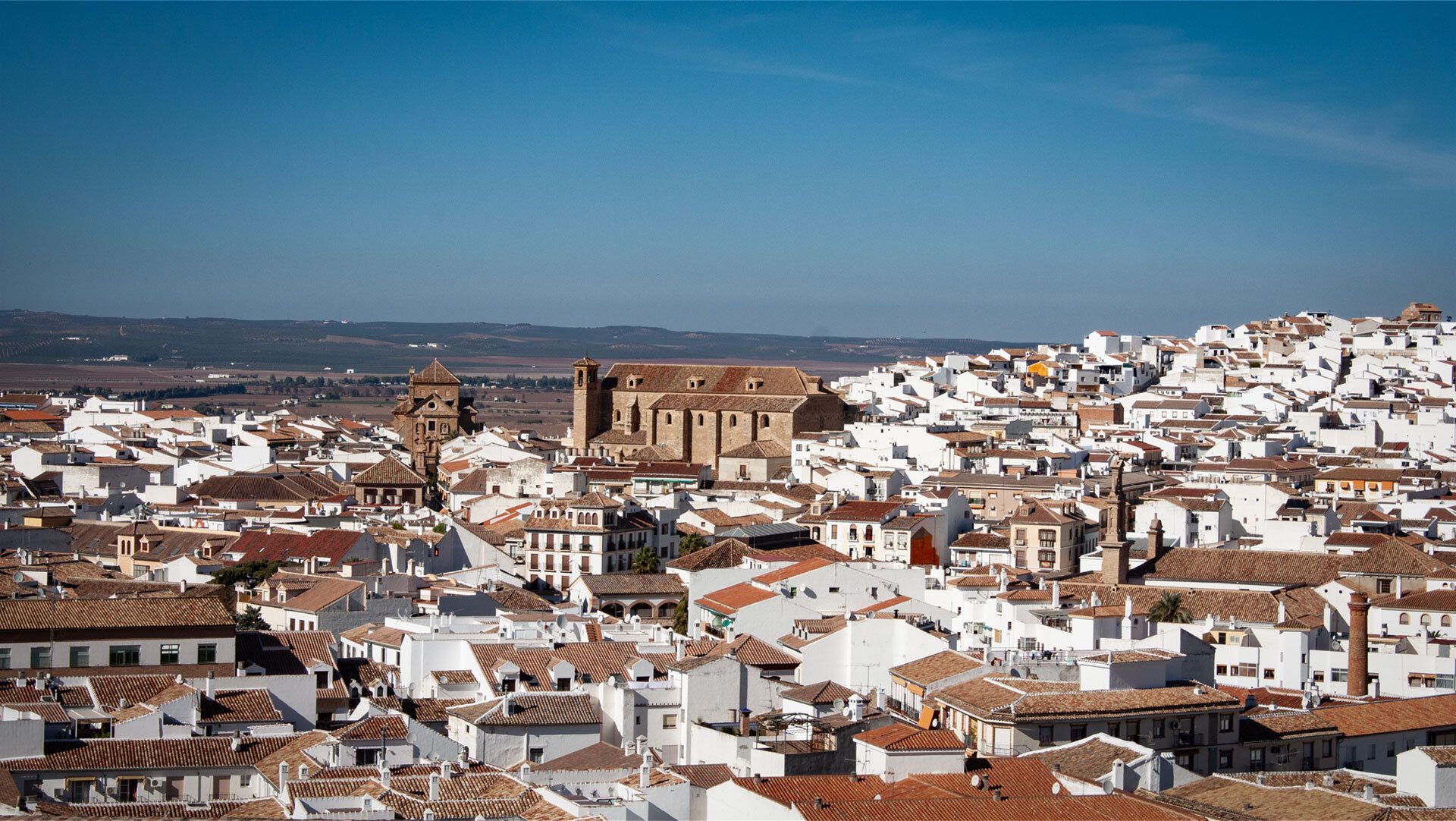
Antequera sits in the valley floor at around 575 metres – more than 700 metres lower than the visitor centre in El Torcal. This makes the town noticeably hotter in summer and noticeably milder in winter than the plateau. Anyone combining both destinations should factor this in: in high summer, strolling around town at midday is almost impossible, whereas in January it’s the more pleasant part of the trip.
Antequera’s cultural season has its own highlights. Semana Santa (Holy Week) is the defining festival – with over 30 churches, the town has a correspondingly large number of processions, some of them centuries old. Summer evenings also have their own charm, when the town only wakes from the midday heat after 9pm and the tapas bars fill up.
For pure sightseeing tours – Alcazaba, Colegiata, dolmens – March–May and October–November are ideal. Mild enough for fortress steps, bright enough for long days, and without the high-summer heat that quickly makes the interiors of the sites feel oppressive.
When is it crowded – and when isn’t it
Crowds, weekends, seasonal peaks
Over 100,000 visitors a year sounds like a lot, but they’re spread very unevenly. Three peaks are reliable: February/March (early spring, when schools and nurseries go on outings), Easter (Semana Santa and school holidays), and October (the best hiking weather draws Spanish weekend tourists from Málaga, Seville and Granada).
Weekends are noticeably busier than weekdays all year round. Anyone travelling from Tuesday to Thursday in spring or autumn often has the karst almost to themselves. On weekends between March and October, it’s best to arrive early in the morning – from 11am onwards the upper car park is often full, and waiting times for the shuttle are not unusual.
The quietest weeks are typically in the first half of January (after the Epiphany holidays), mid-November, and midday in high summer – when most Spaniards are having a siesta and no one in their right mind heads into the hot karst.
Conclusion: two main seasons, four alternative strategies
March to May and September to November are the ideal times to travel. Summer and winter aren’t ruled out, but they call for their own strategy – hiking early, sunset tours, snow photos, or the rare stillness of January.
Anyone with flexible travel dates should choose spring for the abundance of blossom and autumn for the light. Those coming in summer should plan for the guided tours at the visitor centre and avoid the midday heat. Those coming in winter should hope for a bit of luck with snow days – and otherwise enjoy the completely deserted rock labyrinth.
Weiter zu Hiking im Sommer bei 40 °C, zu Hiking im Winter bei Schnee, zu den Wilden Orchideen im El Torcal, zur Anreise zum El Torcal und zu den geführten Touren am Besucherzentrum. Back to overview
Frequently asked questions about the best time to travel
When is the best time to visit El Torcal?
When should you avoid El Torcal?
Does it snow in El Torcal?
How does the climate of Antequera differ from that of El Torcal?
Is Semana Santa a good time to travel?
This article is based on the on-the-ground knowledge of the Gequo editorial team – publishers of several best-time-to-travel hiking guides and operators of Sunhikes.com. Last updated: May 2026