Arco de los Gigantes in Antequera: a Renaissance gate that links the city to its antiquity
Anyone climbing the steep Cuesta de San Judas from Antequera’s town centre doesn’t simply end up in a narrow alley, but passes beneath a tall, clearly structured stone arch. This is the Arco de los Gigantes – often poetically called the ‘Gate of Heaven’ or ‘Arch of Heaven’ in German. Behind the arch, the upper plateau of Antequera opens up, with the Alcazaba and the Real Colegiata Santa María la Mayor – the area that has defended and crowned the city for twelve centuries.
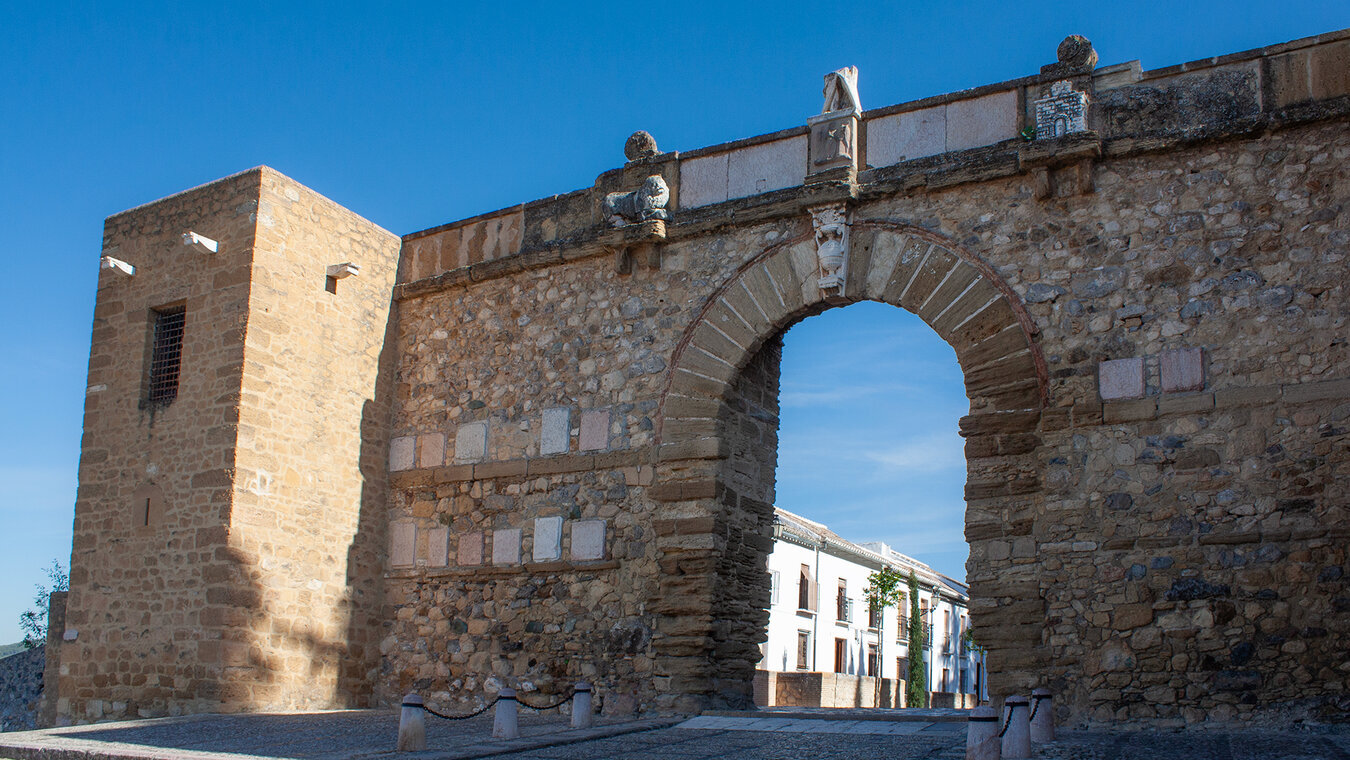
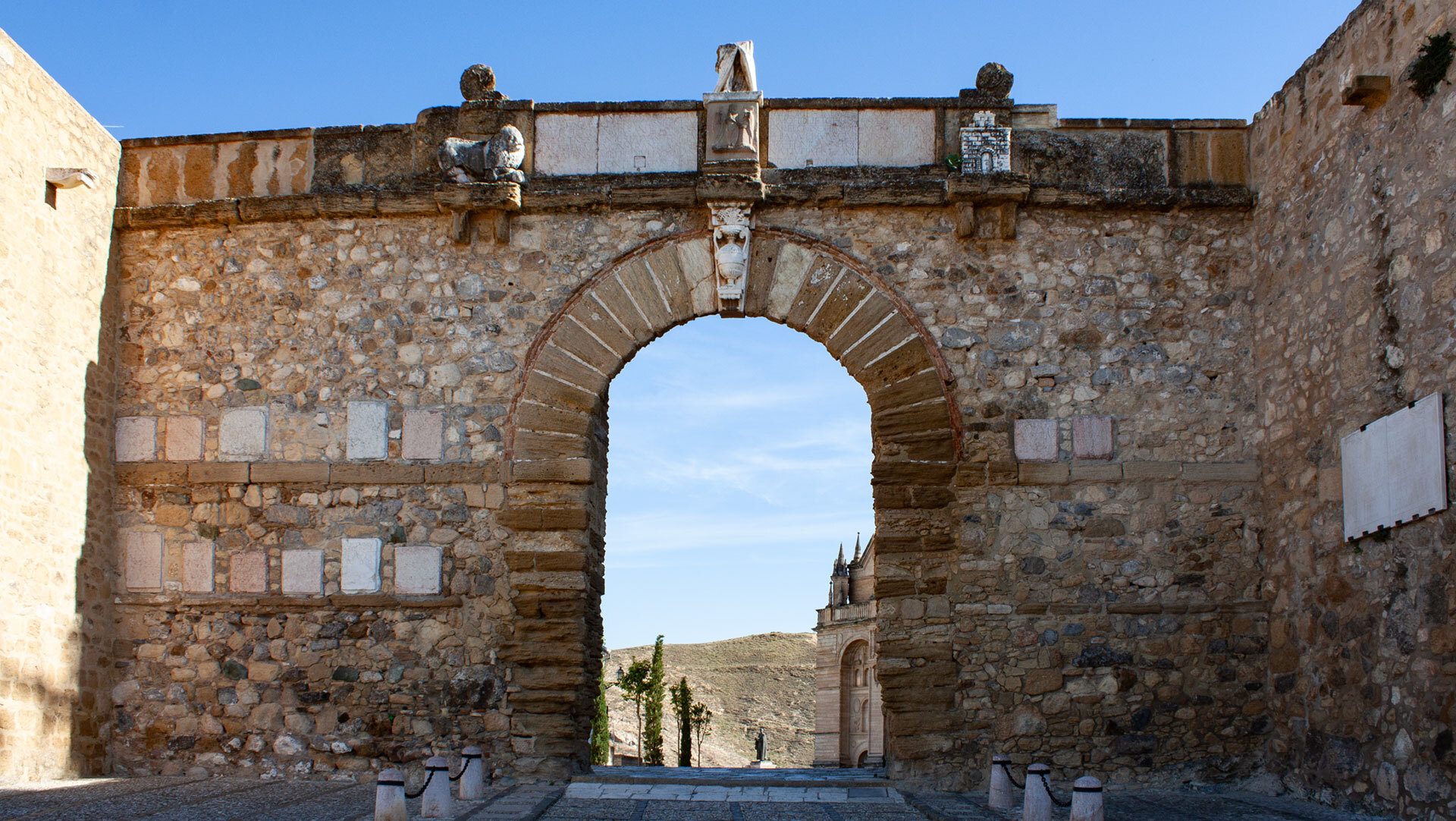
The arch is not old in the sense of antiquity, but young by Antequera’s standards. It was built in 1585, almost 200 years after the Christian conquest of the city. Yet from the outset it was conceived as a deliberate link – between the Spanish Renaissance, in which it was built, and the earlier Roman city of Antikaria, whose stones are incorporated into the arch. It is a triumphal arch with a double history: Renaissance on the outside, antiquity within.
It was built in honour of King Philip II, then ruler of the Habsburg world empire. The design was provided by the architect Francisco de Azurriola, while construction was carried out by the master mason Francisco Gutiérrez. Today, the Arco de los Gigantes is one of Antequera’s three surviving city gates and, at the same time, one of its quietest landmarks – not a headline attraction like the Alcazaba, but the point where the city’s layers can be seen most clearly.
Fact file – the key facts at a glance
Construction period, commission, location
The Arco de los Gigantes is one of Antequera’s key Renaissance works. Anyone exploring the city from the Plaza de los Escribanos and heading up to the Alcazaba will pass it almost inevitably.
| Built | 1585, Renaissance |
| Commissioned | in honour of King Philip II of Spain (1556–1598) |
| Architect (design) | Francisco de Azurriola |
| Construction | Master mason Francisco Gutiérrez (alarife) |
| Style | Triumphal arch / city gate with Roman spolia as the inscription panel |
| Function | Link between the lower town and the Alcazaba plateau · also a memorial |
| Nearby | Real Colegiata Santa María la Mayor + Alcazaba + Termas Romanas (all within walking distance) |
| Admission | City gate freely accessible, no opening hours |
Construction: Renaissance outside, antiquity inside
What ‘spolia’ are – and why they tell a story here
The Arco de los Gigantes is not a purely Renaissance structure. It is a composition of two eras that reference one another. On the outside, the arch follows the classical lines of the Spanish Cinquecento: a wide round-arched opening, clean pilasters, an architrave, and above it the inscription panel. But what was visibly built into the arch is far older.
In technical jargon these are called spolia – from the Latin ‘spolium’, meaning ‘spoils’. This refers to ancient stones removed from older buildings and set into a new structure. In Antequera’s case, these stones come from the earlier Roman city of Antikaria, whose remains are scattered throughout the old town – most visibly in the Termas Romanas next to the Colegiata. Several Latin inscribed stones and relief blocks from this Roman period were set into the arch’s inscription panel, some upside down, some sideways – however they happened to fit.
This is not carelessness. It is a deliberate message: Antequera has not existed only since the Reconquista. The city has Roman roots, and the Renaissance saw itself as the direct heir of antiquity. The Arco de los Gigantes shows this kinship quite literally, stone by stone.
Anyone looking at the arch today can still partly decipher the inscriptions – the names of Roman magistrates, dedications, gravestones. They are not decoration in the classical sense, but a gesture of appropriation. A 1,500-year-old history, worked into the entrance of a Renaissance city.
The historical context: why 1585?
Philip II, Antequera and the Spanish Golden Age
Antequera was a thriving city in the 16th century. After the Reconquista in 1410 by Infante Fernando ‘el de Antequera’ (later King Ferdinand I of Aragón), the city had around 175 years to redefine itself – as a Christian city between Seville, Granada, Córdoba and Málaga, and as a logistics hub between Andalusia’s four main cities. In the 16th century, building flourished: noble palaces, monastery churches and townhouses in the Spanish Renaissance style.
In 1585, the Habsburg empire under Philip II was at its peak. Spain ruled over half of Europe, the Caribbean, large parts of South and Central America, and the Philippines. For the cities of the kingdom, it was taken for granted that buildings would be dedicated to the monarch – as proof of loyalty, but also as self-representation. Antequera afforded itself a triumphal arch that did exactly that: demonstrating loyalty to the crown, showcasing its own Roman tradition, and underlining its Renaissance self-image.
The architect and the builder were regional figures of note in their day: Francisco de Azurriola provided the design, and Francisco Gutiérrez carried it out as alarife – a ‘master mason’ in the sense of the time, i.e. the executing master builder. Both names are barely known today, but their work has endured.
Antequera was once regarded as the ‘city with the most churches per inhabitant in Andalusia’ – more than 30 churches, chapels and monasteries still shape the old town today. The Arco de los Gigantes was not a religious building but a civic one – yet part of this religious-civic high culture, and together with the Colegiata and the Alcazaba, the city’s most visible Renaissance legacy.
Location and urban context
What the arch has to do with the Alcazaba, the Colegiata and the Termas Romanas
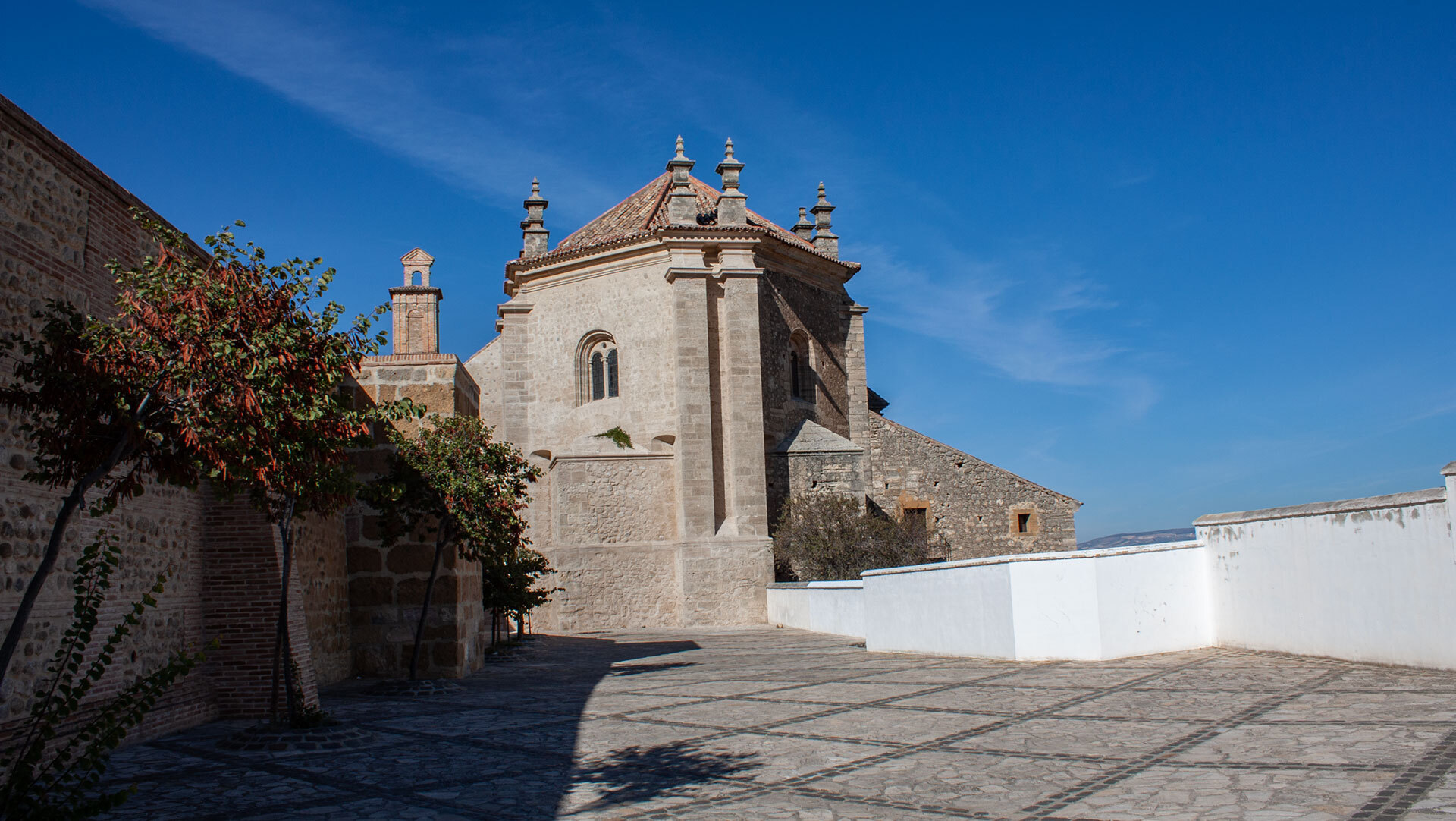
The Arco de los Gigantes does not stand in isolation. It is the lower entrance gate to a dense ensemble of historic buildings that defines Antequera’s southern hill. Anyone walking up the Cuesta de San Judas from the Plaza de los Escribanos passes through the arch and arrives directly at the square in front of the Real Colegiata Santa María la Mayor, one of the earliest Renaissance churches in Andalusia. A few steps further begins the fortified area of the Moorish Alcazaba, whose 14th-century walls and towers tower over the city.
Right next to the Colegiata lie the Termas Romanas – the remains of Roman baths that belonged to the ancient city of Antikaria. This is where the circle closes: the stones built into the inscription panel of the Arco de los Gigantes may come from this or a neighbouring Roman complex. Anyone who passes through the gate and shortly afterwards stands before the remains of the baths sees Antikaria and its later Renaissance heir in the same sweep.
The arch is thus not merely a building but an architectural hinge: it separates the lively old town, with its alleys, bars and squares, from the quiet plateau of history above. Anyone passing through it literally shifts time layers.
Practical information – when to go, what to combine
Time of day, accessibility, combinations
As a city gate, the Arco de los Gigantes is freely accessible – there is no admission charge and no fixed opening hours. It stands open day and night, making it one of the few Antequera landmarks that can be photographed at any time. The view is particularly beautiful in the late afternoon, when the setting sun sweeps across the city and bathes the pale Renaissance stonework in golden light. The arch is also illuminated at night and is one of the sights that makes Antequera especially photogenic after dark.
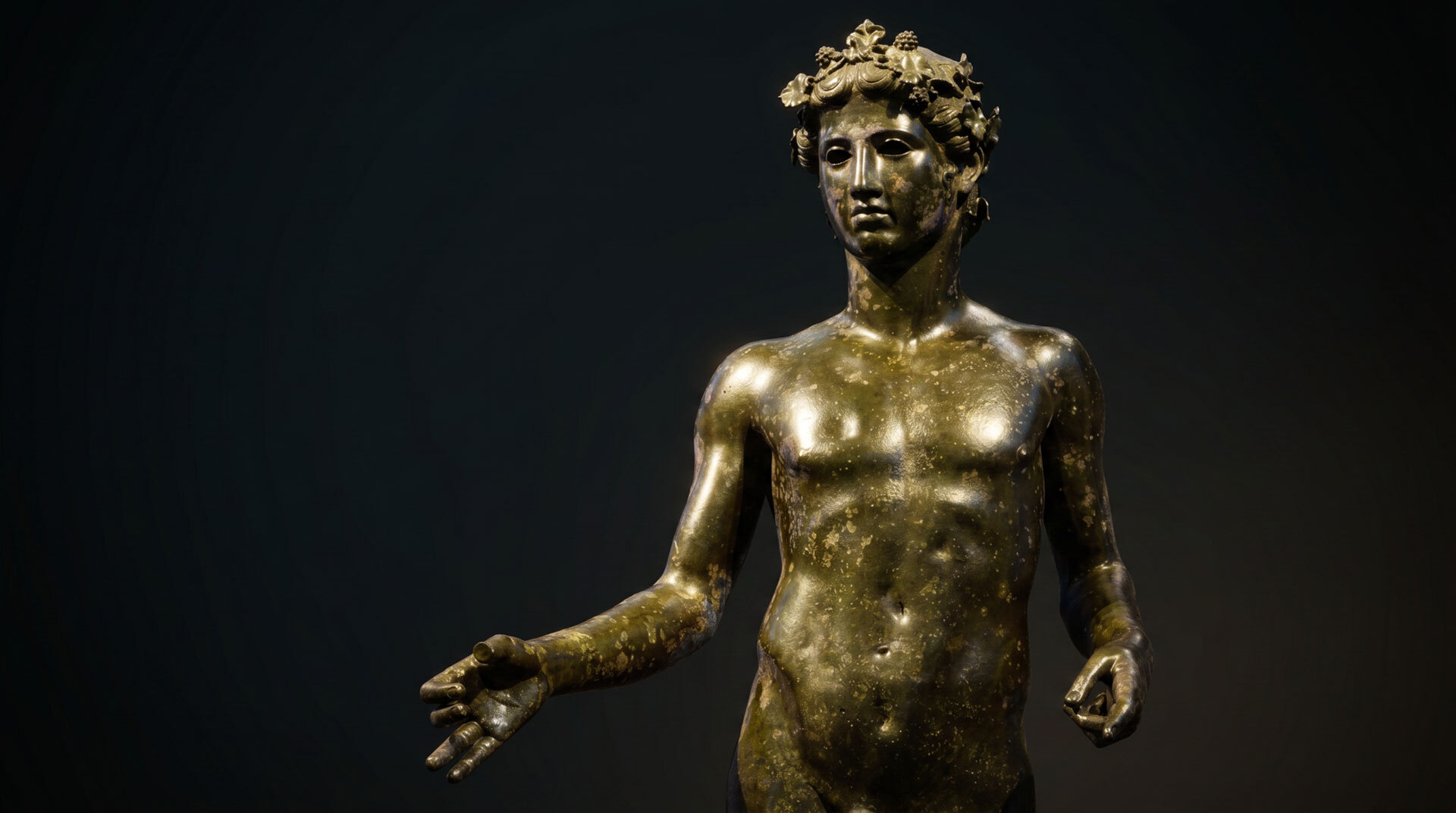
It’s practical to build the arch into a longer walk: from the Plaza de los Escribanos through the Arco de los Gigantes, then to the Colegiata Santa María la Mayor, on to the Termas Romanas, and finally up to the Alcazaba with its panoramic view. Those with more time can continue to the Museo Municipal, home to the famous Ephebus of Antequera, a Roman bronze statue from the 1st century AD.
Anyone planning Antequera as a day trip from the coast should be in the city in the morning, take a break at midday in one of the bars on the Plaza de los Escribanos, and reserve the afternoon for El Torcal or the dolmens – both World Heritage sites are less than 20 minutes’ drive away.
Tips for visiting the Arco de los Gigantes
Best time of day: late afternoon – golden light over the Renaissance stonework
Admission: freely accessible, no opening hours
Accessibility: via the Cuesta de San Judas, about a 5-minute walk from Plaza de los Escribanos
Combination tip: arch → Colegiata → Termas Romanas → Alcazaba → Museo Municipal (about 2–3 hours)
Photography: frontal shot with a low sun; illuminated at night
Onward travel: El Torcal or the dolmen sites reachable within 15–20 minutes’ drive (as of May 2026)
Conclusion: Antequera’s quietest landmark
The Arco de los Gigantes is not what you see first in glossy pictures of Antequera – but it is what best explains the city.
Three eras meet in a single structure: Roman Antikaria, Moorish urban history (the plateau behind it), and the Spanish Renaissance (the arch itself). Whoever reads the stone reads the city. And whoever passes through it enters not only the fortress plateau but also the longer history behind Antequera.
Weiter zu Alcazaba, zu Real Colegiata Santa María la Mayor, zu den Termas Romanas und zum Ephebus of Antequera. Magazinee overview
Frequently asked questions about the Arco de los Gigantes
What does ‘Arco de los Gigantes' mean in German?
When and why was the Arco de los Gigantes built?
What are the Roman inscriptions in the arch?
Can you visit the Arco de los Gigantes at any time?
What's the best way to combine the arch with other Antequera sights?
This article is based on the on-the-ground knowledge of the Gequo editorial team – publishers of several Reisezeit hiking guides and operators of Sunhikes.com. As of: May 2026