Lobo Park Antequera: Where Wolves Live on 40 Hectares Almost as They Would in the Wild
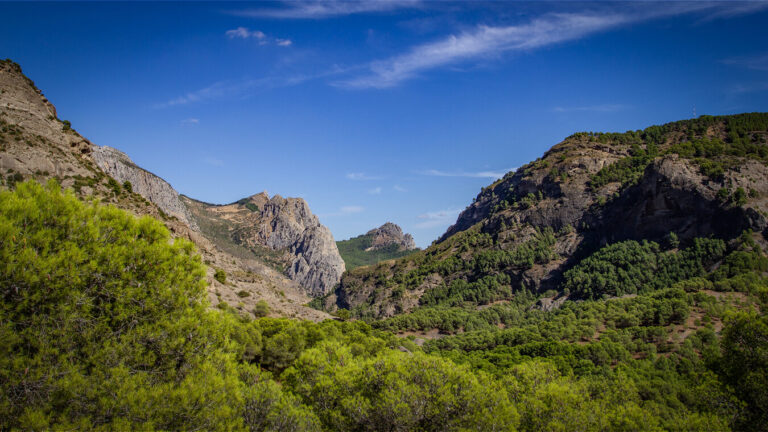
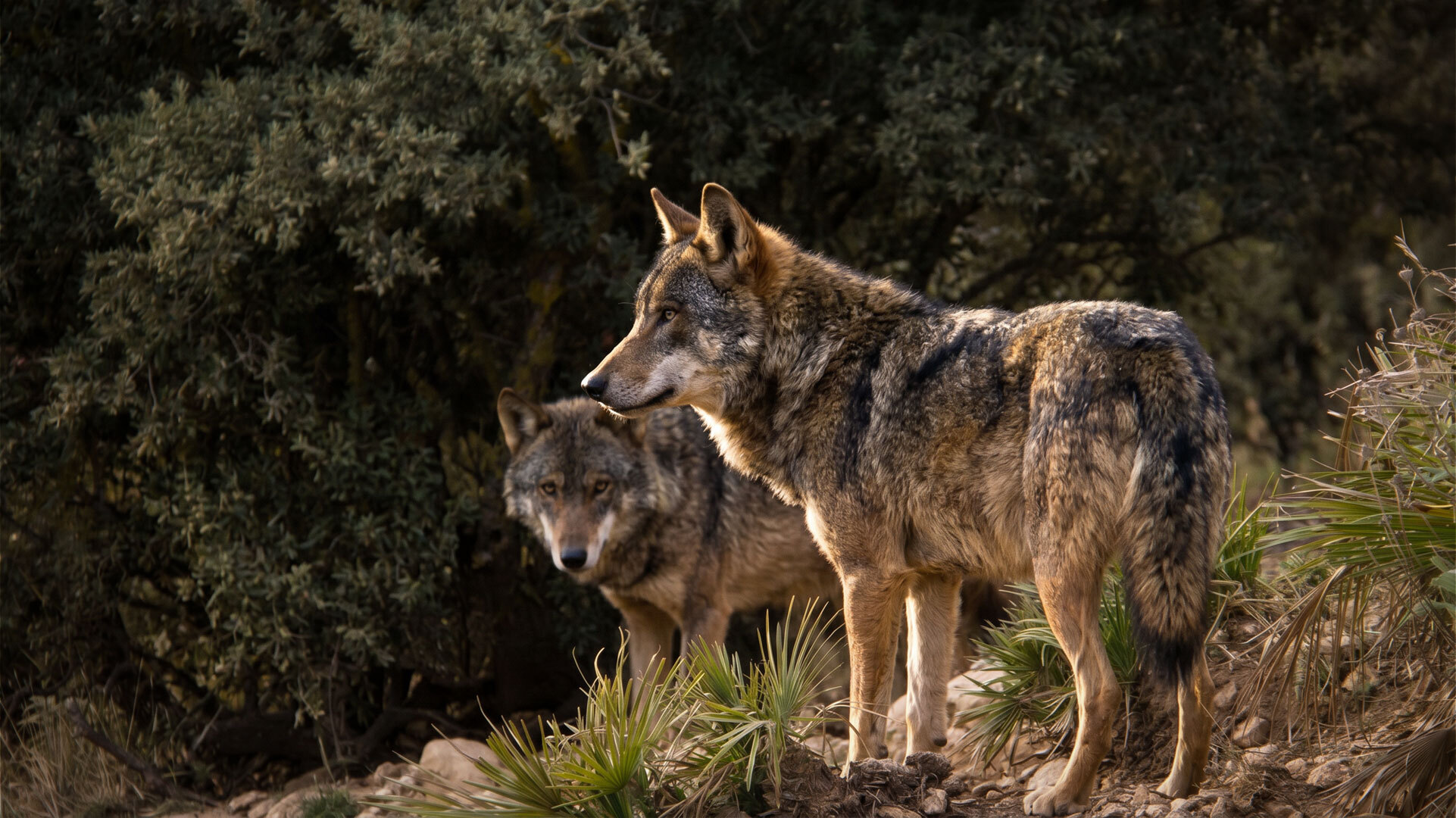
Just under half an hour west of Antequera, on the A-343 country road to Álora, lies one of Spain’s most unusual nature parks. Lobo Park is not a zoo, not a conventional animal reserve, and not a breeding station either. It is a private park that offers wolves of four different subspecies, across 40 hectares of Mediterranean landscape, a habitat that comes as close as possible to their natural environment. The animals are not domesticated, their enclosures are generous, and visitors only see them from outside — on guided tours with wolf experts who understand pack behaviour.
What sets the park apart from other animal parks is its focus on research and education. Lobo Park is organised as a non-profit association, and its aim is the scientific observation of wolf packs and raising awareness of a species that was long systematically exterminated in Europe — and whose return to Spain and Italy is a controversial topic today. Anyone who takes a tour here doesn’t just get to know wolves, but also the history of their persecution and the reality of their reintroduction.
The Park: Four Wolf Species in a Mediterranean Landscape
What Sets Lobo Park Apart from a Zoo
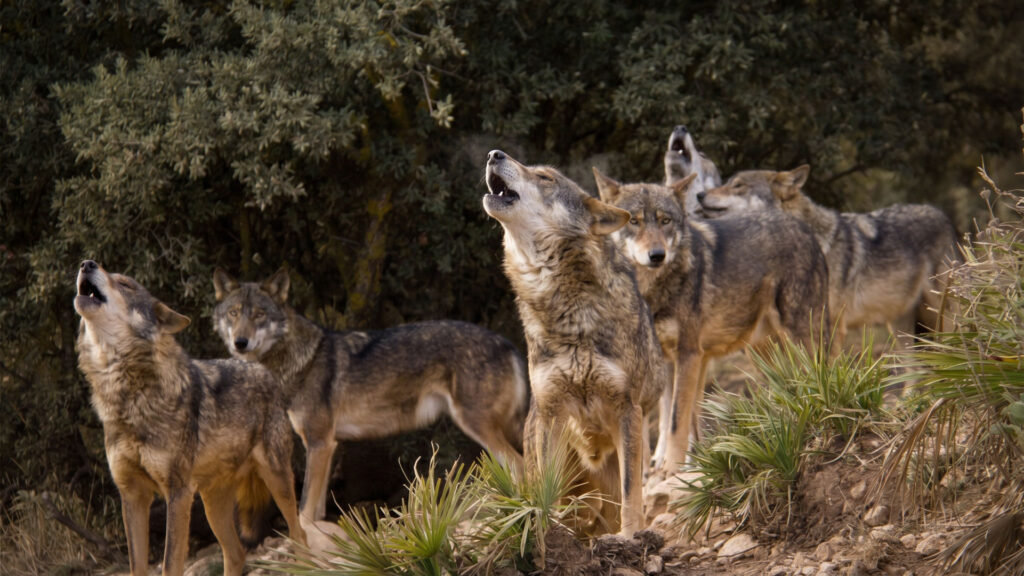
Four wolf subspecies live across Lobo Park’s 40 hectares — each in its own enclosure spanning several hectares. The animals are not display pieces but members of genuine packs with their own hierarchy and social structure. They were not bred in captivity to be tame, but raised in a controlled environment in which their wariness of humans is reduced — without any domestication taking place.
| European wolf (Canis lupus lupus) | the historic wolf of Central Europe, now found again in Spain and Italy |
|---|---|
| Iberian wolf (Canis lupus signatus) | the Spanish subspecies · strictly protected in Spain · characteristic dark mask |
| Hudson Bay wolf (Canis lupus hudsonicus) | Arctic subspecies from Canada · light to almost white coat · very shy |
| Canadian timber wolf (Canis lupus occidentalis) | the largest wolf subspecies in North America · distinctive grey-brown coat |
The park’s real value doesn’t lie in a wolves-per-visitor statistic, but in the opportunity to observe wolves within their social structure. Anyone who quietly watches a pack for a few minutes sees the hierarchy between alpha animals and subordinate members, the play sequences of the cubs, and the sentry behaviour at the edges of the territory. Wolf researchers with many years of experience lead the tours — their explanations elevate the visit from a spectacle to a biology lesson.
Alongside the wolves, the park is also home to a small farm-school area with horses, donkeys, goats and a fox family — mostly rescued animals that came from other institutions. A plus for families with younger children.
Tours and Prices: What You Can Book On-Site
From the Standard Tour to the Howl Night
Lobo Park cannot be explored freely — all encounters with the wolves take place exclusively on guided tours. This is regulated both for safety reasons and because of the park’s protection concept. Four tour formats are on offer in total, with varying levels of intensity and price.
| Duration | Adult price | |
|---|---|---|
| Standard Wolf Tour | 1.5 h | €15 (children 3–12: €8.50) |
| Howl Night | 2.5 h | €30 (children: €17) |
| VIP Tour (private, German-speaking) | 3 h | from €170 for 2 people |
| Photo Tour (professional) | 2 h | €75 per photographer · companion €25 |
The Standard Wolf Tour is the usual option for day visitors. It starts at fixed times (11:00, 13:00, 15:00 and 16:30), follows an 800-metre circular route past three of the four wolf enclosures, and is accompanied by a wolf expert in Spanish or English. Booking is recommended, and during the high season from March to October it is effectively essential. Places are limited because group size is controlled.
The Howl Night is the most exciting format and the one most visitors remember. As darkness falls, a guide leads the group to the enclosures, where individual animals or whole packs begin their characteristic howling. The sound carries far across the valley, and other packs respond — a natural phenomenon that can only be experienced in a few places in Europe. Howl Nights take place at irregular intervals and are often booked out weeks in advance.
Howl Night: What to Expect
Howl Nights last 2.5 hours and typically begin at sunset. They can only be booked via the park’s website (lobopark.com) up to 3 hours before the start of the event at the latest — but they are usually sold out days or weeks in advance.
No guaranteed howling: wolves are not performing animals. Whether and when they howl depends on pack behaviour, the moon, the weather and many other factors. Experience shows that at least one pack howls per evening, often several — but there is no guarantee.
For travellers seeking a more intensive experience, there are two special formats. The VIP Tour also takes place from Monday to Wednesday — days when the park is otherwise closed — and can be conducted in German on request. Three hours of a private tour with a welcome drink, tailored to the group’s interests. The Photo Tour is aimed at photographers who want to capture wolves in special poses without the hustle of a group — 2 hours with special positions at the enclosure.
Practical Information: Getting There, Opening Hours, Visitor Tips
From the Car Park to the Picnic Area
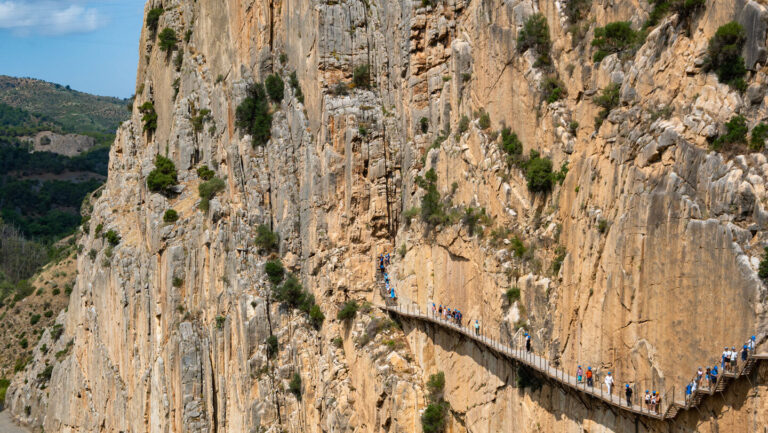
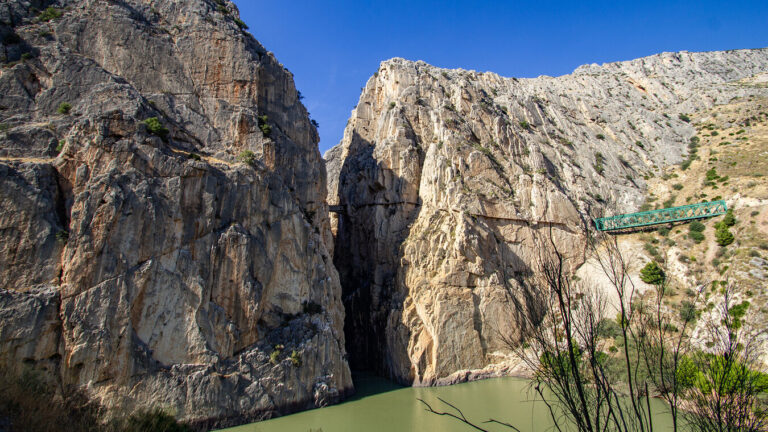
Lobo Park is situated on the A-343 country road between Antequera and Álora, at kilometre 16. Coming from Antequera, it’s just under a 25-minute drive west — the same route as to the Caminito del Rey — with the turn-off to Lobo Park about 10 minutes before Ardales. Coming from Málaga, head first towards Antequera (A-45) and then turn onto the A-343 — around an hour in total.
Getting There and Practical Information
Address: Ctra. Antequera – Álora (A-343), km 16, 29200 Antequera (Málaga)
Telefon: +34 952 031 107
E-Mai: info@lobopark.com
Website: lobopark.com
Directions from Antequera: A-343 westwards · approx. 25 min · 25 km
Directions from Málaga: A-45 to Antequera, then A-343 · approx. 1 h · 70 km
Opening hours: Thu–Sun and on public holidays, 10:00–18:00
Closed: Mon–Wed · 25 December · 1 January
Car park: free at the entrance
In the park: picnic area · terrace with views of El Torcal · souvenir shop
The circular route through the park is 800 metres long, gently undulating, and runs along a gravel path. Sturdy footwear is recommended but not essential — trainers are fine. Sun protection in summer, a light jacket on cooler mornings. For those travelling with children: the tour is suitable for children from around five years old; younger children tend to tire quickly over 1.5 hours of concentration. Pushchairs only work to a limited extent on the gravel path.
After the tour there’s a picnic area with tables and a terrace offering wide views across the Mediterranean hill landscape as far as El Torcal. For those planning a half-day from Antequera: a morning tour, a picnic on the terrace, then back to Antequera or on to the Caminito del Rey (around 30 minutes from there). For a more relaxed pace, plan a full day with a morning tour and a long lunch.
A Nature Park with Genuine Wolf Research — Not for the Rushed
Lobo Park is not a conventional zoo, not a spectacle, and not a petting zoo either. It is a non-profit research and education centre that keeps wolves in an environment as close as possible to their natural habitat. Anyone who engages with it — allowing time for the 1.5-hour tour, paying attention to the guide’s explanations, and having patience for a pack that might just be resting — experiences one of the most intense wildlife encounters in the region.
One final recommendation: if you have the choice, book a Howl Night. It’s the option that stays with you — even though the animals aren’t guaranteed to appear, and howling isn’t guaranteed either. The evening alone, dusk settling over the mountain range, the distant sound of the first animals, the slow build-up of a full chorus — that’s an experience few nature parks in Europe offer in this form.
More about the region: Antequera as a base: Antequera Spain. Another wildlife excursion in the region: Fuente de Piedra – Flamingo Lagoon. The El Torcal nature park with a similar protection concept: El Torcal de Antequera. Best time to visit the region: Best Time to Visit El Torcal & Antequera.
Frequently Asked Questions about Lobo Park
Do I need to book the tour in advance?
Can I pet or photograph the wolves?
Is the park suitable for young children?
What happens if it rains?
How many wolves live in the park?
This article is based on the on-the-ground knowledge of the Gequo editorial team — publishers of several hiking travel guides and operators of Sunhikes.com. Last updated: May 2026