Porra antequerana: where the cold soup gets thicker than gazpacho
When the tomatoes hang ripe on the vines in July and the midday sun blazes over Antequera, a soup appears on the tables in the city’s kitchens that exists in this exact form nowhere else in Andalusia. It is the third in the trio — alongside Gazpacho and Salmorejo — and differs from both through one crucial ingredient and a characteristic consistency.
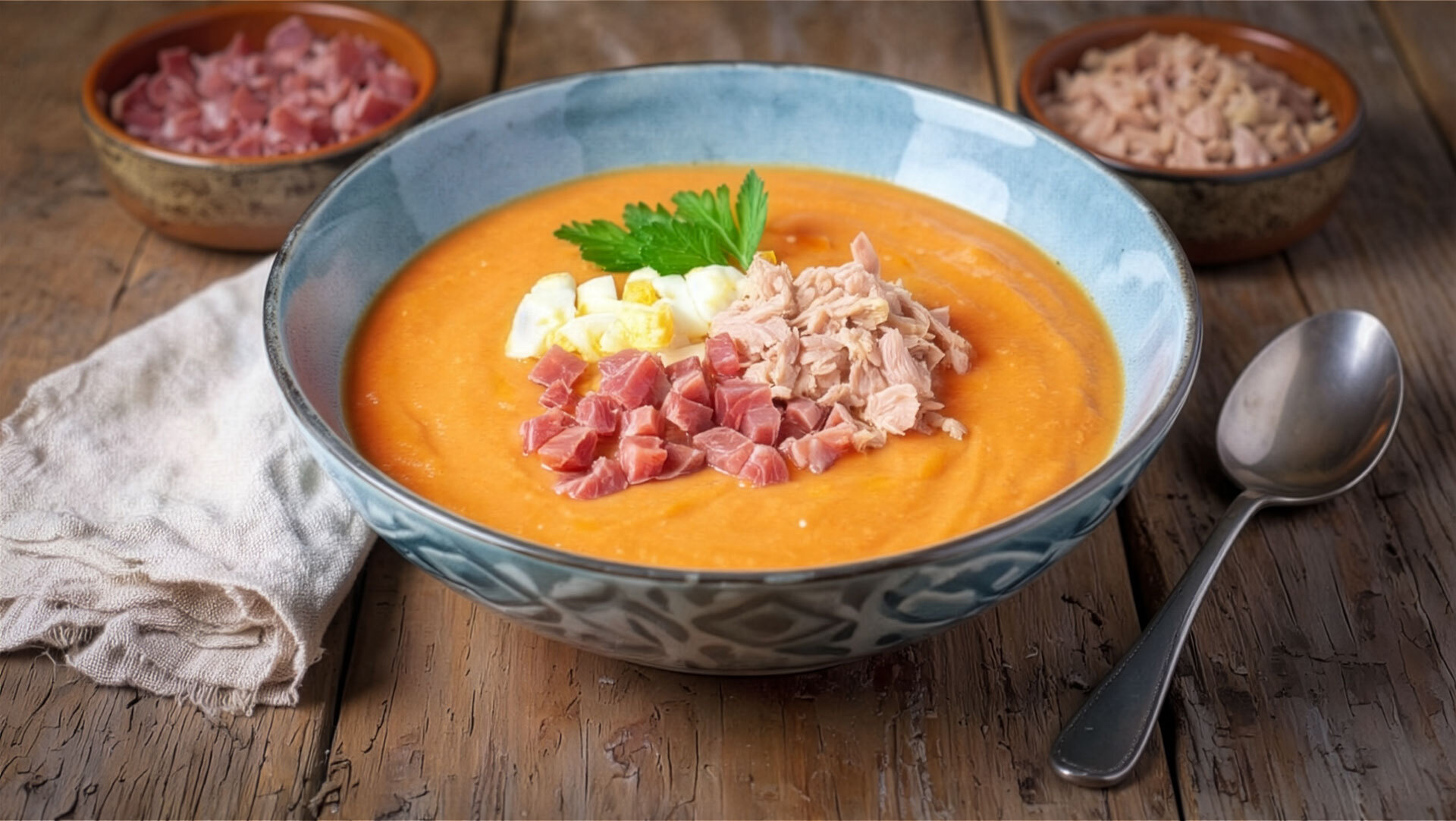
Porra antequerana is a traditional cold tomato soup from the city of Antequera. Closely related to Salmorejo from Córdoba, but noticeably thicker and more robust in flavour due to the addition of green pepper and more bread. During the summer months, it is one of the favourite dishes of the people of Málaga — ice-cold from the fridge, with the classic topping of egg, Serrano ham and tuna.
What makes the Porra a Porra, where the tradition comes from, and how to prepare it according to a genuine Antequera recipe — step by step, with all the ingredients and quantities.
The trio of Andalusian cold soups
Before understanding Porra antequerana, it’s worth looking at its two relatives. Andalusia has three classic cold soups, all developed on the basis of tomatoes, bread, olive oil, garlic and vinegar — but each with a different consistency, a different home and a different personality.
Gazpacho – the internationally known classic
Gazpacho is the most famous of the three. It is liquid, almost drinkable, often served in a glass. Besides tomatoes, classic gazpacho also contains cucumber, often red pepper, onion and sometimes watermelon. Bread is used sparingly; the soup stays thin and refreshing. It is widespread throughout Andalusia, with an emphasis on Seville and the western provinces.
Salmorejo – Córdoba’s thicker sister
Salmorejo comes from Córdoba and is the direct precursor to the Porra. It contains only tomatoes, bread, garlic, olive oil, vinegar and salt — no cucumber, no onion, no pepper. Due to the higher bread ratio, it is noticeably thicker than gazpacho, almost spreadable. Classic salmorejo is garnished with hard-boiled eggs and Serrano ham. In Córdoba, it’s on every tapas menu.
Porra antequerana – the thickest, most robust version
Porra antequerana goes one step further still. It uses even more bread than salmorejo, which makes the consistency so compact that it can barely be poured from a bowl — it has to be spooned. Then there’s the green pepper, which gives the dish a spicier, slightly more bitter character. And the topping traditionally contains tuna — a detail that clearly sets the Porra apart from gazpacho and salmorejo.
What makes the Porra unique
Three details set Porra antequerana apart from its relatives — and explain why it carries its own name in Antequera rather than simply passing as “thicker salmorejo”.
More bread, green pepper, different consistency
The bread ratio is the true defining trait. Where salmorejo uses about 200 grams of bread per kilo of tomatoes, the Porra uses 300 to 400 grams — up to twice as much. This makes the soup noticeably denser, almost like a cold tomato cream. It works well as a filling main course, not just as a starter.
Green pepper is the second distinguishing feature. Traditionally, the “Pimiento Italiano” is used — a slim, mild green pepper that gives the soup a spicy, slightly bitter undertone. If you can’t get an Italiano, you can use a small ordinary green pepper instead; the flavour remains unmistakably present. This pepper is completely absent from classic salmorejo.
The tuna in the topping as a defining feature
The third peculiarity lies not in the soup itself but in the garnish set. While salmorejo makes do with egg and ham, Porra antequerana traditionally includes flaked tinned tuna — drained and scattered in small pieces on top of the soup. If you’re served a Porra in Antequera and don’t see any tuna, you have every right to ask about it.
The combination makes for a complete summer dish: tomato soup as the base, egg as the binding element, ham for salty seasoning, tuna for a maritime touch. With crusty bread on the side, it’s a lunch that fills you up even at 38 degrees, without lying heavy on the stomach.
The authentic recipe step by step
The quantities given are for around four people as a main course or six people as a starter. If you need a smaller portion, halve everything proportionally — the ratios matter more than the absolute figures.
Ingredients for 4 people
| Ingredients for the soup | |
|---|---|
| Tomatoes | 1 kg ripe, flavourful tomatoes (ideally beef or Roma tomatoes) |
| Stale white bread | 300–400 g (traditionally Pan de Telera, a light wheat bread with a dense crumb; baguette or a rustic white loaf also work) |
| Green pepper | 1 small pod of the Pimiento Italiano type, or ordinary green pepper as an alternative |
| Garlic | 1–2 cloves, to taste — remove the green germ in the middle |
| Olive oil | 100–150 ml cold-pressed, Virgen Extra |
| Sherry vinegar | 1–2 tbsp Vinagre de Jerez |
| Salt | 1 tsp |
| Traditional garnish (toppings) | |
|---|---|
| Hard-boiled eggs | 2, diced or chopped |
| Serrano ham | 100 g, cut into small cubes or strips |
| Tuna | some tinned, in oil, drained and flaked — the Porra’s defining feature |
| Olive oil for drizzling | a few drops of Virgen Extra at the end |
Preparation in 6 steps
| Step by step to the Porra | |
|---|---|
| 1. Preparation | Wash the tomatoes and remove the stem. If you want a very fine consistency with no bits, you can briefly blanch and peel the tomatoes — with a powerful stand blender this is usually unnecessary. Deseed the pepper and cut it roughly. |
| 2. Soaking the bread | Cut or tear the bread into rough pieces. With very juicy tomatoes, the bread can be put straight into a bowl with the tomato pieces so it soaks up their juice. Moisten dry bread with a little water. |
| 3. Blending | Put the tomatoes, pepper, garlic, soaked bread and salt into a blender. Blend on the highest setting until a completely smooth, thick and creamy mixture forms — ideally for one to two minutes continuously. |
| 4. Emulsifying | Add the sherry vinegar. While the blender runs on a medium setting, slowly pour in the olive oil in a thin stream. This emulsifies the oil with the tomato-bread mixture — the soup takes on its characteristic pale orange, velvety texture. |
| 5. Seasoning & chilling | Adjust with salt and vinegar. Then chill in the fridge for at least 2–3 hours. The Porra must be served ice-cold. |
| 6. Serving | Arrange in deep bowls or earthenware dishes. Sprinkle generously with chopped egg, diced ham and tuna, and drizzle with a few drops of the best olive oil. Serve with fresh, crusty bread. |
Where to eat Porra in Antequera
In Antequera, Porra is a standard fixture on lunch menus — from simple taverns to upmarket restaurants. Anyone walking through the old town in summer will see it listed on almost every tapas board, often as the dish of the day during the hottest part of the year.
Seasonality and how it’s served
The real season runs from June to September — precisely when Andalusian tomatoes reach full ripeness. It’s also offered outside this season, but with less flavourful winter tomatoes it loses much of its character. Anyone wanting to try Porra at its best should come between July and August.
It is traditionally served in deep earthenware or ceramic bowls, never in glasses like gazpacho — the consistency is too thick for that. The toppings sit separately on top of the soup — usually in a small ring of egg, ham and tuna, finished with a final drizzle of olive oil.
Classic accompaniments
Porra comes with fresh, crusty bread — often the same Pan de Telera used in the soup itself, freshly baked and sliced. Some restaurants serve a small bowl of green olives alongside it, plus a chilled Fino or Manzanilla — the dry sherry from western Andalusia.
Tips for the perfect Porra
Ripe tomatoes: The flavour stands or falls with the tomatoes. Warm, fully ripe summer beef or Roma tomatoes give the best result. Winter tomatoes or firmer varieties produce a flatter-tasting soup.
Bread overnight: The bread really should be stale — fresh bread makes the soup watery. If you don’t have any old bread, slice fresh bread and dry it out in the oven at a low heat first.
Olive oil quality: With only six main ingredients, the oil plays a leading role. A good Andalusian Virgen Extra makes a noticeable difference — especially from the Antequera region, where the DOP-certified olive oil is produced.
Serve ice-cold: At least 2 hours in the fridge is essential, ideally overnight. The flavours need to meld, and the taste only really comes into its own when cold.
Don’t forget the toppings: Without egg, ham and tuna it simply isn’t a Porra antequerana — just a thick tomato soup. The tuna is the trademark.
Conclusion – a city in a bowl
Porra antequerana is more than a recipe. It is Antequera’s compact, robust answer to the same culinary problem that Seville and Córdoba also solved: what to do with ripe tomatoes and old bread in the hot summer. Anyone who prepares the soup themselves has the city quite literally in the bowl — the tomatoes from the surrounding countryside, the bread from the bakery, the olive oil from the sierra.
More on the city’s sweet and savoury specialities: Bienmesabe and Mollete. On the local olive oil with protected designation of origin: Aceite de Oliva Antequera DOP. On the taverns where you can spoon up Porra in genuine Antequera atmosphere: taverns and restaurants in Antequera’s old town. More on Antequera in the Magazinee.
Frequently asked questions
What's the difference between Porra antequerana and gazpacho?
What's the difference between Porra antequerana and salmorejo?
Which bread works best?
How long does Porra keep in the fridge?
What are the traditional toppings?
This article is based on the on-the-ground knowledge of the Gequo editorial team – publishers of several Reisezeit hiking guides and operators of Sunhikes.com. As of: May 2026